
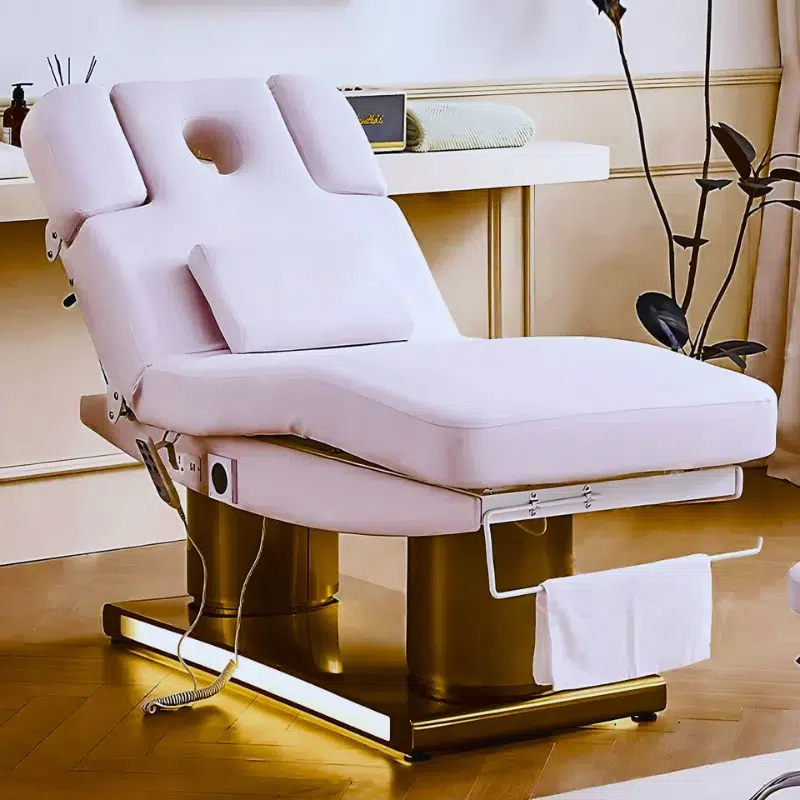
If you’re an esthetician shopping for your first facial bed — or replacing the one you’ve been fighting with for three years — you already know there’s a lot of junk out there. I’ve tested more beds than I’d like to admit, and I’ve made every mistake in the book. Bought a cheap one from a random online seller, regretted it in six months. Bought a fancy one with features I never used. The “best facial bed for esthetician” isn’t the most expensive one, and it’s not the cheapest either. It’s the one you can actually work on for 8 hours without your back screaming at you.
This guide is what I wish someone had told me before I spent my first dollar. No fluff, no marketing speak. Just what matters when you’re the one standing over that bed day after day.
What Makes a Facial Bed “Best” for an Esthetician?
Forget what the manufacturer’s website says. Here’s what actually matters when you’re the one working:
- Height range matters more than you think. If you’re short or tall, a bed that doesn’t go high or low enough will destroy your posture. Make sure the lowest setting lets you work comfortably while seated, and the highest doesn’t force you to hunch.
- Face cradle comfort is non-negotiable. A bad face cradle can turn a relaxing facial into a neck-pain nightmare for your client. Look for memory foam padding and adjustable angle/lift.
- Vinyl that cleans easily. If the material stains from a little oil or mask residue, you’ll hate it within a month. Commercial-grade PU or PVC is your friend.
- Weight capacity that covers your client base. Don’t assume a standard 300 lb rating is enough if you treat a diverse clientele. Many Nova beds support up to 400 lbs.
- Motor count — more isn’t always better. Three motors (height + backrest + leg rest) is the sweet spot. Four motors adds face cradle adjustment, which is nice but not essential.
One thing estheticians I’ve talked to agree on: get electric, not hydraulic, if your budget allows. Pumping a foot pedal between every client gets old fast, and the height memory on electric beds is a game changer when you have back-to-back appointments.
Best Facial Beds for Estheticians — Quick Comparison
Here are the facial beds that actually deliver for estheticians. Prices are factory-direct (no middleman markup):
| Model | Motors | Weight Cap | Best For | Price (Est.) |
|---|---|---|---|---|
| 4-Motor Electric Beauty Bed | 4 (height + backrest + leg rest + face cradle) | 400 lbs | Estheticians who want full adjustability for multiple treatment types | $500–$700 |
| 3-Motor Electric Beauty Bed | 3 (height + backrest + leg rest) | 400 lbs | Best value — covers 95% of needs without the 4th motor premium | $400–$600 |
| Electric Facial Bed with LED Base | 3 or 4 | 400 lbs | High-end spa atmosphere with under-bed LED lighting | $600–$800 |
| Commercial PVC Electric Bed | 3 | 400 lbs | High-traffic clinics — PVC is waterproof and easy to sanitize | $450–$650 |
Note: Prices above are rough estimates. Contact us for current wholesale pricing and shipping to your location.
Honest take: If I were buying for a solo esthetician room, I’d go with the 3-motor electric. The 4th motor is nice but not make-or-break, and the savings can go toward a good stool or facial steamer. If you run a busy med spa with multiple rooms, the LED base models give you that wow factor when clients walk in.
Electric vs Hydraulic: The Real Difference
I’ve used both, and here’s the honest difference:
Electric beds (3 or 4 motor) let you adjust height, backrest, and leg rest with a foot pedal or remote. You can change positions mid-treatment without stopping. Some even have memory presets so you can save your preferred working height. Worth every penny if you do 6+ facials a day.
Hydraulic beds use a gas spring or foot pump. They’re cheaper and simpler — nothing electronic to break. But you have to pump to raise and release a lever to lower. Fine for low-volume work or budget setups. Not ideal if you adjust height frequently between clients.
My recommendation: Go electric 3-motor as a minimum. The time you save on adjustments adds up fast, and your lower back will thank you.
What Size Facial Bed Do You Need?
Standard facial beds are about 70–74″ long and 28–30″ wide. That’s plenty for most clients. But here’s the thing — measure your treatment room before you buy anything. You want at least 2 feet of clearance on all sides to move around comfortably. A bed that barely fits in the room is going to make your workday miserable.
If your room is tight (under 10′ x 10′), consider a bed with a narrower profile or one that doesn’t have oversized armrests that eat into your working space. Most Nova facial beds have a compact footprint while maintaining full treatment width.
Features Estheticians Actually Use
I asked a few working estheticians what features they actually use vs what’s just marketing fluff. Here’s the real list:
- Adjustable face cradle — critically important. A fixed face cradle forces your client’s neck into whatever angle the manufacturer chose.
- Removable armrests — lets clients in wheelchairs or with mobility issues transfer easily. Not a nice-to-have; it’s necessary for accessibility.
- Heating option — clients love it in winter. Not essential but a nice upgrade if you offer luxury facials.
- Under-bed LED — purely aesthetic. Helps set a mood but zero functional difference. Skip it if you’re on a tight budget.
- USB charging ports — nobody uses these on a facial bed. Don’t pay extra for them.
- Roller wheels — actually useful if you rearrange your room or need to clean under the bed. But make sure they lock when you need stability.
Common Mistakes I See Estheticians Make
Mistakes I’ve made myself, so you don’t have to:
- Buying a non-commercial bed for a commercial setting. Those marketplace specials under $300? They use residential-grade foam and thin vinyl. You’ll be reupholstering within a year.
- Ignoring weight capacity. A bed rated for 300 lbs may not be enough. Go for 400 lb capacity — it costs the same and covers everyone.
- Forgetting about storage. Where will you keep your esthetician stool, trolley, and supplies? Make sure the room flow works before the bed arrives.
- Skipping the face cradle test. If possible, try resting your own face on the cradle for 5 minutes. If it’s uncomfortable, your clients will hate it too.
How to Maintain Your Facial Bed
Good news: facial beds are low-maintenance. Here’s what keeps them going for years:
- Wipe down after every client with a gentle disinfectant safe for vinyl/PU (avoid bleach and alcohol-heavy solutions).
- Check screws and bolts monthly — they can loosen with use.
- Lubricate moving parts on electric beds every 6 months (silicone spray is fine).
- Replace the face cradle foam every 2-3 years depending on use. It compresses over time.
Frequently Asked Questions
What is the best facial bed for a licensed esthetician starting a home studio?
A 3-motor electric facial bed with a compact frame is your best bet. You get professional adjustability without taking up your whole room. Look for one with removable armrests — it makes the room feel bigger when not in use. Our 3-motor electric bed is popular for home studios for exactly this reason.
Should I get a 2-motor, 3-motor, or 4-motor facial bed?
3-motor (height + backrest + leg rest) is the sweet spot for most estheticians. 2-motor is too limited — you can only adjust height and backrest, so leg positioning is fixed. 4-motor adds face cradle adjustment, which is nice for advanced facial treatments but not essential for basic services.
Can I use a facial bed for waxing and other body treatments?
Yes — most electric facial beds double as waxing beds and light body treatment tables. Just make sure the vinyl is commercial-grade (PU or PVC) so wax residue cleans off easily. Avoid fabric or cloth upholstery if you offer waxing services.
How much should I spend on a quality facial bed for my esthetician business?
Expect to spend $400–$800 for a quality electric model from a factory-direct supplier like Nova. The cheap $200 beds from discount marketplaces will cost you more in replacements and lost clients. The luxury $2,000+ beds from premium brands are nice but rarely worth the premium — you’re paying for the name, not the build quality.
Does Nova offer wholesale pricing for multiple facial beds?
Yes — we manufacture our own beds, so you cut out the middleman. Bulk orders for spas, med clinics, and salon suites get additional discounts. Contact our sales team for a custom quote.
Bottom Line: Pick the Best Facial Bed for Your Esthetician Workflow
The “best” facial bed for one esthetician might be wrong for another. If you do mostly basic facials in a small room, a 3-motor electric with a compact frame is all you need. If you run a high-end med spa, the LED-lit 4-motor model adds a premium feel that clients notice. If you’re on a tight budget starting out, a hydraulic bed gets the job done — just plan to upgrade within a year or two.
Whatever you choose, buy from a supplier that actually manufactures the beds (not just resells them). Factory direct means better pricing, better support, and you know exactly what you’re getting. That’s what we do at Nova — if you want to see our full lineup, check out our facial bed collection.
More Resources
- Choosing the Best Facial Bed — Full Guide – Detailed breakdown of types and features
- Beauty Beds Collection – Browse electric beauty beds for spas and salons
- Esthetician Supplies Checklist – Everything you need to set up your treatment room
- Beauty Trolleys – Storage solutions to keep your products organized