
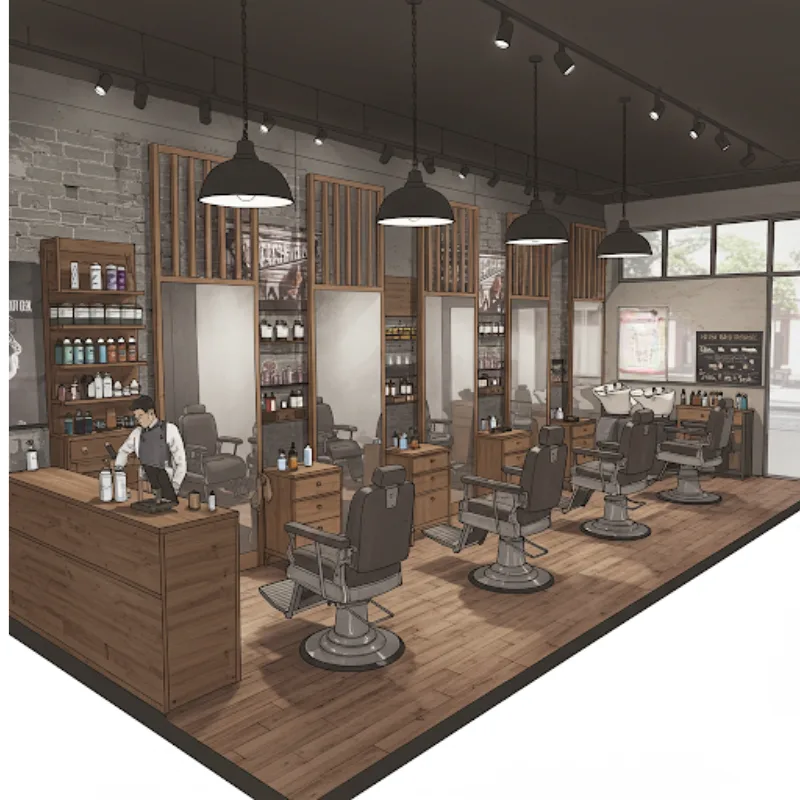
Designing a barber shop is not primarily a design exercise. It is an operational decision that affects workflow, service quality, staff fatigue, and long-term profitability. Shops that perform well over time usually make the right spatial decisions early, before aesthetics enter the conversation. This guide focuses on those decisions.
Before you commit to a layout barber shop floor plan, sketch the walking path from door to chair to shampoo and back: a clean loop keeps staff from crossing clients and speeds up turnover. Nova’s barber furniture ships factory-direct with MOQ 1, one-year warranty and DDP delivery.
Why Barber Shop Design Matters
Barber shop design influences business performance long before clients comment on style.
A clear, professional layout shapes first impressions and signals operational competence. Clients often decide whether to enter a shop based on visibility, order, and perceived cleanliness within seconds. Once inside, design determines how smoothly services are delivered and how comfortable clients feel during waiting and treatment.
For barbers, layout and equipment placement affect daily physical strain. Poor circulation, inadequate lighting, or limited reach space compounds fatigue over time. Shops with efficient layouts consistently support higher service quality simply because staff can work without friction.
If you need a single takeaway here, it is this. Design choices either reduce daily effort or multiply it. Over time, that difference directly affects retention, reputation, and pricing flexibility.
What to Define Before You Start Designing Your Barber Shop
Before selecting furniture or finishes, define the decisions that are expensive to reverse.
Start with business intent. Clarify who the shop serves, what services drive revenue, and whether the model prioritizes speed, experience, or premium positioning. These choices determine spatial priorities.
Evaluate the physical constraints of the space. Floor area, ceiling height, window placement, plumbing access, and electrical capacity will limit what can be changed without structural cost.
Set a realistic budget early. Allocate funds to layout, lighting, and core equipment first. Decorative elements should remain flexible. Many successful projects treat décor as a later-phase decision rather than an upfront commitment.
Gather staff feedback before finalizing plans. Barbers usually identify inefficiencies quickly, especially around storage access, chair spacing, and lighting angles.
Confirm local safety, hygiene, and accessibility requirements. Compliance is not optional and should be resolved at the planning stage, not after installation.
If you must prioritize one action here, define layout and lighting constraints before selecting any visual theme. Those decisions are the least forgiving later.
Choosing the Right Design Style for Your Barber Shop
Design styles only work when they support operations.
Classic and Vintage
This style emphasizes familiarity and tradition. Wood finishes, leather seating, and warm lighting create comfort. The risk lies in overuse of dark materials, which can reduce visibility if lighting is not upgraded accordingly.
Modern and Minimal
Clean lines, strong contrast, and integrated storage support clarity and efficiency. This style performs well in high-throughput shops where visual simplicity reduces distraction. Maintenance is generally easier when surfaces are uninterrupted.
Industrial
Exposed materials and darker tones project strength and authenticity. However, industrial spaces demand careful lighting design to avoid shadow-heavy workstations.
Luxury Grooming Lounge
Privacy, layered lighting, and premium materials support extended services. This style requires disciplined zoning. Without it, comfort features can interfere with circulation.
Style should never override workflow. If a style conflicts with lighting clarity or movement space, adjust the style, not the layout.
How to Plan Your Barber Shop Layout for Daily Operations
Layout decisions carry the highest operational risk because they are costly to change later.
Reception and Waiting Area
This area establishes order and flow. Seating should not block circulation. Brand elements should be visible without competing with movement paths. Retail displays perform best when placed along natural waiting sightlines.
Barber Workstations
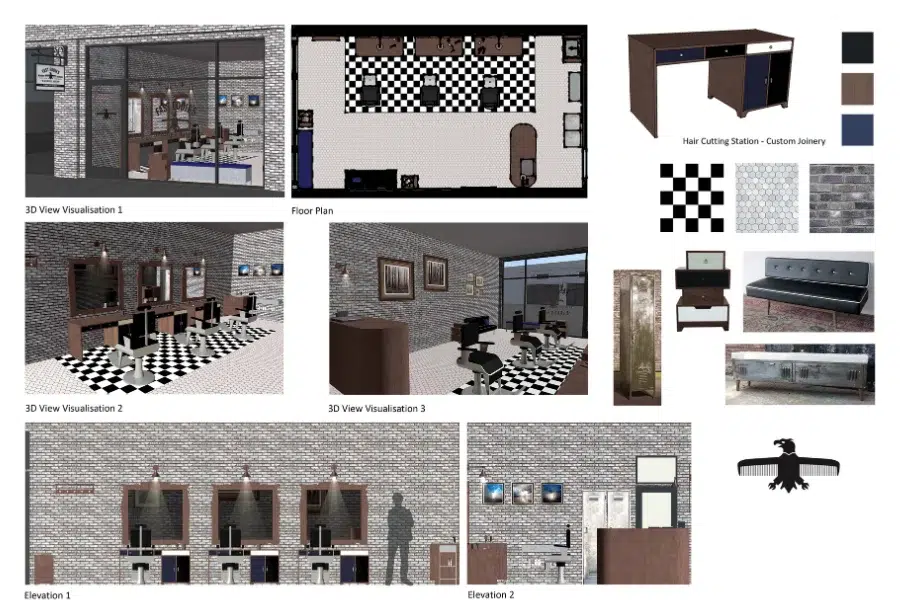
Each chair should allow approximately 1.5 to 2 meters of clear movement space. Mirrors must avoid backlighting. Tools should be reachable without repeated twisting or bending.
Wash and Treatment Area
When space permits, separation improves comfort and perceived service quality. Acoustic control and stable water temperature matter more here than visual design.
Storage and Back-of-House Areas
Storage should be designed, not improvised. Wall-mounted systems and mobile carts reduce clutter and shorten service time.
If only one layout rule is followed, make sure workstations allow full movement without interruption. Everything else is secondary.
How to Design Barber Shop Lighting That Supports Precision Work
Lighting errors are among the most expensive to correct after opening.
Use a three-layer system. Ambient lighting ensures even base illumination. Task lighting focuses on cutting zones. Accent lighting supports branding and spatial depth.
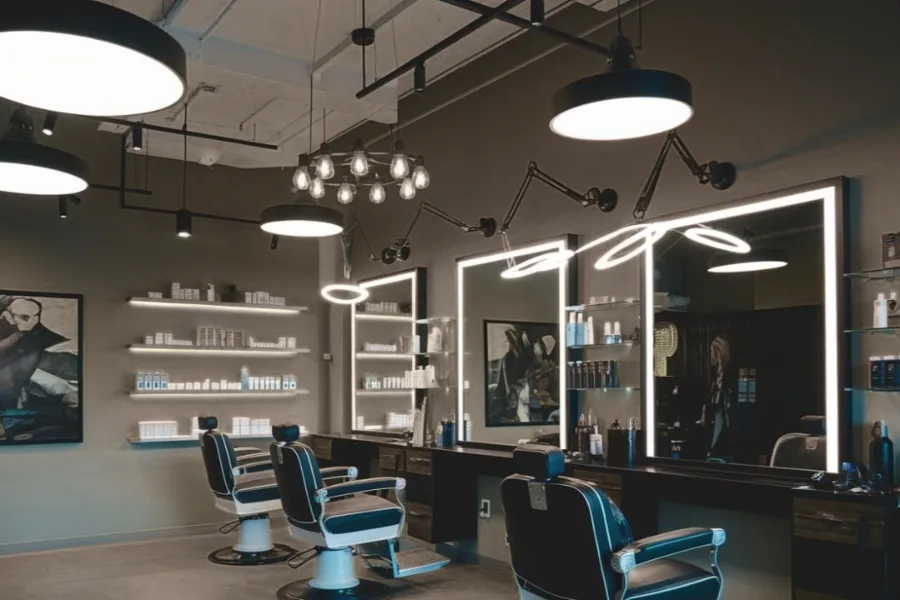
Workstations require cooler light between 4000K and 6000K for accuracy. Waiting and wash areas benefit from warmer tones.
A CRI of 90 or higher is non-negotiable. Lower CRI distorts hair color and skin tone.
Position lights from the front and sides, not directly overhead. Anti-glare fixtures and dimming controls protect both clients and staff.
If forced to choose, invest in task lighting first. Decorative lighting can wait. Poor cutting light cannot.
Choosing Colors and Materials That Hold Up Over Time
Color influences perception, but material choice affects cost.
Black and white convey precision. Neutral tones feel stable and inclusive. Dark palettes create weight but demand stronger lighting control. Bright accents should remain limited.
Materials must tolerate daily cleaning, moisture, and impact. Non-slip flooring, sealed surfaces, synthetic leather, glass, and stainless steel outperform porous alternatives.
When budget is tight, prioritize material durability over color preference. Replacing worn finishes costs more than repainting walls.
Using Décor to Reinforce Your Brand Without Overcrowding the Space
Décor should clarify identity, not compete with operations.
Wall art, signage, and typography work best when grouped rather than scattered. Plants add balance but should remain low maintenance.
Small details, such as tool displays or subtle scent systems, reinforce experience when used sparingly.
Décor is a flexible layer. Treat it as adjustable, not foundational.
Design Strategies for Small Barber Shops With Limited Space
Small spaces demand restraint.
Use light color palettes, large mirrors, and open layouts to increase perceived space. Wall-mounted workstations and multifunctional furniture free floor area.
Vertical storage and suspended elements reduce clutter. Layered lighting prevents compression.
In compact shops, removing one unnecessary object often improves function more than adding a new one.
Designing for Hygiene, Safety, and Long-Term Comfort
Ventilation protects air quality and reduces chemical buildup. Acoustic control limits fatigue. Accessibility supports broader clientele.
Clear hygiene zoning, organized disinfection storage, and disposable supply management simplify daily routines.
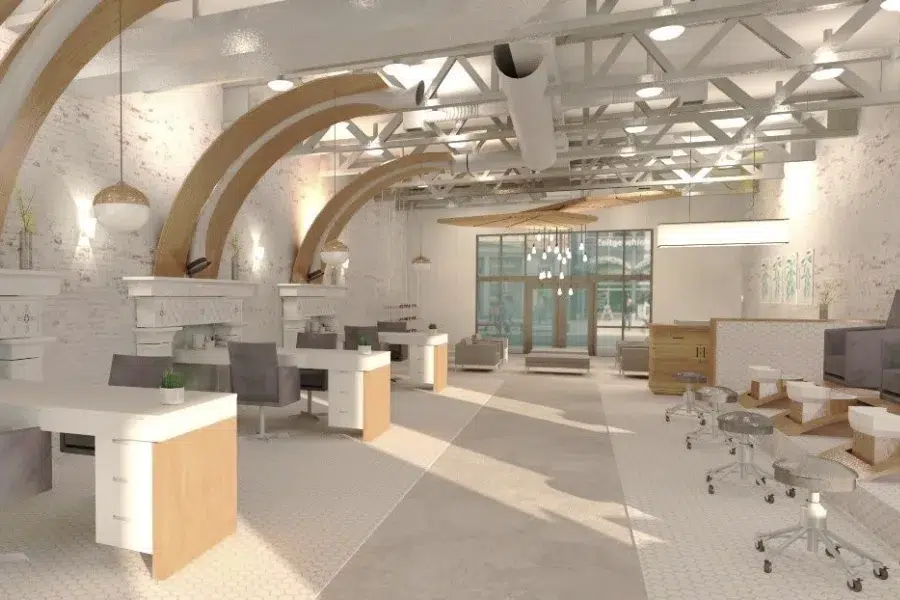
Health and safety features should feel invisible when done correctly.
How to Budget and Schedule a Barber Shop Design Project
A common allocation places 40 percent on construction, 30 percent on furniture, 15 percent on lighting, 10 percent on décor, and 5 percent contingency.
Sequence matters. Infrastructure comes first, then lighting and furniture, then styling.
Phased work or off-hour construction minimizes downtime.
Spend first on elements that affect daily operation. Visual upgrades can follow.
What to Review and Improve After Your Shop Is Open
Observe real usage. Note congestion, reach issues, or underused zones.
Minor updates every two to three years maintain relevance without disruption.
Manufacturers that work closely with operating shops, such as Nova, often see that small adjustments in lighting angles or storage access deliver disproportionate gains over time.
Barber Shop Design FAQ
How do I choose a design style that fits my brand?
Start with your target clientele, service mix, and location context. The right design style should support how clients perceive your professionalism, pricing, and service pace. Test ideas through mood boards or small design elements first, and prioritize styles that align with daily operations rather than short-term visual trends.
What matters most in lighting design?
Accuracy and visibility matter more than mood. Prioritize lighting with a CRI above 90 so hair color and skin tone appear correct. Use cooler lighting at cutting stations for precision, and reserve warmer lighting for waiting or wash areas to balance clarity with client comfort.
How can a small shop avoid feeling crowded?
Use light color palettes, large mirrors, and concealed storage to increase visual openness. Keep walkways clear and limit unnecessary furniture. Wall-mounted stations and vertical storage free floor space, while layered lighting helps the shop feel organized and comfortable during peak hours.
How can renovation costs be controlled?
Control costs by investing first in durable, high-impact elements such as barber chairs, lighting, and flooring. These affect daily operations and are expensive to replace later. Decorative finishes and accessories can be added gradually once the shop is running and revenue patterns are clear.
What are the most common design mistakes?
The most frequent mistakes include poor lighting, insufficient storage, and unclear circulation paths. These issues increase staff fatigue and slow service over time. Many shops also overinvest in décor while underinvesting in layout and lighting, which are far harder to correct later.
Related Products for Your Salon Business
Browse our professional-grade salon equipment and furniture at factory-direct wholesale prices: