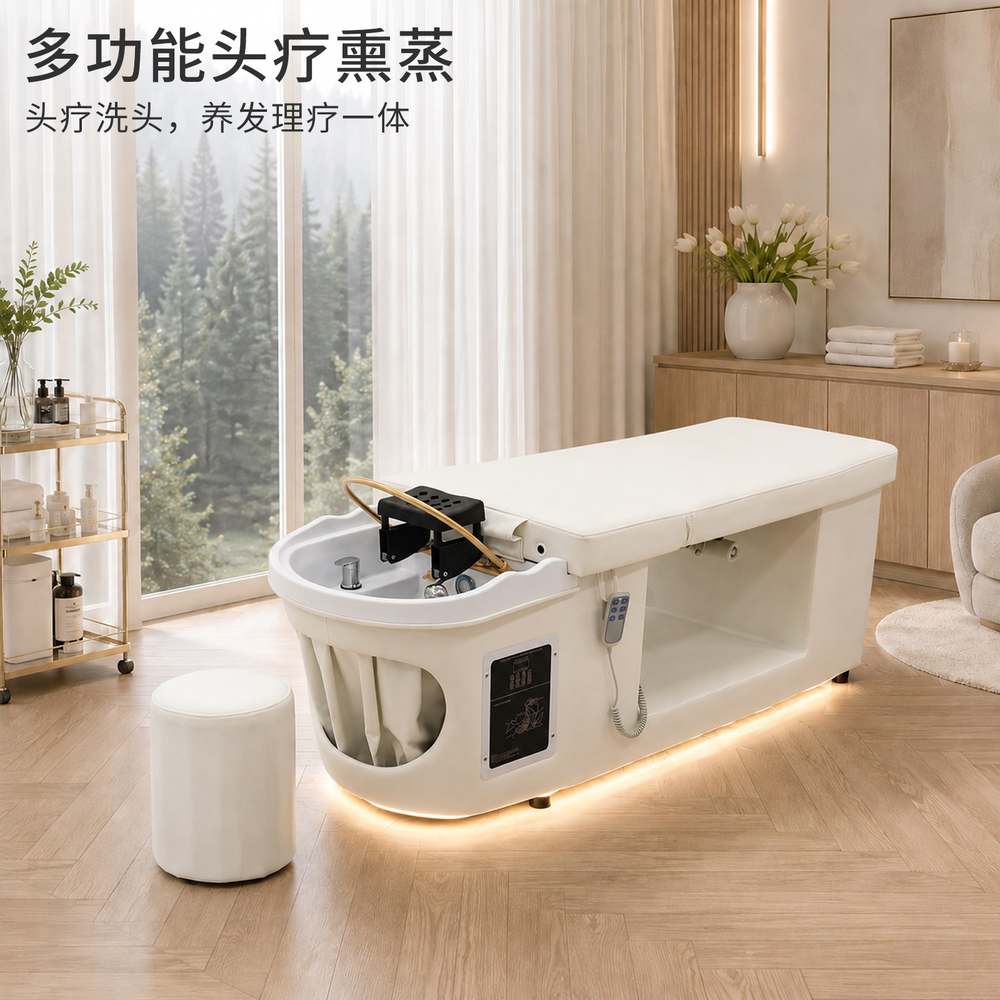
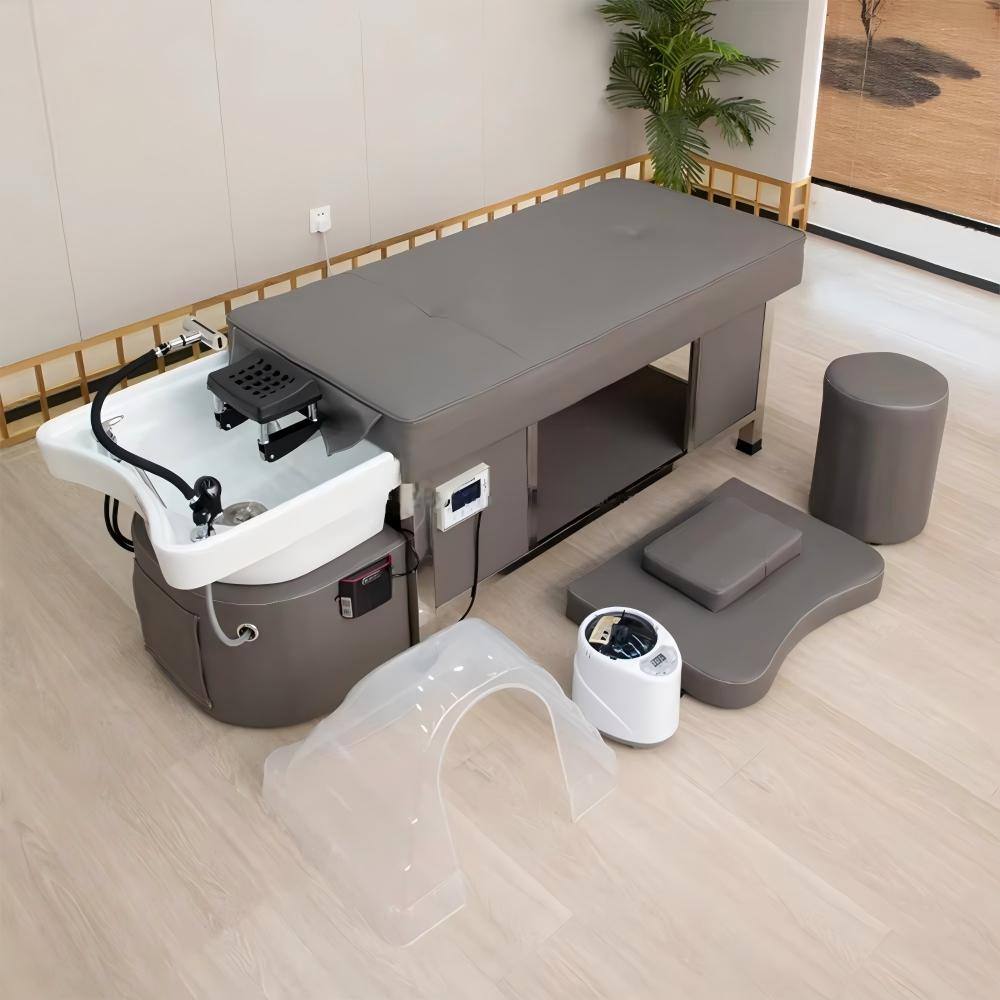
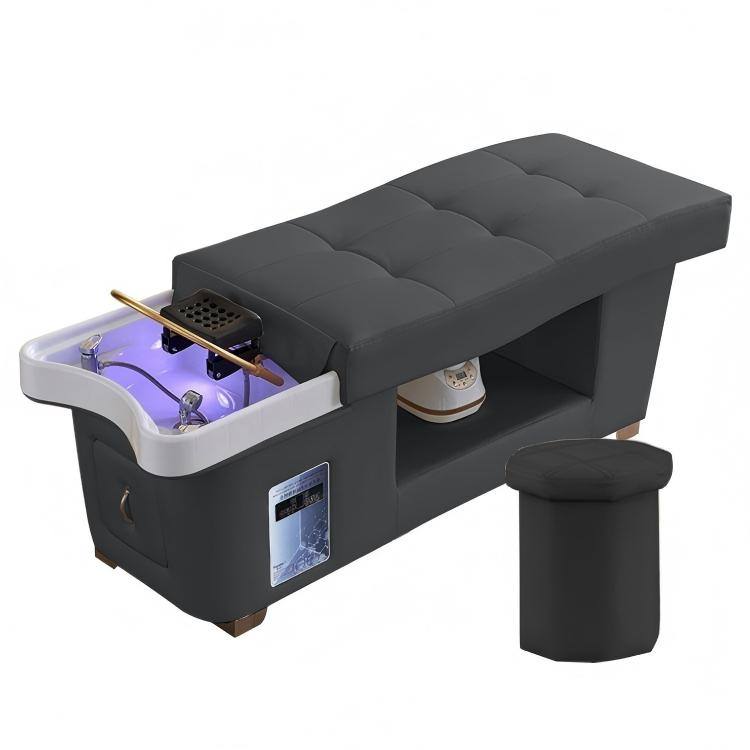
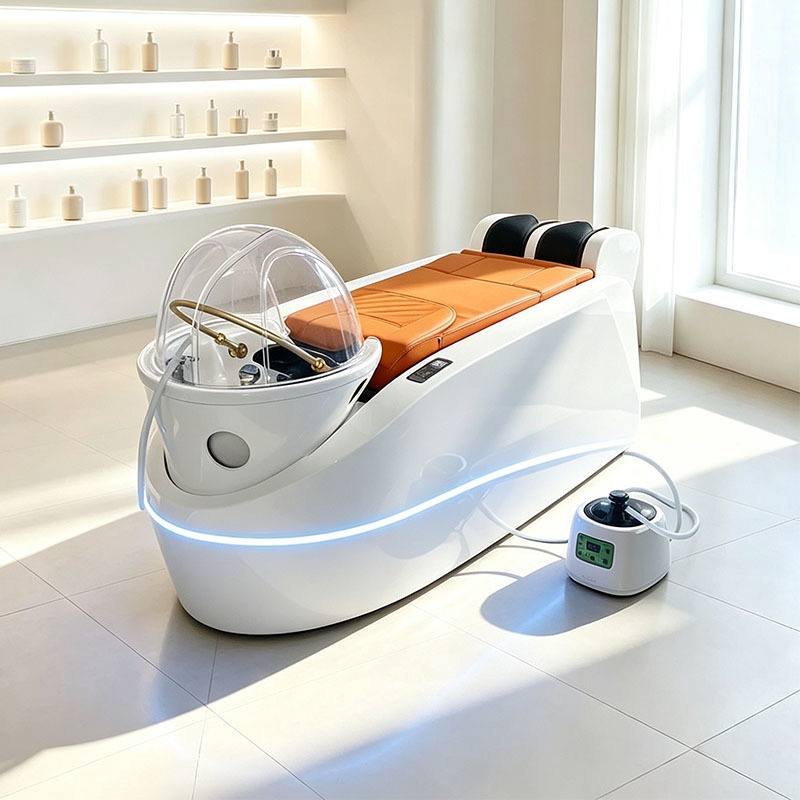
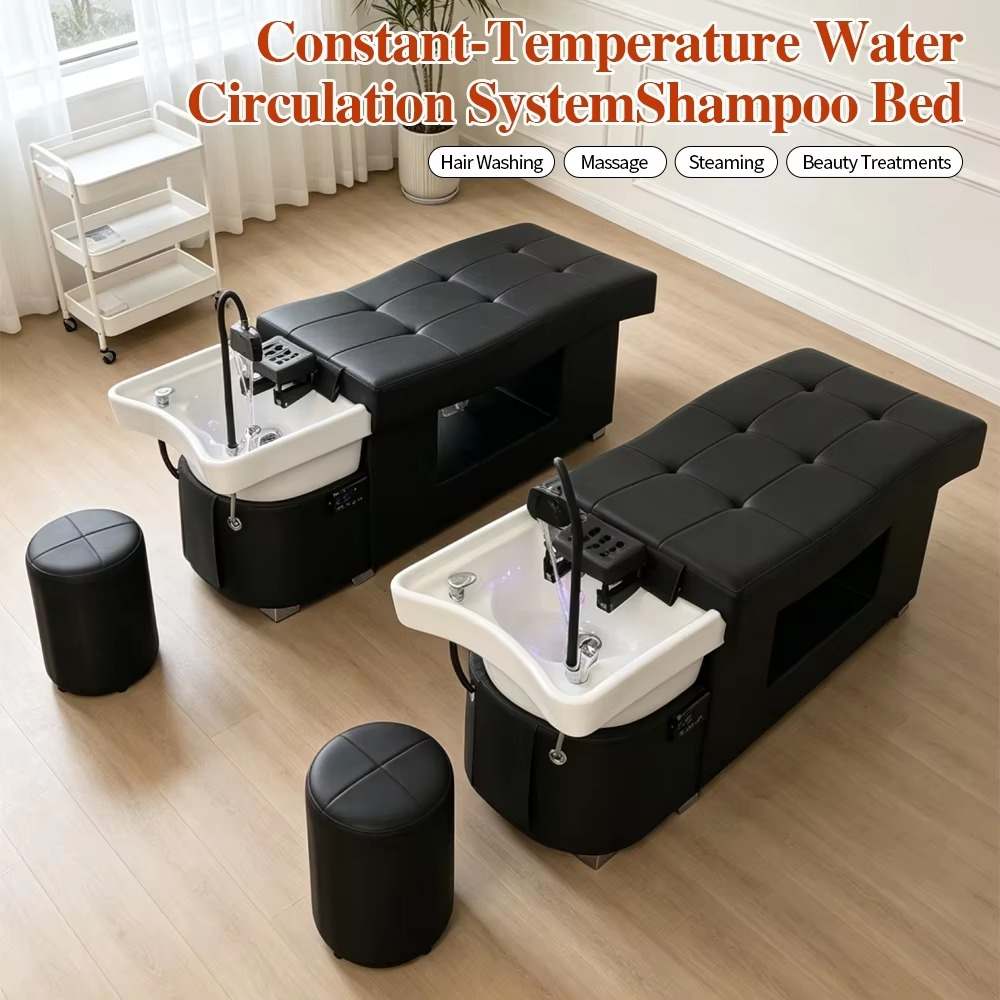
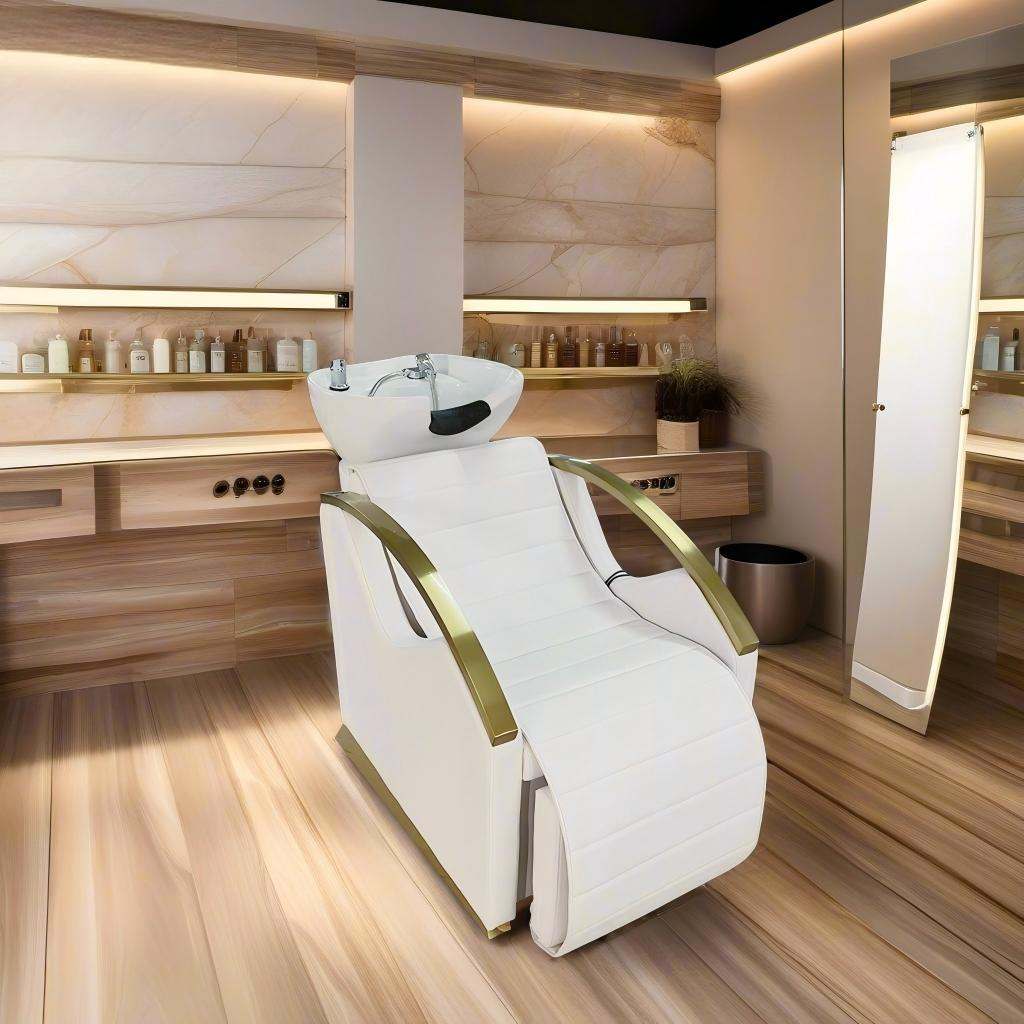
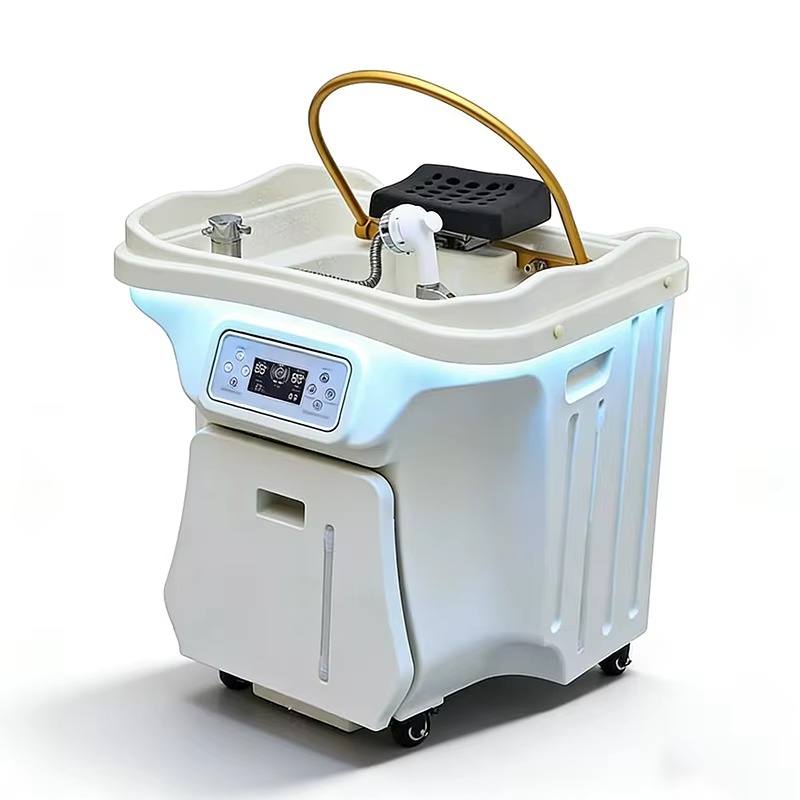
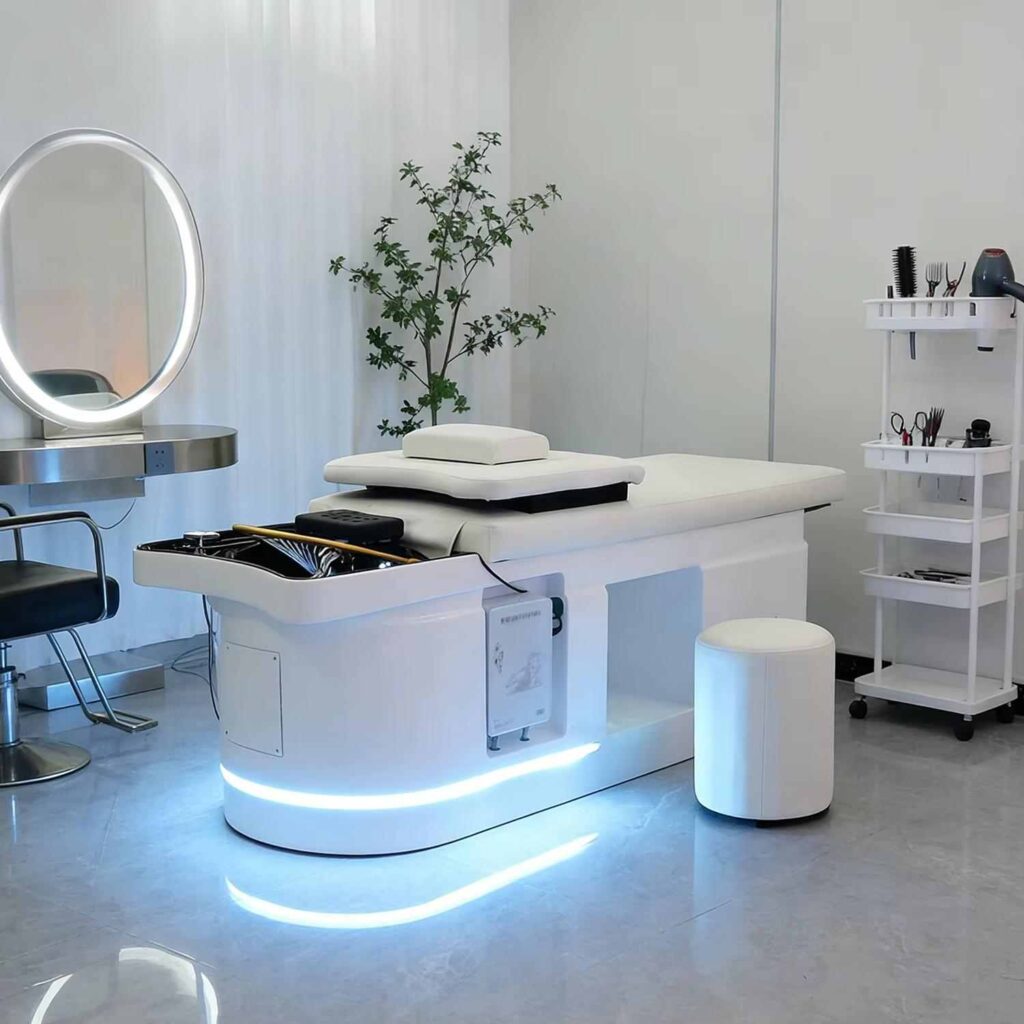
Shampoo Beds with Water Tank: No Plumbing, No Installation
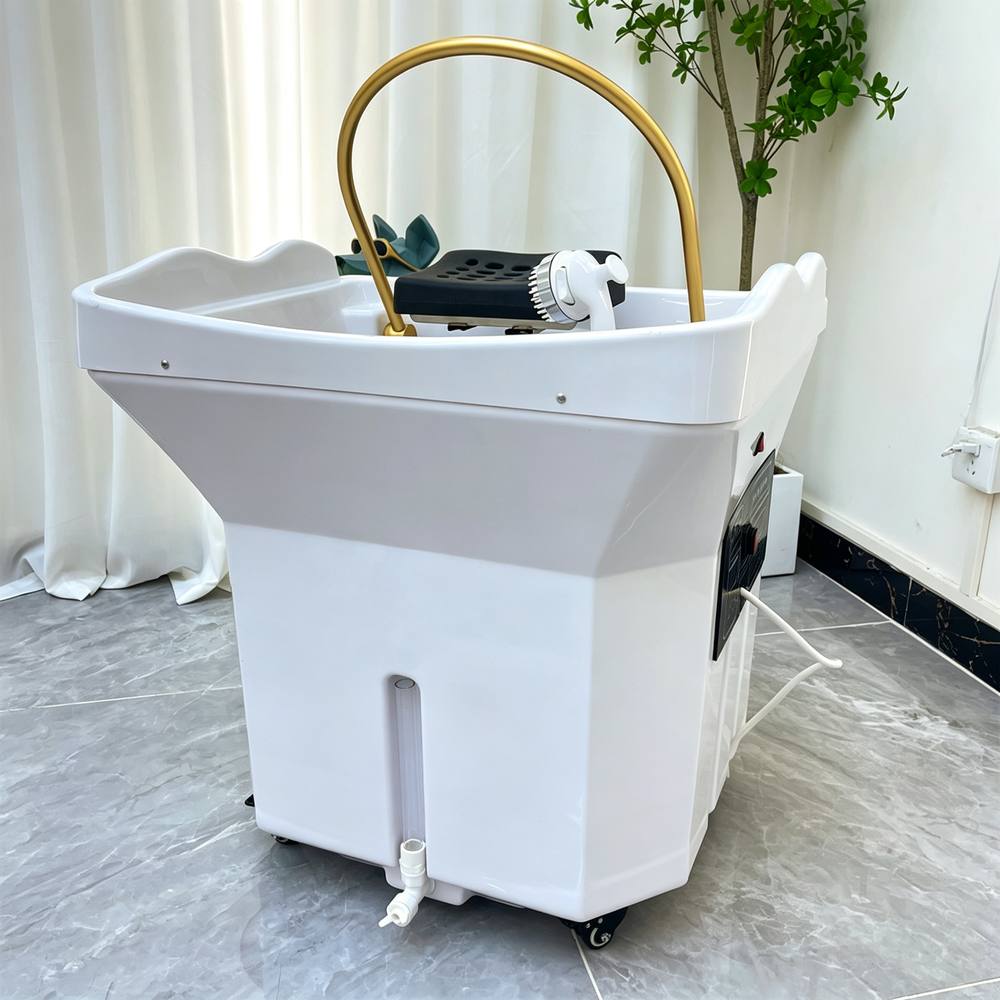
A shampoo bed with water tank is a self-contained hair washing station: the water supply, heating and drainage all live inside the unit, so the bed can go anywhere in the salon without a plumber, floor drain or dedicated water line. For salons renting a space, mobile beauty businesses and head spa studios opening a second treatment room, that single design choice removes the biggest cost and delay in adding a wash station.
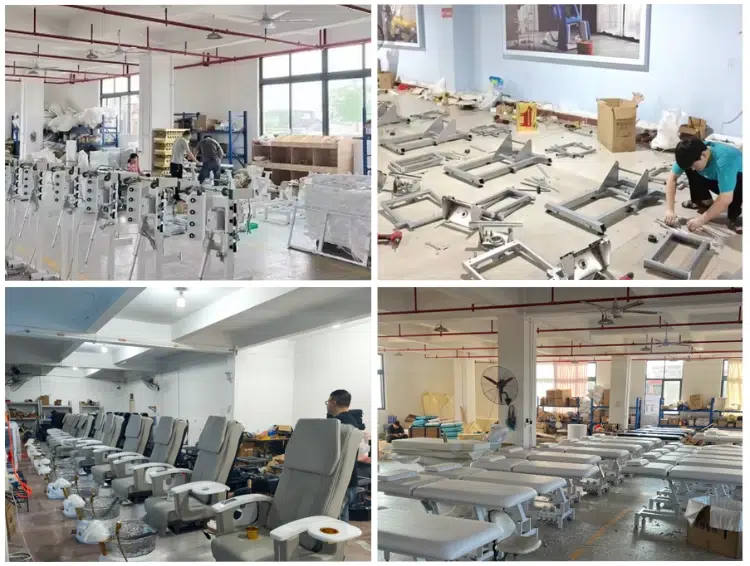
Nova builds these units for wholesale buyers in the US, with 60L and 90L tanks, 110V-240V dual voltage and one-year warranty. Every model ships as a complete unit — pump, heater, basin, neck rest and drain hose included.
How a Water Tank Shampoo Bed Works
Water is stored in a tank under or behind the basin, heated to the set temperature, then circulated through the spray head. Used water drains into a second tank or a removable bucket, so nothing connects to the building’s plumbing. Refilling is a manual or pump-assisted step, usually once every 6-10 shampoos depending on tank size and spray time.
Fresh water tank vs. circulation system
A fresh water tank holds clean water and sends waste to a separate container — the right choice for colour services and anyone who needs guaranteed clean water per client. A circulation system filters and reuses water through the basin, which suits high-volume head spa treatments where water is used for massage and rinsing rather than chemical services.
60L vs. 90L capacity
60L covers a small studio or a mobile setup doing 4-6 washes between refills. 90L is the practical choice for a salon with two or more wash stations running all day, and for Thai or Japanese head spa routines that use continuous water for 30-60 minutes per client.
No-Plumbing Installation: What You Actually Need
No plumbing means no water line, no floor drain and no wall-mounted heater. You need a level floor, a standard 110V outlet (or 220-240V outside the US) and about one square metre of space. Most units ship with casters, so the bed can be moved between rooms or stored at close.
Electrical requirements
Heating elements draw the most power. A 110V model typically needs a dedicated 15A circuit; dual-voltage units are wired for 110V-240V and configured at the factory for the destination market. Confirm the outlet before delivery — this is the only installation step that cannot be solved afterwards.
Drainage and daily cleaning
Waste water goes to the internal waste tank or a removable bucket. Empty it after the last client, rinse the basin and run clean water through the spray head for 30 seconds. A monthly descale with a mild citric solution keeps the heater and pump at full flow.
Portable and Mobile Shampoo Stations
Portable shampoo beds with a water tank are built for businesses that move: home visit hairdressers, event and wedding styling, pop-up head spa rooms and clinics adding a temporary treatment space. Look for locking casters, a basin that does not slosh when tilted, and a total weight the floor and doorways can take.
Weight, casters and doorways
A filled 60L unit is roughly 60kg heavier than the dry weight, so check the floor loading and the width of the narrowest doorway before ordering. Locking casters keep the bed stable during treatment and release with a foot pedal on most models.
Head Spa Beds with Water Tank
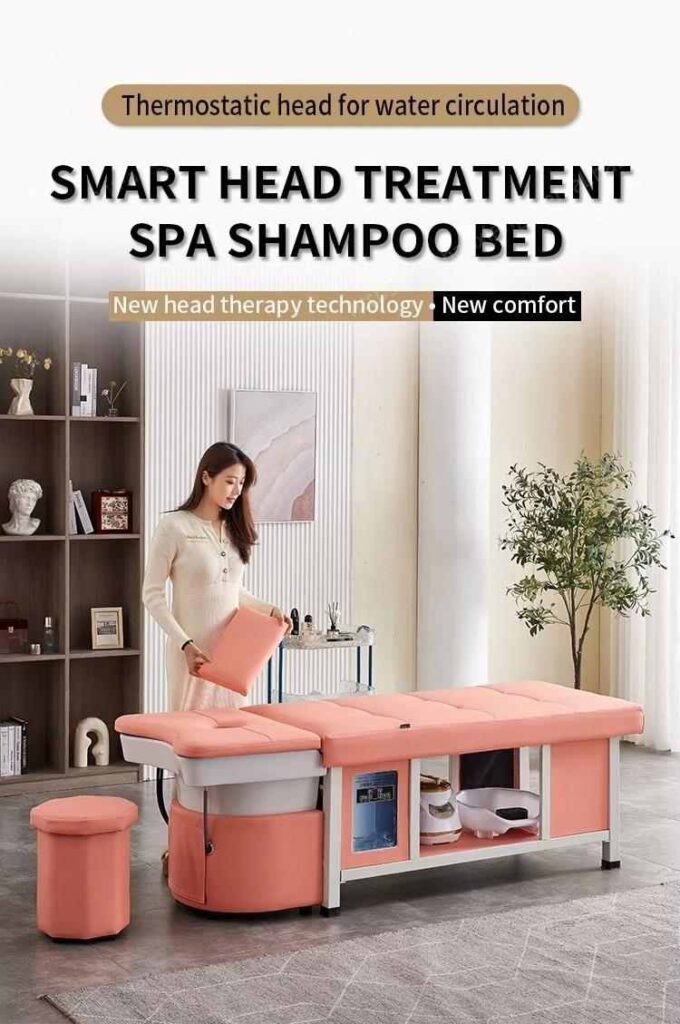
Japanese and Thai head spa treatments need continuous warm water, a deep basin that supports the neck, and a surface long enough for a 45-60 minute session. Water tank head spa beds combine that basin geometry with a self-contained supply, so a studio can open a treatment room without construction work.
Basin depth and neck support
A deeper basin keeps water off the client’s face during scalp massage; an adjustable neck rest takes pressure off the cervical spine. Both matter more in head spa work than in a standard backwash, where the client sits upright for a few minutes.
Steam, ozone and light therapy
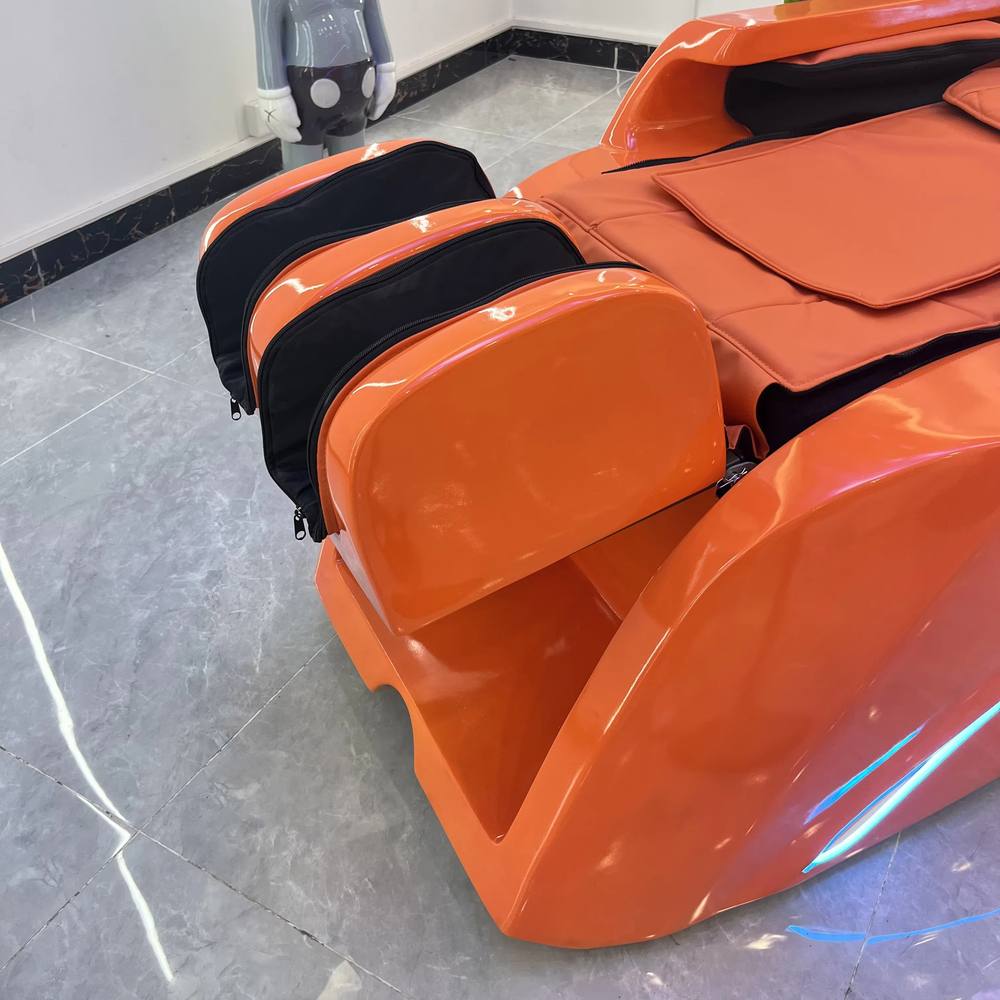
Many head spa models add steam, ozone sterilisation or LED light therapy. These are optional modules — decide before ordering, because they change the internal layout and cannot be retrofitted on every frame.
How to Choose the Right Model
Start with the service mix, not the price. Colour and chemical services need fresh water per client; head spa and massage need continuous flow and a comfortable basin. Then match tank size to daily volume, confirm voltage, and check that the frame rating covers the heaviest client you expect.
Weight capacity and frame
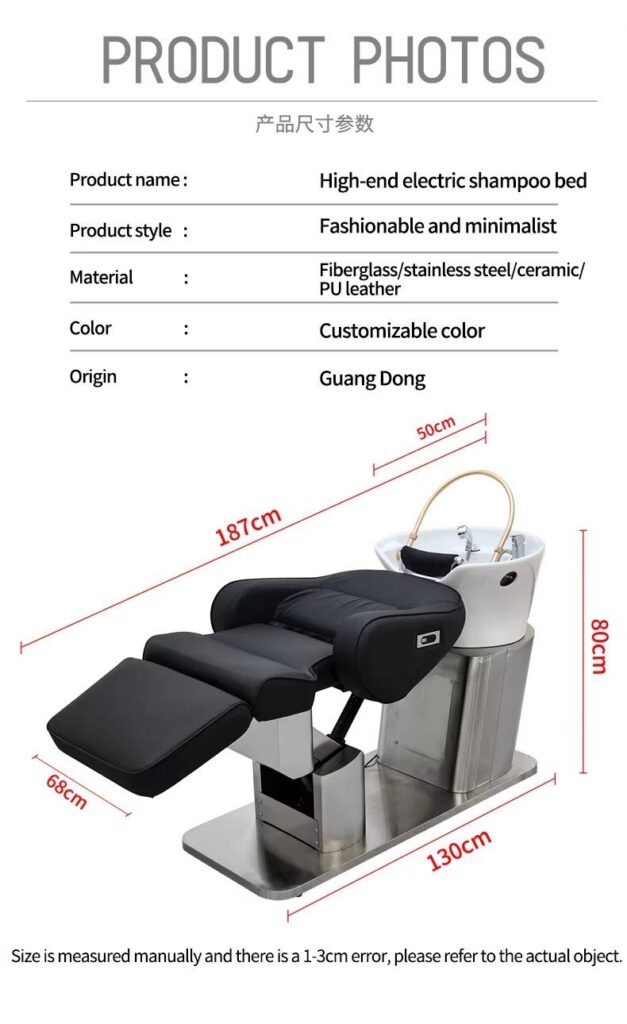
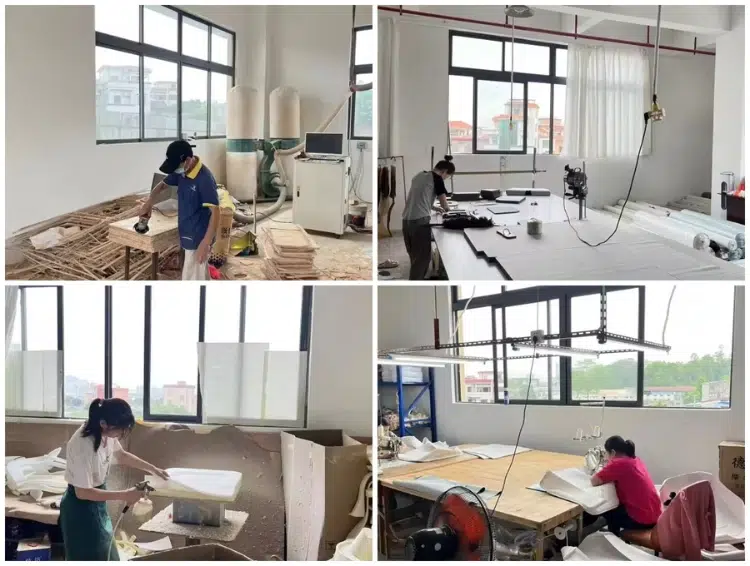
Nova units are rated to 300kg. Steel frames with a powder-coated finish hold up better in wet rooms than painted tube frames, and upholstery should be PU leather rather than fabric for daily water exposure.
Wholesale, MOQ and lead time
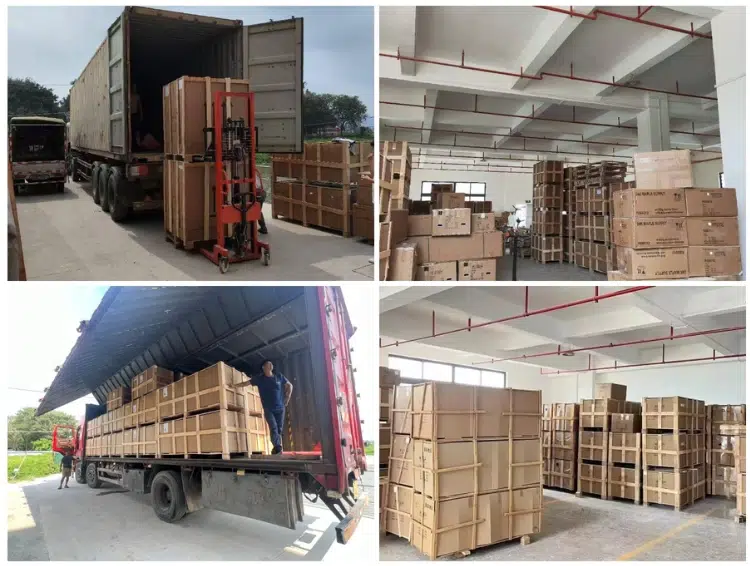
MOQ is one unit, lead time is 10-15 days, and mixed containers are available. Custom upholstery colours and logo plates can be added on volume orders. Every unit is CE certified; UL motors are available on request for the US market.
Frequently Asked Questions
Q: Do I need a plumber to install a shampoo bed with a water tank? No. The tank, heater, pump and drain are inside the unit. You need a level floor and a standard outlet.
Q: How many shampoos before I refill the tank? Roughly 4-6 with a 60L tank and 8-10 with 90L, depending on spray time and hair length.
Q: Can the water be heated? Yes. All models include an electric heater with adjustable temperature; dual voltage 110V-240V is standard.
Q: What is the MOQ and lead time? MOQ 1 unit, 10-15 days production, with mixed-container options.