
Why Salon Interior Design Matters in 2026
Many salons renovated between 2021 and 2023 already feel dated. Materials aged faster than expected, layouts no longer support current workflows, and once-trendy features now feel disconnected from daily operations.
This is why salon interior design matters more in 2026 than in previous years. Design is no longer about reacting to trends. It has become a strategic tool that directly affects brand perception, client retention, staff efficiency, and long-term operating costs.
What makes 2026 different is not the appearance of entirely new trends. It is the shift from experimentation to execution. Sustainability, personalization, modular layouts, and integrated technology are no longer optional ideas. In 2026, they become operational standards that must work reliably, consistently, and at scale.
Salons that treat design as a business decision rather than a visual refresh are better positioned to stay relevant and adaptable.
Salon Interior Design Trends Shaping 2026
In 2026, the focus moves away from chasing novelty and toward refining what has proven effective. Trends that once felt aspirational are now expected to perform under real-world conditions.
Color Trends Defining Salon Interiors in 2026
Color palettes in 2026 continue to draw from nature, but with a more disciplined application.
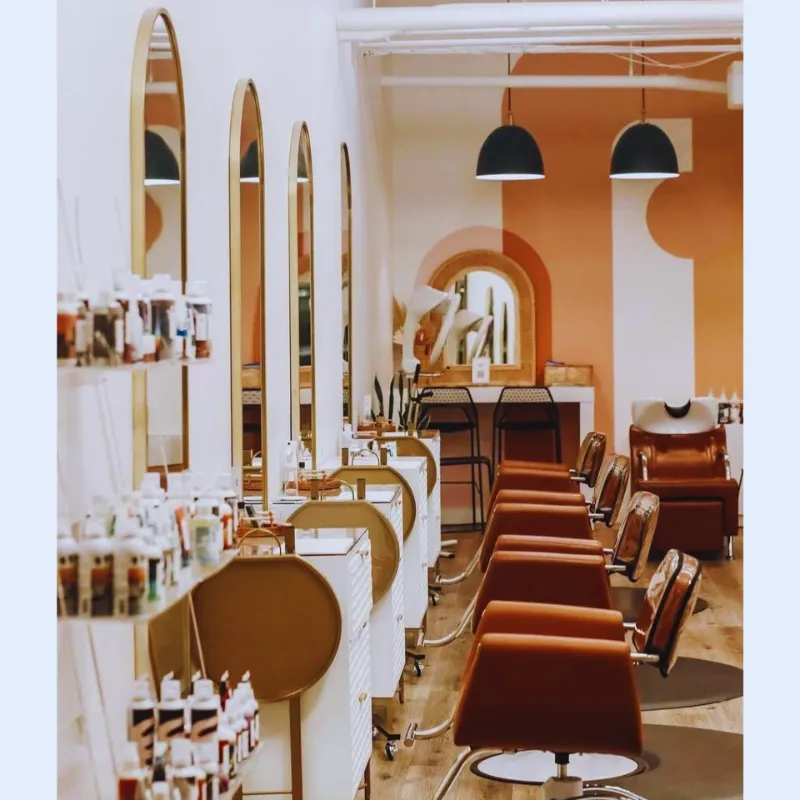
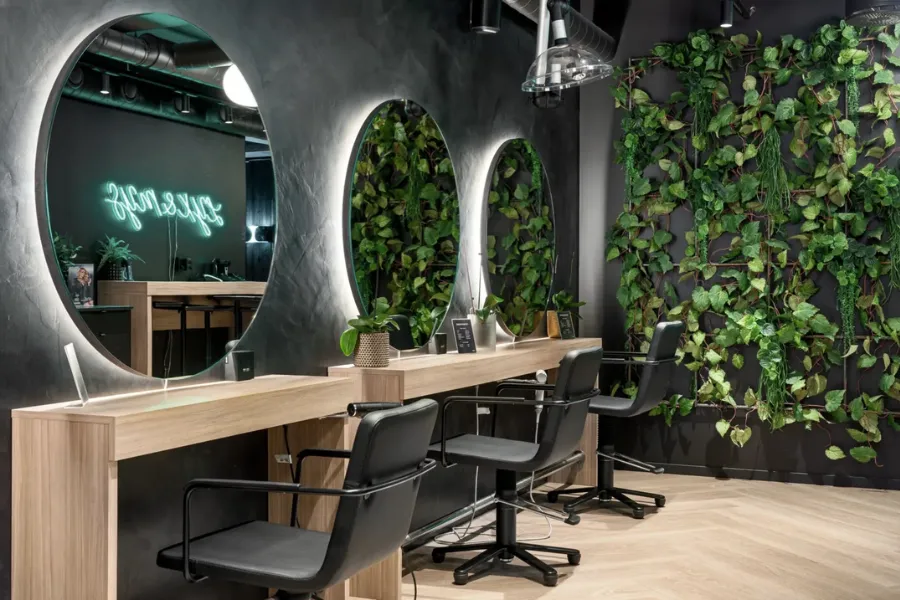
Primary color families include earthy browns, warm taupes, deep greens, muted olive tones, and soft blues paired with warm neutrals. Accent colors such as metallic finishes in gold or copper and jewel tones like emerald green or deep burgundy are used selectively to add depth without overwhelming the space.
Rather than covering entire rooms, saturated or dark colors are applied as focal points. Feature walls, reception backdrops, or niche zones allow visual impact while maintaining flexibility.
Color drenching creates cohesion by repeating the same color across finishes and materials. Color zoning uses contrast to define functional areas. Deliberate maximalism layers texture and color in controlled, intentional focal points. In 2026, color choices are judged by longevity and adaptability, not visual shock value.
Materials and Furniture Choices That Matter in 2026
Material and furniture decisions now prioritize performance over novelty.
Preferred materials include solid wood, reclaimed timber, bamboo, linen, recycled plastics, and handcrafted ceramic accents. Furniture design continues to draw from midcentury modern influences, favoring curves, arches, organic forms, including our professional beauty beds, and clean geometric structures balanced by softer outlines.
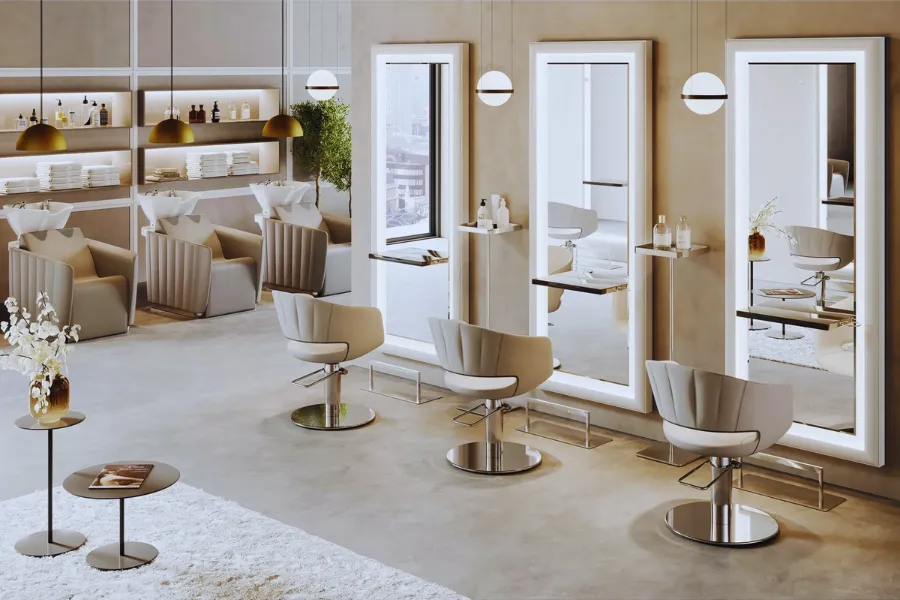
Key furniture categories include styling chairs that emphasize comfort, durability, and brand-aligned finishes, workstations with integrated storage and customizable panels, large mirrors often arched or LED-integrated to improve lighting accuracy, and reception desks designed to support both workflow and visual clarity.
In 2026, furniture is expected to adapt as services evolve. Manufacturers such as Nova emphasize modular systems and customization that allow salons to adjust layouts over time rather than commit to one fixed configuration.
Sustainable Salon Design Without Sacrificing Function
Sustainability in 2026 is no longer positioned as a design feature. It is an operational baseline.
Material and system choices increasingly include reclaimed wood, low-VOC finishes, energy-efficient LED lighting, and durable surfaces that reduce replacement frequency. Water and energy efficiency are addressed through low-flow faucets, efficient shampoo systems, and smart climate control that minimizes energy waste.
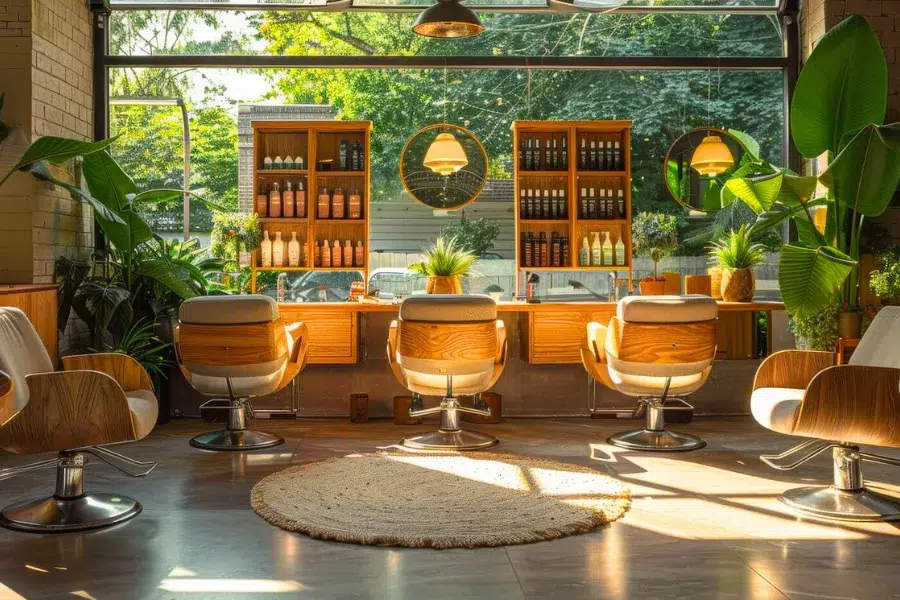
Flexible space planning plays a key role, with mobile partitions and modular furniture supporting multiple service types. Green integration through living plant walls, potted greenery, and moss installations improves both visual comfort and perceived wellness while reinforcing an eco-conscious brand image.
Planning Salon Layouts and Functional Zones
If only one area deserves priority in 2026, it is layout planning. A well-designed layout affects every service, every shift, and every client interaction.
Essential zones include a reception and retail area, styling stations with adequate lighting and storage, shampoo areas designed for comfort and privacy, color or processing zones with proper ventilation, and staff areas or storage kept visually discreet.
Effective layouts rely on clear circulation paths to prevent congestion, strategic use of natural light, and visual openness to avoid cramped or fragmented spaces. Unlike decorative upgrades, layout improvements deliver structural benefits that compound over time.
Lighting Design for Comfort, Accuracy, and Atmosphere
Lighting choices influence both technical results and client perception.
A layered lighting strategy combines ambient lighting for overall illumination, task lighting at styling and treatment stations, and accent lighting to add depth and visual structure. Natural light from large windows or translucent partitions reduces reliance on artificial lighting while improving spatial comfort.
Warm lighting complements natural materials and wabi-sabi aesthetics, while cooler white lighting suits modern and minimal interiors. Dimmable LED systems allow lighting to adapt to different services, making accuracy and atmosphere equally achievable.
Popular Salon Interior Styles to Watch in 2026
Interior styles work best as flexible frameworks rather than strict rules.
Wabi-sabi interiors emphasize natural materials, handcrafted textures, restrained palettes, and imperfections that age gracefully. Bohemian styles focus on layered textures, organic patterns, and strong connections to plants and tactile materials. Minimal modern spaces rely on clean lines, neutral tones, concealed storage, and discreet technology integration. Maximalist interiors use rich colors and strong focal points but work best when applied selectively to avoid visual fatigue.
In 2026, successful salons blend styles based on function, brand identity, and long-term usability rather than trend loyalty.
Integrating Technology Into Modern Salon Spaces
Technology in 2026 supports efficiency, comfort, and personalization rather than visual novelty.
Smart furniture such as adjustable styling chairs and electric shampoo systems improves ergonomics and service consistency. Digital tools include LED mirrors with adjustable lighting, tablet-based booking or consultation systems, and virtual hair or color previews.
Environmental controls such as smart temperature systems and centralized music or scent management simplify daily operations while enhancing client comfort. Technology is most effective when it works quietly in the background rather than dominating the visual environment.
How to Apply Salon Design Trends in Real Spaces
Not every trend deserves equal attention. In 2026, prioritization matters.
Structural priorities include layout and zoning, core furniture and ergonomics, and lighting accuracy. Decorative priorities such as color accents, wall finishes, and styling details should follow once the structural foundation is in place. When budgets are limited, investing in decisions that are difficult or expensive to change later reduces long-term risk.
Budget Planning for Salon Interior Projects
A clear budget structure helps prevent costly revisions.
A balanced allocation typically assigns forty percent to furniture and equipment, thirty percent to construction and structural work, twenty percent to lighting and decorative elements, and ten percent to contingency. Cost control strategies include modular furniture systems, reclaimed or recycled materials, and phased updates that focus first on high-impact zones.
How to Optimize Small Salon Spaces
Small salons benefit most from clarity and flexibility.
Large mirrors help increase perceived space, while mobile and multifunctional furniture supports adaptable layouts. Vertical storage frees floor area, and unified color palettes reduce visual clutter, making compact spaces feel more open and intentional.
Keeping Your Salon Interior Consistent With Your Brand
Interior design should reinforce brand identity at every touchpoint.
Extending logo colors and materials into the space, aligning design choices with target clientele expectations, and using subtle brand elements such as custom lighting or artwork help create a cohesive environment. Consistency reduces cognitive load for clients and strengthens brand recognition over time.
Designing Salon Interiors Around the Client Experience
Client experience is shaped by both sensory input and spatial flow.
Visually clean, photo-friendly environments, background music matched to service type, subtle scent profiles, and comfortable seating all contribute to a calm atmosphere. Clear service flow from reception to waiting, service, and checkout areas reduces uncertainty and improves overall efficiency.
Frequently Asked Questions
How can a salon refresh its look without a full renovation
A salon can refresh its appearance by upgrading lighting, adding plants, repainting key walls, adjusting furniture layouts, and introducing statement mirrors. These changes improve atmosphere and perception without structural work, allowing owners to modernize the space while keeping costs and downtime under control.
Does sustainable design always increase costs
No. While some sustainable materials have higher upfront costs, energy-efficient lighting, durable finishes, and modular furniture often reduce long-term maintenance, replacement, and utility expenses. Over time, sustainable design choices can lower operating costs while supporting a more resilient and future-ready salon environment.
Can small salons use maximalist design
Yes, when applied with restraint. Small salons can use maximalist design by concentrating bold colors, textures, or patterns in a single focal area, such as a feature wall or mirror zone. This creates visual impact without overwhelming the space or disrupting movement flow.
How should salons choose styling chairs or beauty beds
Salons should select chairs and beds based on service needs, space proportions, and overall color harmony. Comfort, durability, ease of cleaning, and ergonomic support are more important than visual novelty. Well-chosen equipment should integrate seamlessly into the layout and withstand daily, long-term use.
What are entry-level technology upgrades
Entry-level upgrades include smart or dimmable lighting, wireless charging stations, tablet-based booking or consultation tools, and centralized music control. These technologies enhance convenience and efficiency without requiring major infrastructure changes, making them practical first steps toward a more modern salon experience.
How can a salon become more social-media friendly
Creating a social-media-friendly salon starts with one well-lit, photo-ready area. Using distinctive mirrors, greenery, or lighting while keeping backgrounds clean and uncluttered helps clients capture shareable images without disrupting everyday operations.
Final Decision Takeaways for 2026
If nothing else is remembered, three principles define effective salon design in 2026. Treat layout and ergonomics as long-term investments rather than trends. Adopt only design ideas that can function as operational standards. Prioritize decisions that reduce future renovation and replacement costs.
Salons that approach interior design with this mindset are better prepared for stable operations, adaptable growth, and evolving client expectations.
Related Products for Your Salon
More Salon Design Resources
Explore more salon design ideas and guides:
- Salon Design Trends 2026 – Modern interior ideas for US salons
- Salon Reception Desk Design Ideas – Front desk design inspiration
- Salon Lighting Guide – How to choose the right lighting
Frequently Asked Questions About Salon Design
What are the top salon design trends for 2026?
Minimalist Scandinavian, biophilic design, smart LED lighting, sustainable materials, multi-functional spaces, and bold accent colors.
How much does it cost to design a salon interior?
Basic refresh $5K-$15K, mid-range $15K-$50K, full luxury $50K-$150K+. Equipment adds $10K-$50K.
What colors are trending for salon interiors in 2026?
Warm neutrals, sage green, dusty rose, navy, charcoal. White remains dominant. Gold and brass accents add luxury.
How do I design a small salon layout?
L-shaped stations, wall-mounted mirrors, multi-functional furniture, bright lighting. Keep reception near entrance for clear traffic flow.
Browse our selection of professional salon equipment and furniture designed for your business:
Shop All Salon Equipment | Request Wholesale Quote
Salon Design & Equipment Buying Guides 2026
Looking for detailed equipment guides? Check out our complete buying guides:
- Pedicure Chair Buying Guide 2026 — Compare packages and pricing for your new salon
- Electric Beauty Bed Buying Guide — 3-motor vs 4-motor electric beds explained
- 4 Motor Beauty Bed Complete Guide — Find the perfect motor configuration
- Japanese Head Spa Bed Complete Guide — Non-plumbed options for any space
New: Salon Equipment Buying Guides
Complete guides to choosing the right equipment for your salon:
- Electric Beauty Bed Buying Guide
- Pedicure Chair Buying Guide 2026
- Beauty Salon Bed Complete Guide
- Japanese Head Spa Bed No Plumbing Guide
Salon Interior Design 2026 Price Guide (Factory-Direct)
Planning a modern salon remodel requires a clear budget. The following price ranges reflect factory-direct wholesale costs for commercial-grade equipment, assuming a 110V US plug and standard DDP shipping. These are baseline estimates for new builds and full renovations in 2026.
| Model/Type | Price Range (USD) | Best For |
|---|---|---|
| Hydraulic Barber Chair (Basic) | $450 – $700 | High-volume men’s grooming; durable vinyl, minimal upholstery. |
| Electric Reclining Shampoo Chair | $850 – $1,200 | Backwash stations in full-service salons; CE certified motors. |
| Styling Station (Mirror + Cart) | $380 – $600 | Compact spaces; laminate tops with built-in electrical. |
| Nail Table (Porcelain Top) | $320 – $550 | Manicure stations; stain-resistant, easy to sanitize. |
| Waiting Area Sofa (3-Seat) | $700 – $1,100 | Reception lounges; commercial-grade foam and fabric. |
| LED Wall Mirror (Backlit) | $250 – $400 | Modern salon decor; energy-efficient lighting for color accuracy. |
All units above are available with MOQ 1 directly from our factory. Prices exclude local electrical installation but include DDP shipping to your US business address. For a full quote on your specific salon interior design 2026 layout, contact our wholesale team.
Salon Interior Design 2026 Buying Checklist
Use this six-point checklist when evaluating vendors for your renovation. It covers the critical differences between budget and premium equipment options.
- CE Certification vs. No Listing: Always request CE certified equipment for electrical items like chairs and dryers. This ensures compliance with international safety standards. Do not accept unlisted imports; verify the certificate before ordering.
- 110V US Plug Compatibility: Confirm all units are wired for 110V/60Hz. Some overseas factories ship 220V units by default. A wrong voltage will damage motors and void warranties immediately.
- DDP Shipping Terms: Choose DDP (Delivered Duty Paid) to avoid surprise customs fees and freight broker charges. This locks your total landed cost at the time of purchase.
- MOQ Flexibility: For a single-location remodel, you need MOQ 1. Many wholesalers require bulk orders. Factory-direct suppliers offer lower per-unit costs without forcing you to buy 20 chairs.
- Upholstery Grade: For waiting areas, specify commercial-grade vinyl or Crypton fabric. Residential fabrics will show wear within six months. Check the foam density; 2.0 lb or higher is standard for daily use.
- Lighting Integration: Plan your lighting layout before buying mirrors. Backlit LED mirrors reduce shadows and improve color rendering. Ensure your salon interior design includes dimmable overhead fixtures for ambiance.
Frequently Asked Questions
What is the average cost per square foot for a modern salon build-out in 2026?
Expect $150 to $250 per square foot for full commercial construction, excluding equipment. This covers plumbing, electrical, and finishes. Equipment costs add $8,000 to $15,000 for a basic 4-station setup. Buying factory-direct wholesale on items like styling stations and chairs can reduce your total equipment budget by 30%.
Can I mix different equipment brands in my salon interior design?
Yes, mixing is common, but maintain consistent color finishes and metal trims. For example, pair a matte black hydraulic chair with black-framed mirrors. For a cohesive look, consider sourcing all your core pieces from a single manufacturer like our salon chair collection to ensure matching hydraulic bases and upholstery tones.
How do I choose the right lighting for the waiting area?
Use layered lighting: ambient overhead (3000K), task lighting near reading materials, and accent lighting on artwork. Avoid harsh fluorescents. Dimmable LED panels are ideal. Ensure all fixtures are CE-certified for commercial use and operate on standard 110V US plug circuits to simplify installation.
What is the typical lead time for factory-direct salon equipment?
Standard production takes 2-3 weeks for MOQ 1 orders. DDP shipping from our factory to a US salon typically adds 10-15 days. Plan for a 5-week total lead time. For rush projects, confirm stock availability before ordering. Always request pre-shipment photos to verify the 110V US plug configuration.