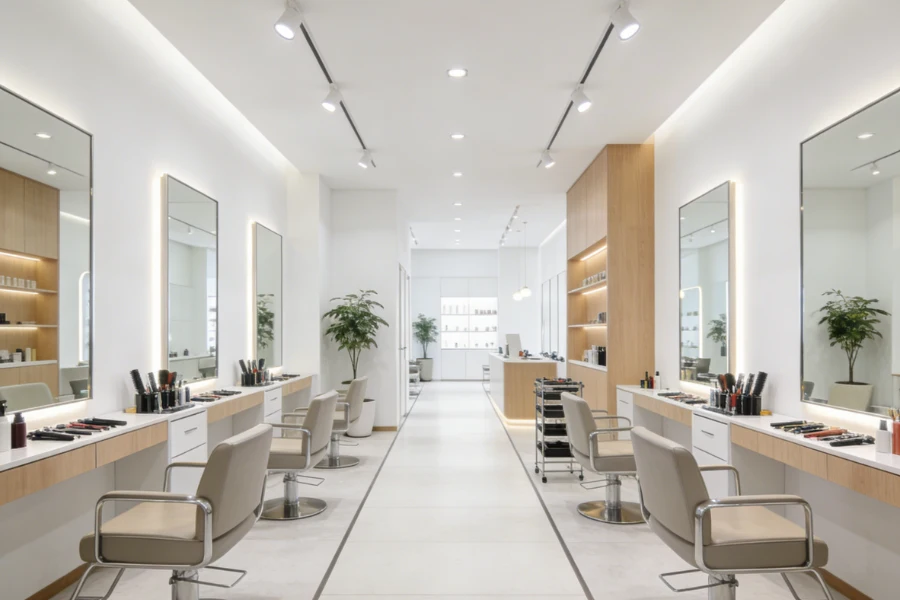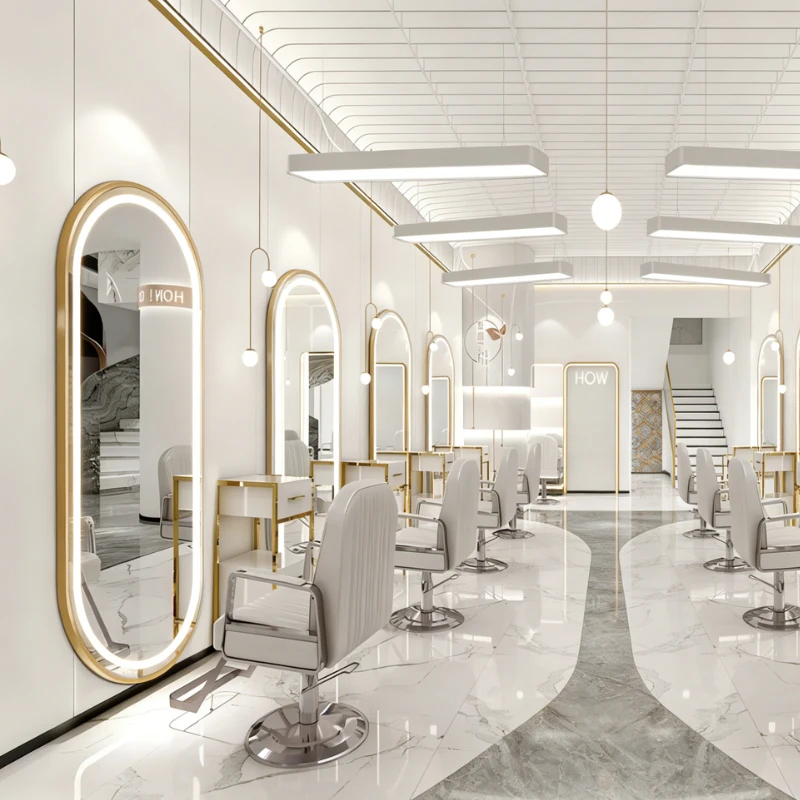
What Good Salon Lighting Should Do for Your Business
Salon lighting determines how accurately your team can work and how consistent your results appear to clients.
A well-planned system allows stylists to see true hair color, reduces shadow interference during detailed services, and maintains visual comfort during long working hours. It also ensures that what clients see in the mirror matches how their hair looks in natural light, reducing complaints and rework.
Poor lighting leads to predictable issues, including uneven cutting lines, incorrect color perception, and increased client dissatisfaction.
What to Decide Before You Choose Any Salon Lighting
Lighting decisions should follow workflow, not decoration.
Start by defining all functional areas, including styling, coloring, washing, waiting, and retail zones. Then identify where precision work is required and where comfort is the priority. Based on this, set clear lighting requirements for each area before selecting fixtures.
This sequence ensures your lighting system supports daily operations rather than creating limitations during busy periods.
The 3 Types of Salon Lighting You Need to Get Right
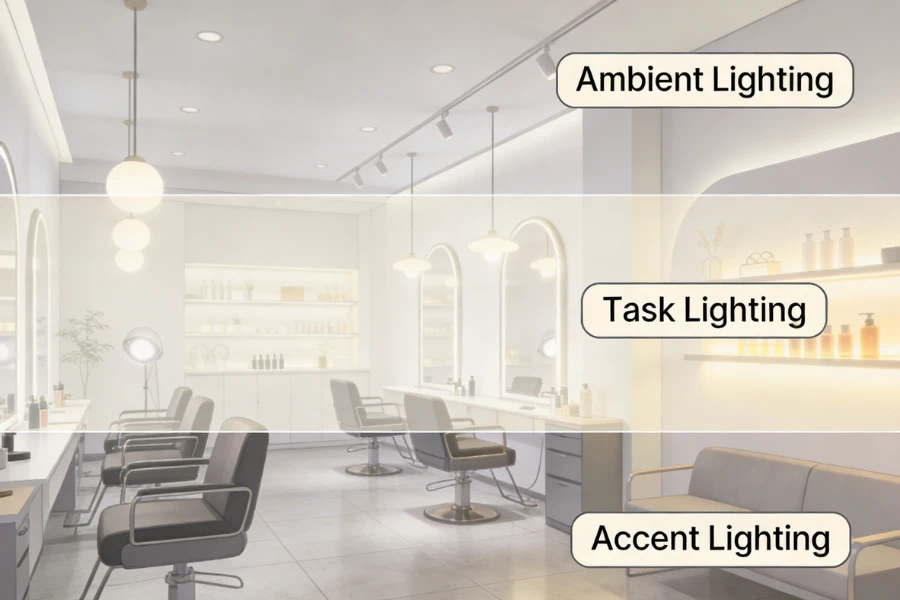
Ambient Lighting — base visibility
Ambient lighting provides overall visibility so clients and staff can move comfortably throughout the space.
Maintain a consistent brightness level of around 300 to 500 lux using evenly distributed LED panels or track systems. Avoid uneven light distribution, as it can create visual fatigue and reduce overall comfort.
Task Lighting — operational accuracy
Task lighting directly affects the quality of salon services.
Install vertical lighting on both sides of the mirror and combine it with a soft overhead fill to reduce contrast. Use neutral light between 3500K and 4000K with a CRI of at least 90 to ensure accurate color evaluation and clear visibility during detailed work.
Accent Lighting — visual guidance
Accent lighting highlights key features without interfering with working areas.
Use focused lighting for retail displays, brand walls, and focal points. Keep this layer separate from task lighting to maintain clarity in work zones while enhancing visual hierarchy across the salon.
How to Plan Lighting for Each Area of Your Salon
Reception and waiting area
Use warm lighting between 2700K and 3000K with lower intensity to create a welcoming and stable first impression. Indirect or diffused lighting works best to reduce glare and visual stress.
Styling stations
Use neutral lighting between 3500K and 4000K with brightness levels around 700 to 1000 lux. Combine vertical mirror lighting with overhead fill and maintain a CRI of at least 90 to ensure consistent results across all stations.
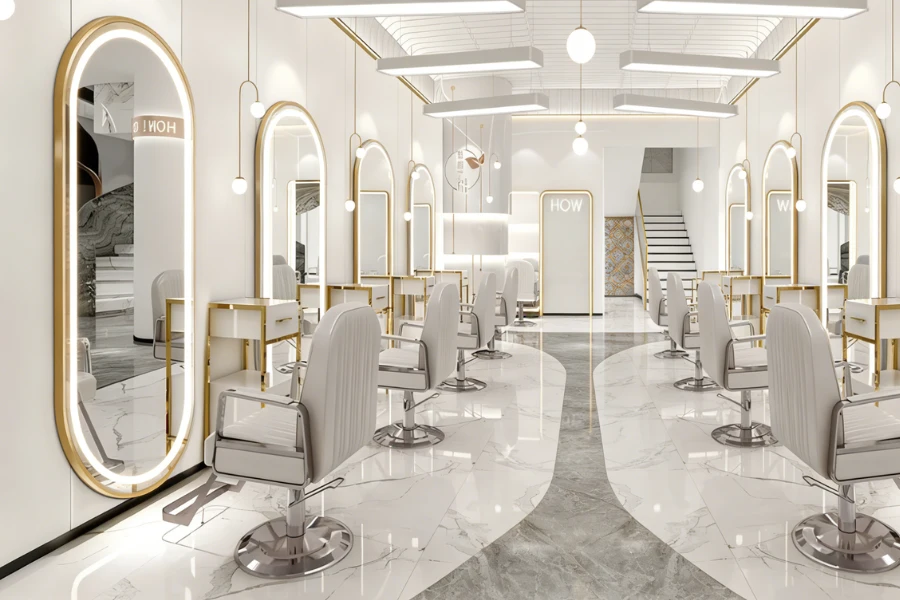
Coloring area
Use daylight lighting between 5000K and 6500K with high CRI to ensure accurate color perception. Even illumination across the working area prevents color distortion and reduces the need for corrections.
Shampoo area
Use soft, diffused, and dimmable lighting to create a more relaxed environment. Avoid direct glare while maintaining enough visibility for safe and efficient work.
Retail display
Use focused lighting between 500 and 800 lux to highlight products and guide customer attention. Proper lighting improves product visibility and supports purchasing decisions.
Private or VIP rooms
Use adjustable lighting between 3000K and 3500K with diffused sources. This allows flexibility between consultation and treatment while maintaining comfort.
How to Choose the Right Light Color and CRI
Color temperature selection
Use warm light for relaxation areas, neutral light for general work zones, and daylight lighting for precision tasks. Different functions require different lighting conditions, and using a single setting across the entire salon reduces both comfort and accuracy.
CRI requirements
CRI measures how accurately colors appear under a light source.
Use CRI of at least 90 in all service areas to ensure consistent and natural color representation. Lower CRI values can distort color perception and lead to inconsistent results once clients leave the salon.
Where to Place Salon Lights for Better Results
Mirror lighting placement
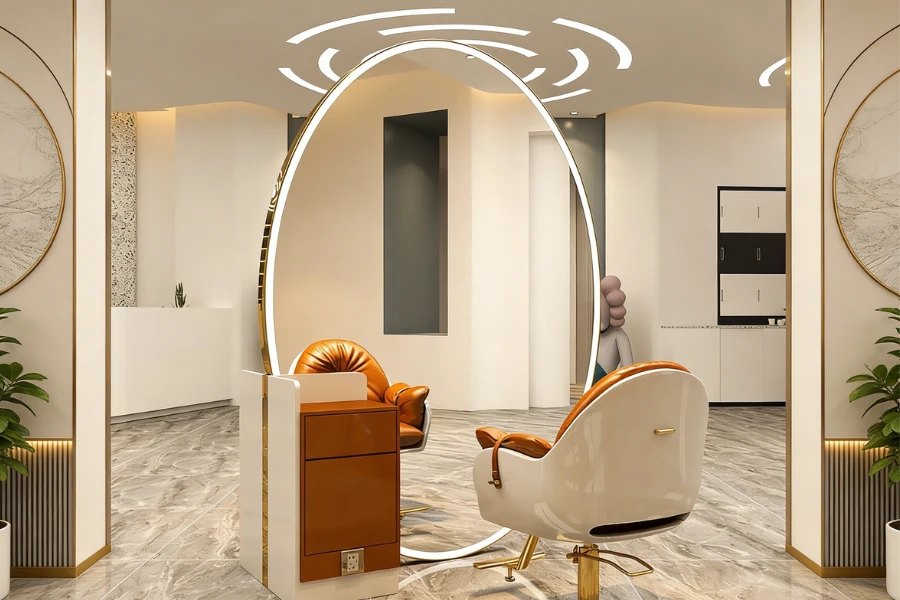
Install vertical lighting on both sides of the mirror at face height, typically between 120 and 170 centimeters from the floor. Keep the distance close to the mirror edges to ensure even illumination across the face.
This setup eliminates shadows under the eyes and chin and improves visibility for detailed work.
Overhead lighting placement
Use overhead lighting as a secondary source rather than the main light. Position fixtures slightly in front of the client and combine them with diffused panels to reduce contrast.
Direct overhead lighting creates downward shadows that interfere with precision tasks.
Fixture spacing and alignment
Maintain consistent spacing between stations to avoid uneven brightness. Ensure both sides of the client’s head are evenly illuminated and avoid placing lights too far above or behind the working area.
Inconsistent placement leads to visible differences in service results.
Integration with furniture layout
Lighting performs best when planned together with salon equipment.
Mirror stations designed with integrated lighting positions help maintain consistent height and alignment. Coordinated setups, such as those commonly used in NovaBeauty projects, reduce installation errors and improve operational consistency across multiple workstations.
Common Salon Lighting Mistakes to Avoid
Relying only on overhead lighting
This creates strong shadows on the face and reduces visibility during precision work, increasing the risk of uneven results.
Ignoring CRI
Low CRI lighting causes inaccurate color perception, which becomes noticeable once clients leave the salon.
Using one color temperature across all areas
Different tasks require different lighting conditions. A single setting reduces both comfort and performance.
Overly bright or dim lighting
Excess brightness causes glare and fatigue, while insufficient lighting reduces accuracy and slows workflow.
Not planning for long working hours
Lighting that seems acceptable initially may cause eye strain after extended use, affecting both productivity and service quality.
How to Set Up Salon Lighting That Works Long-Term
Use LED as the standard solution
LED lighting provides stable output, lower energy consumption, reduced heat, and longer lifespan, making it suitable for continuous salon use.
Build flexibility into the system
Dimmable lighting allows adjustment based on different services and times of day. This improves both client comfort and working conditions.
Plan as a complete system
Lighting should be integrated with layout and equipment planning.
When furniture dimensions and lighting positions are aligned, installation becomes more predictable. Many salons adopt coordinated solutions, similar to NovaBeauty system-based setups, to ensure consistent performance across all stations.
Maintain consistency across all stations
Consistent lighting conditions ensure that clients receive the same quality of service regardless of where they sit, supporting both operational stability and brand consistency.