
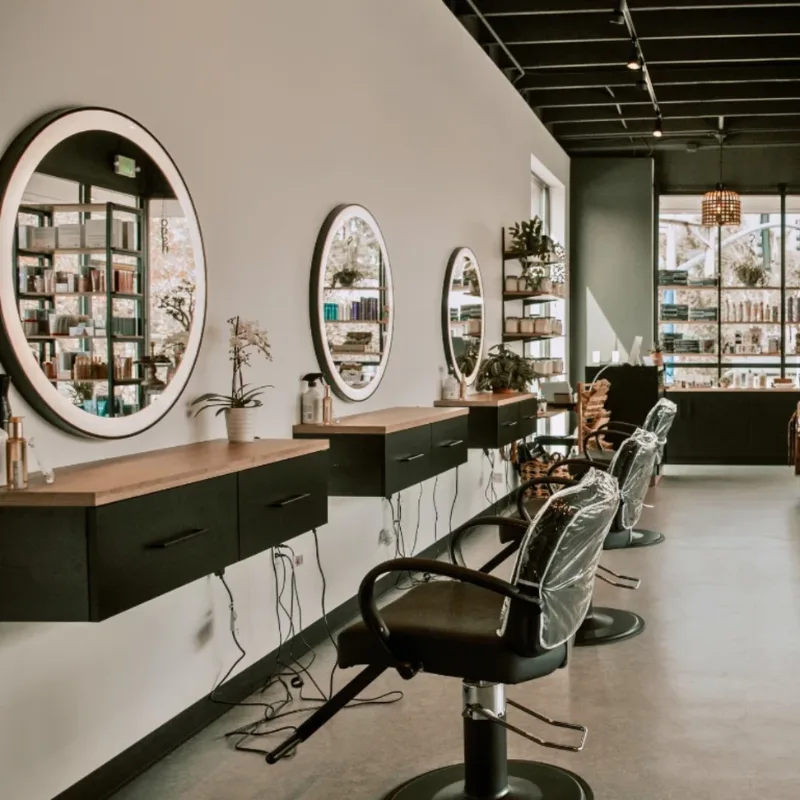
Why Choosing the Right Salon Station Affects Daily Operations
A salon station is the operational center of daily service. It determines how efficiently tools are accessed, how smoothly services are delivered, and how consistently stylists can maintain quality throughout the day. When the station layout works, movement is reduced, focus improves, and services stay on schedule.
For clients, the station often shapes the first impression. Clean surfaces, organized storage, and comfortable spacing signal professionalism before any service begins. Even subtle friction—crowded walkways, cluttered countertops, awkward reach—can quietly erode the experience.
From a long-term perspective, a salon station is not a decorative purchase. It is a working asset. Durable materials, ergonomic design, and adaptable configurations reduce replacement cycles, lower maintenance costs, and help teams stay productive over years of daily use.
Before You Buy
Four Questions That Define the Right Salon Station
Space and Layout
Begin with accurate measurements. Record the length, width, and ceiling height of the available area. Mark fixed elements such as doors, windows, plumbing runs, and electrical outlets so planning is grounded in reality.
Think in terms of movement, not just placement. Stylists need space to step back, rotate chairs, and access tools without crossing traffic paths. A station that fits physically may still feel restrictive if drawers open into walkways or shampoo access cuts through the styling zone.
Business Model and Scale
Clarify how services are delivered. A cut-focused salon typically needs clear mirror visibility and efficient tool access. A color-heavy salon often requires deeper storage, chemical-resistant surfaces, and more countertop space.
Team structure also matters. A solo studio may prioritize compact efficiency, while a multi-stylist salon must decide whether stations are assigned or shared. If growth is planned, modular systems reduce the cost of future reconfiguration.
Budget Range
Set a complete budget, not just a furniture number. Freight, installation, electrical upgrades, and wall reinforcement can materially affect final cost.
Within that range, prioritize long-term value. A lower-priced station that degrades quickly often costs more over time than a durable option that requires minimal maintenance.
Brand Style Positioning
Define the atmosphere you want clients to feel. Calm and refined, modern and minimal, industrial and bold, or warm and approachable.
Stations should visually align with the rest of the space. Consistency in materials and proportions reinforces brand identity and avoids a fragmented look as the salon evolves.
Salon Station Types
Which Configuration Fits Your Space and Workflow
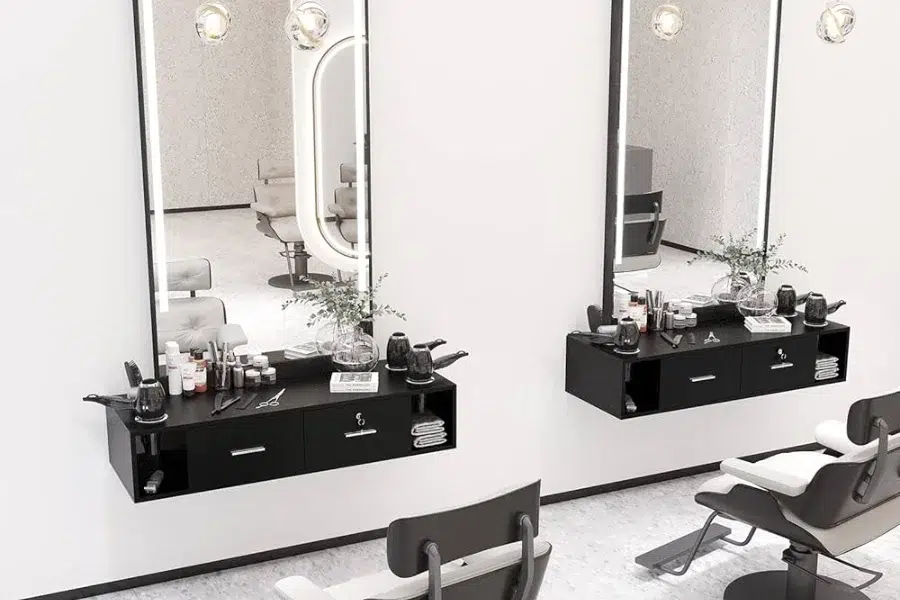
Single-Sided Stations
Single-sided stations offer greater privacy and fewer visual distractions. They work well along walls and suit salons aiming for focused, one-on-one service.
Boutique salons and suites often choose single-sided stations to maintain a quieter, more controlled environment without sacrificing storage or function.
Double-Sided or Back-to-Back Stations
Double-sided stations serve two stylists within the same footprint, making them efficient for high-volume environments.
Open-concept salons commonly place these stations centrally to form service islands, freeing wall space for retail, storage, or decorative elements.
Wall-Mounted Stations
Wall-mounted stations minimize floor usage and simplify cleaning. Adjustable mounting heights allow better ergonomic alignment for different stylists.
They are particularly effective in compact studios or narrow layouts where floor clearance directly affects comfort. Structural wall support is essential for safe installation.
Modular Stations
Modular systems combine cabinets, mirrors, and work surfaces that can be rearranged over time. This flexibility supports evolving service offerings or layout changes.
Salons planning phased expansion often favor modular systems to avoid replacing entire stations when adding staff or services.
Mobile Stations
Mobile stations with casters allow quick layout adjustments. They also improve accessibility for clients with mobility needs and support multi-purpose spaces.
Training facilities, rental environments, and new salons testing their layout often benefit from this flexibility.
Wet or Multi-Function Stations
Wet stations integrate a shampoo bowl directly into the workstation, allowing wash and style in one location.
Barber shops and small salon suites often use wet stations to reduce plumbing complexity and save space otherwise dedicated to a separate shampoo area.
Key Features to Evaluate Before Choosing a Salon Station
Ergonomic Design
Countertop height typically ranges from 36 to 42 inches. The correct height allows stylists to work with relaxed shoulders and neutral posture, reducing fatigue over long shifts.
Rounded edges improve safety, while adequate knee clearance enhances client comfort. Mirrors should provide clear sightlines without forcing awkward head or body movement.
Storage and Organization
Assess how many tools and products must be stored at each station. This includes cutting tools, styling tools, hot appliances, color products, and personal items.
Effective stations balance enclosed storage with accessible work surfaces. Shared stations often benefit from lockable drawers to maintain organization and accountability.
Materials and Durability
Material choice affects longevity and maintenance.
High-pressure laminate is economical and scratch-resistant but sensitive to standing water. Solid or reclaimed wood offers depth and strength but requires periodic care. Stainless steel is durable, waterproof, and easy to sanitize. Quartz and solid-surface materials resist heat and chemicals at a higher cost. Tempered glass delivers a modern look but requires impact awareness.
Panel thickness, edge finishing, and hardware quality are critical indicators of build integrity, especially in humid environments.
Mirrors and Lighting
Mirrors should be at least 24 inches wide, with larger dimensions preferred for double-sided stations.
Integrated LED mirrors improve visibility. A color temperature between 4000K and 5000K with high color accuracy supports precise color evaluation throughout the day.
Electrical Integration and Safety
Modern stations benefit from multiple GFCI outlets and USB charging ports. Concealed wiring channels maintain a clean appearance and reduce clutter.
Electric-ready stations simplify installation by providing pre-cut access points. All electrical work should comply with local codes and be completed by licensed professionals. Manufacturers such as Nova often design commercial stations with these installation realities in mind, reducing retrofit complexity in professional spaces.
How to Plan Space and Spacing Around Salon Stations
Station Footprint
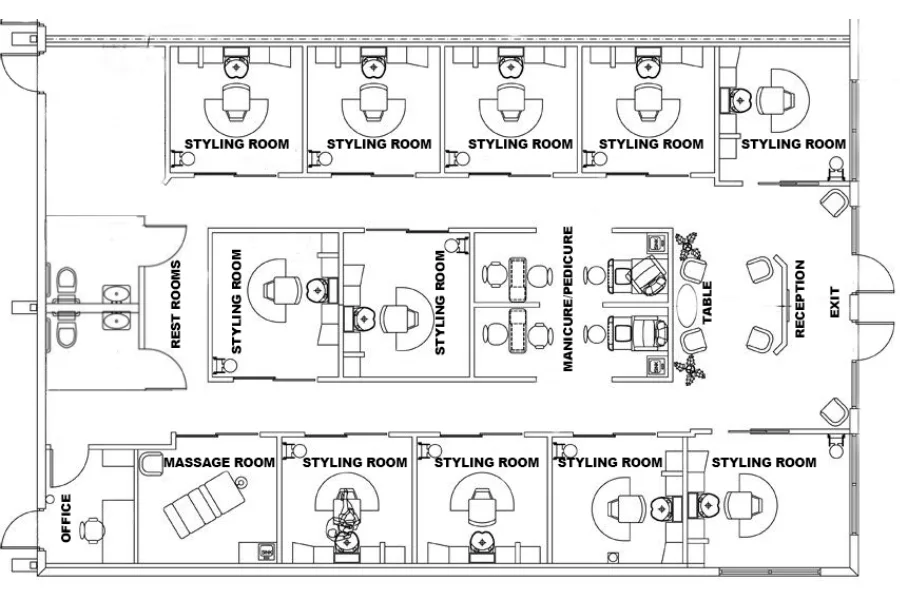
A functional layout typically requires 30 to 40 square feet per station. This includes chair rotation, drawer clearance, and stylist working space.
Recommended Clearances
Leave at least 5 feet in front of each station for client access and stylist movement. Allow approximately 5.5 feet between adjacent stations, measured from chair center to chair center. Maintain at least 2 feet between a station and nearby walls or obstructions.
Layout Strategies
Long, narrow salons benefit from single-sided or wall-mounted stations along one wall.
Square or open spaces can use perimeter placement or central double-sided islands to preserve openness while maximizing capacity.
Small suites often succeed with wall-mounted or compact mobile stations, positioning shampoo areas opposite the styling zone to avoid congestion.
Aligning Salon Station Design With Function and Brand Style
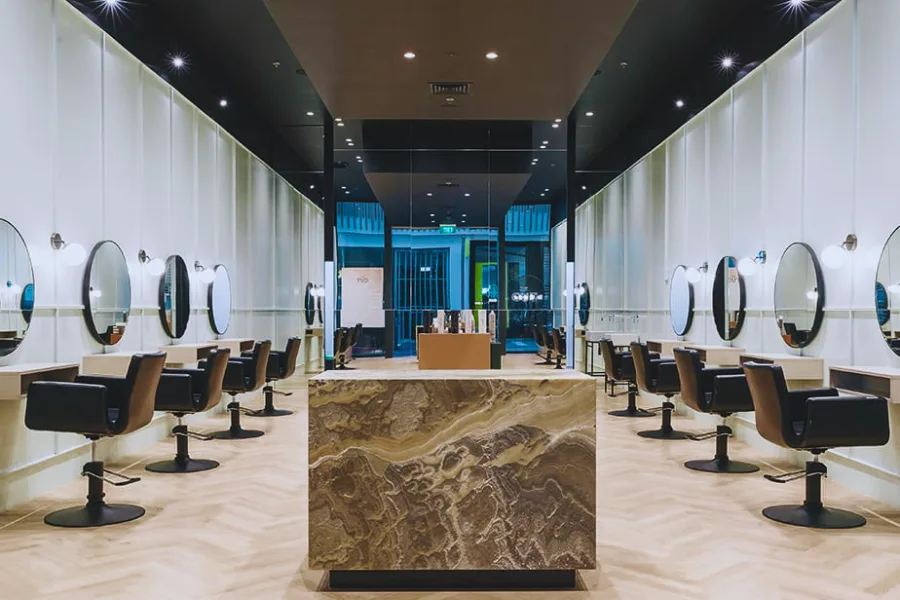
Neutral colors such as white, black, gray, and wood tones provide long-term flexibility and simplify future updates.
Textured finishes add visual depth without dominating the space. Hardware details—pulls, legs, trim finishes—quietly elevate perceived quality when chosen consistently.
Design choices should reinforce the overall interior direction, whether minimalist, industrial, mid-century, or natural wood-focused.
What to Check Before Purchase, Installation, and Long-Term Use
Choosing a Supplier
Review customer feedback and industry reputation. Confirm access to clear installation guidance, responsive support, and defined warranty procedures.
Clarify shipping timelines, delivery conditions, inspection steps, and return policies before ordering.
Installation Preparation
Assess whether professional installation is required. Any electrical or plumbing integration should be handled by licensed contractors.
Prepare the site in advance. Floors should be level, walls structurally sound, and service points positioned according to the final layout.
Warranty and Maintenance
Review warranty coverage carefully, including duration and protected components.
Maintain stations with pH-neutral cleaners and non-abrasive cloths. Periodically tighten hardware and lubricate drawer slides to extend service life.
FAQ
How many salon stations do I need?
There is no fixed number. Start with your active stylist count, peak-hour demand, and desired spacing. A more spacious layout improves comfort and workflow, while modular or mobile stations can support future growth without overcommitting early.
Are modular stations better than pre-built stations?
Neither is universally better. Pre-built stations are simpler to install and often more cost-effective. Modular stations offer flexibility and long-term adaptability but require more planning and may increase total cost depending on configuration.
How can I assess salon station quality?
Check overall weight and stability, drawer glide smoothness, edge finishing, and material specifications. High-quality hardware and a clear manufacturer warranty are strong indicators of durability and long-term reliability.
What should I do if my salon station arrives damaged?
Inspect the station immediately upon delivery and document any damage with photos or video. Contact the supplier before full acceptance. Reputable vendors typically replace damaged parts or units under warranty.
Are used salon stations worth considering?
Used stations can reduce upfront costs, but inspection is critical. Verify structural stability, drawer function, surface condition, hygiene standards, and whether the size and style truly fit your space and workflow.
Related Products for Your Salon Business
Browse our professional-grade salon equipment and furniture at factory-direct wholesale prices: