
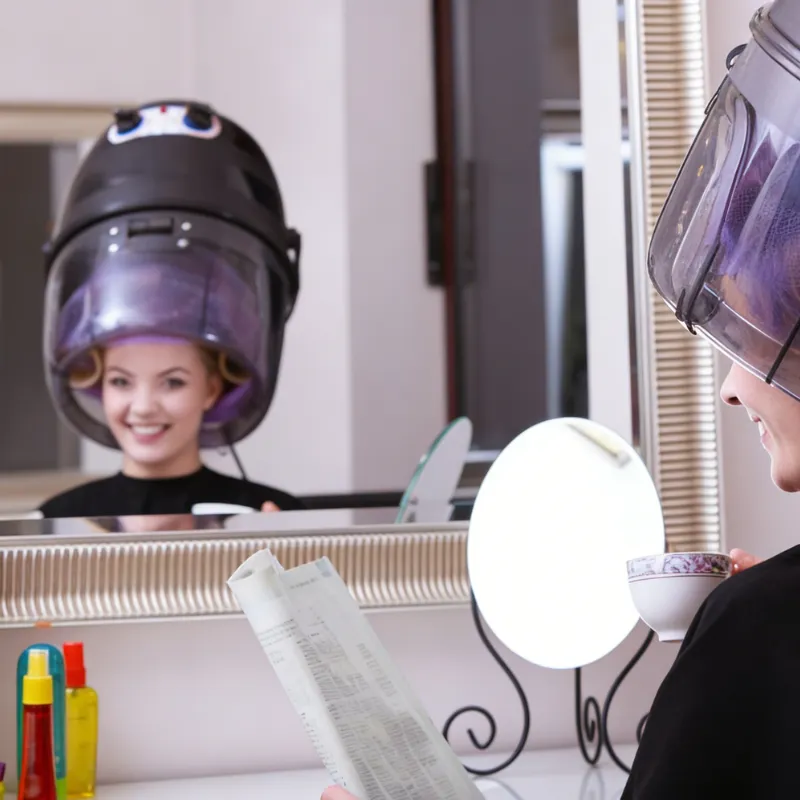
Hooded hair dryers are a familiar sight in professional salons. Clients sit under a dome-shaped dryer while treatments process or styles set. Although the process appears simple, the equipment behind it plays an important role in maintaining consistent service quality.
Unlike handheld blow dryers, hooded dryers circulate controlled heat around the entire head. This design allows hair to dry evenly while supporting treatments such as coloring, perming, and deep conditioning.
Understanding how hooded hair dryers work helps salon owners make better equipment decisions and organize treatment workflows more effectively.
What Is a Hooded Hair Dryer and How Is It Different From a Blow Dryer
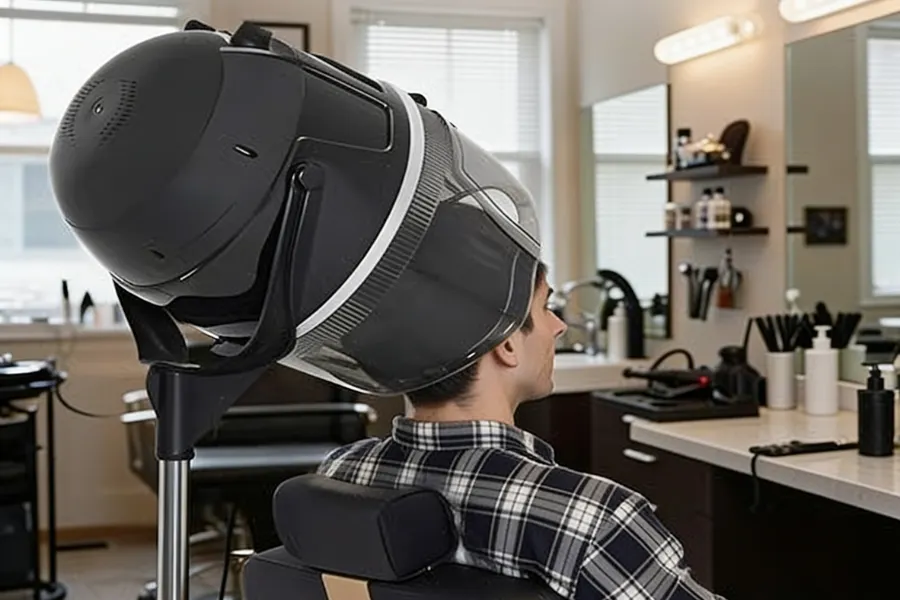
A hooded hair dryer is a salon device designed to dry hair or assist chemical treatments using evenly distributed warm air. The dryer includes a dome-shaped hood that surrounds the client’s head while circulating controlled heat.
Because the hood covers the entire head, heat spreads evenly across the hair. This reduces the concentrated heat exposure commonly associated with handheld blow dryers.
Two types of hooded dryers are commonly used.
Professional hooded dryers
Professional models are usually floor-standing or wall-mounted units used in salons and spas. They include adjustable heat settings, timers, and durable motors designed for continuous commercial use.
These dryers are typically found in hair salons, beauty clinics, training academies, and other environments where reliable equipment performance is required.
Portable bonnet dryers
Portable bonnet dryers use a flexible hood connected to a traditional blow dryer through a hose. Warm air travels through the hose and fills the bonnet.
These dryers are compact and convenient for home use or travel, although they usually provide lower power and less precise temperature control.
How Hooded Hair Dryers Actually Work
A hooded hair dryer works by combining a heating system, airflow circulation, and a dome-shaped hood that distributes warm air around the head. This system maintains stable heat levels while preventing direct heat concentration on a single area of hair.
Heating element generates warm air
Inside the dryer, an electric heating element converts electrical energy into heat. This element warms the air that circulates within the hood.
Stylists can adjust temperature levels depending on hair texture or treatment requirements.
Fan motor circulates airflow
A built-in fan motor pushes heated air through the internal airflow channels. The air circulates continuously inside the hood during operation.
Consistent airflow helps moisture evaporate evenly from the hair while preventing uneven heating.
Hood diffuser distributes heat evenly
The dome-shaped hood acts as a diffuser that spreads warm air across the entire head. Instead of focusing heat on one area, the hood allows heat to surround the hair from multiple directions.
This design reduces heat damage risk while supporting consistent drying and treatment results.
Temperature control and timers
Professional hooded dryers usually include adjustable temperature settings and built-in timers. These controls allow stylists to match heat conditions to different hair types and services.
Automatic shut-off systems help maintain safe operation during longer treatments.
When Salons Use Hooded Hair Dryers
Hooded dryers are widely used in professional salons because they provide stable heat while allowing stylists to continue working with other clients.
In many salon layouts, hooded dryers are placed near treatment stations so stylists can monitor multiple services without interrupting workflow.
Roller sets and wet styling
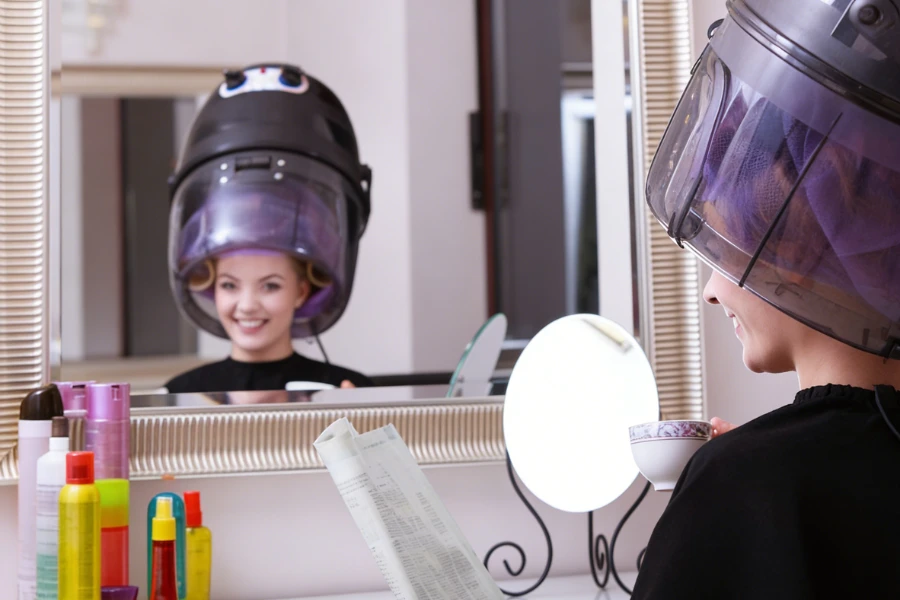
Roller sets require gradual drying to maintain the curl shape created by the rollers. A hooded dryer allows hair to dry evenly without disturbing the style.
This technique is commonly used for classic styling services and textured hairstyles.
Hair coloring and chemical processing
Coloring and perming treatments rely on stable temperature conditions. Hooded dryers help maintain a controlled environment that allows chemical processes to develop evenly.
This reduces the risk of uneven color results or inconsistent texture changes.
Deep conditioning treatments
Many conditioning treatments perform better when gentle heat is applied. Warm air helps open the hair cuticle and allows conditioning ingredients to penetrate the hair structure more effectively.
Treatments such as protein repair, hydration masks, and hot oil therapy often benefit from hooded dryer heat.
Why Hooded Hair Dryers Are Still Essential in Salons
Despite the widespread use of handheld blow dryers, hooded dryers remain an essential piece of salon equipment.
Even heat distribution
The dome structure distributes warm air evenly around the entire head. This prevents concentrated heat exposure and reduces the risk of localized heat damage.
Consistent heat improves both drying quality and treatment performance.
Improved workflow efficiency
Because the dryer operates independently, stylists can manage other services during treatment processing. This allows salons to maintain a steady workflow while treatments develop under controlled heat conditions.
Consistent professional results
Even airflow and stable heat conditions help produce predictable results. This consistency is especially important for chemical services where temperature control affects the final outcome.
How to Choose the Right Hooded Hair Dryer for Your Salon
Selecting a professional hooded dryer involves evaluating several practical factors that influence performance and durability.
Temperature control options
Professional dryers should include multiple heat settings so stylists can adjust temperatures for different hair textures and treatments.
A cool air setting can also help stabilize styles after drying.
Hood size and adjustability
Large hood diameters provide enough space for rollers, thick hair, or long hairstyles. Many professional dryers use hoods measuring around 17 inches or larger.
Adjustable height and tilt angles help position the dryer comfortably for different clients.
Power and airflow
Professional hooded dryers typically operate between 1000 and 1500 watts. Strong airflow systems improve drying efficiency while maintaining consistent temperature levels.
Proper airflow circulation ensures stable performance during treatments.
Noise level and quiet operation
Hood noise is the factor buyers forget until the dryer is already on the floor. Most professional hooded dryers run between 55 and 65 dB at full speed — roughly the level of a normal conversation — while quieter models stay nearer 50 dB. In an open-plan salon with two or three dryers running together, that difference is the one clients actually hear.
Look for a brushless or insulated motor and at least two fan speeds, so you can drop to a quieter setting for chemical processing, where a client sits under the hood for 30 minutes or more.
Model types: floor-standing, wall-mounted and portable
Model type decides how much floor space you give up and how flexible the dryer is. Floor-standing units are the standard for busy salons and pair naturally with a styling chair; wall-mounted dryers free up floor space and suit fixed stations; portable and bonnet-style dryers are the cheapest and most flexible choice for mobile stylists and small studios. Wattage is broadly similar across types (typically 1000–1500W), so the real trade-off is space, reach and how permanently you want it fixed.
Technology features
Some advanced dryers include ionic technology or infrared heating systems. Ionic technology helps reduce frizz and improve hair smoothness during drying.
Infrared heating provides gentler internal warming that supports hair health during longer treatments.
Salon space considerations
Salon layout often determines whether a floor-standing or wall-mounted dryer is the better option. Portable units provide flexibility, while fixed units help maintain an organized workspace.
Most salons place hooded dryers with at least 90 to 100 cm of surrounding clearance to allow clients to move comfortably and ensure stylists can access treatment areas safely.
Hooded Hair Dryer vs Blow Dryer – What’s the Difference
| Feature | Hooded Hair Dryer | Handheld Blow Dryer |
|---|---|---|
| Heat distribution | Even heat around the head | Concentrated airflow |
| Stylist involvement | Hands-free operation | Continuous manual use |
| Best applications | Treatments and processing | Blowouts and styling |
| Client comfort | Relaxed seated experience | Direct airflow and noise |
Both tools serve different purposes in a salon. Hooded dryers support treatments and processing, while handheld dryers are mainly used for styling and finishing.
How to Maintain a Hooded Hair Dryer in a Busy Salon
Regular maintenance helps extend the lifespan of salon equipment and maintain safe operation.
Clean filters regularly
Air filters should be cleaned weekly to remove dust, hair, and styling product residue. Clean filters maintain proper airflow and prevent overheating.
Inspect electrical components
Stylists should periodically check power cords, switches, and ventilation areas. Early inspection helps prevent operational issues.
Schedule routine servicing
Professional servicing ensures motors, heating elements, and airflow systems remain in good condition.
Routine maintenance helps maintain reliable equipment performance.
Why Hooded Hair Dryers Remain a Salon Essential
Hooded hair dryers continue to play an important role in professional salon services. Their ability to distribute controlled heat evenly across the head makes them suitable for treatments, chemical processing, and traditional styling techniques.
By supporting consistent results and improving workflow efficiency, these dryers help salons maintain high service standards.
Professional Salon Equipment from NovaBeauty
Reliable equipment plays an important role in creating a well-organized salon environment. Many salon owners work with manufacturers such as NovaBeauty when selecting commercial salon furniture and styling equipment.
NovaBeauty provides professional salon solutions including shampoo beds, barber chairs, beauty beds, pedicure chairs, and hooded hair dryers designed for long-term commercial use. The company also supports OEM and ODM customization for distributors and B2B buyers seeking tailored salon equipment solutions.
How to identify a true statement about a hooded dryer
To identify a true statement about a hooded dryer, remember the fundamentals: the heating element warms the air, the fan pushes it through the hood, and the diffuser spreads it evenly around the rollers. A hooded dryer relies on airflow and even heat, not direct contact. Nova ships styling chairs and hooded dryers with MOQ 1, one-year warranty and DDP delivery.