
Buying an existing salon can reduce startup costs significantly. Construction work, plumbing installation, and furniture purchases often represent a major portion of the investment when opening a salon from scratch.
However, acquiring an established salon also means inheriting its operational structure, staff relationships, and physical infrastructure. Hidden operational issues can quickly offset the initial savings if they are not identified early.
Before completing a purchase, evaluate the salon from multiple angles including finances, staffing, equipment condition, reputation, and long-term business potential.
Is the Salon Financially Healthy
Financial transparency is the first indicator of whether a salon is a reliable investment.
Review financial documentation from the past three to five years and confirm that revenue and expenses reflect the actual scale of operations.
Important records to review include
- tax filings and profit-and-loss statements
- bank statements and transaction records
- unpaid debts such as rent balances or supplier payments
- cash handling practices for tips and walk-in services
If the financial structure appears unclear, consulting an accountant or business broker can help verify the salon’s true business value.
Will the Staff Stay After the Sale
In the salon industry, revenue often follows the technician.
If stylists or nail technicians leave after the ownership transfer, their clients may follow them to a new location. This can immediately affect the stability of the business.
Questions worth asking include
- whether technicians are employees or booth renters
- whether the staff is aware of the possible ownership transfer
- the salon’s employee turnover history
- how dependent the salon is on the current owner’s leadership
Meeting the team early during negotiations often helps build trust and improve staff retention.
Does the Salon Have Loyal Clients
A loyal customer base is one of the most valuable assets a salon can have.
Review booking data and customer retention patterns to understand whether the business depends mainly on repeat clients or occasional walk-in traffic.
Indicators of a stable client base include
- consistent appointment scheduling
- strong repeat visit patterns
- positive online reviews and ratings
- active booking platforms or social media engagement
Digital assets such as websites and booking systems may represent years of marketing investment and brand visibility.

What Equipment Comes With the Salon
Salon equipment forms a major part of the operational infrastructure.
Before purchasing the business, review all physical assets included in the transaction such as
- shampoo beds or shampoo chairs
- barber chairs and styling stations
- nail tables and pedicure chairs
- beauty beds or facial treatment tables
- salon trolleys, storage units, and mirror stations
Older equipment may still function but can reduce technician comfort, workflow efficiency, and overall client perception.
Many salon buyers use ownership transitions as an opportunity to standardize furniture and workstation layout. Manufacturers such as NovaBeauty produce commercial salon equipment designed for durability and consistent workspace configurations, which can simplify upgrades when refreshing an existing salon interior.
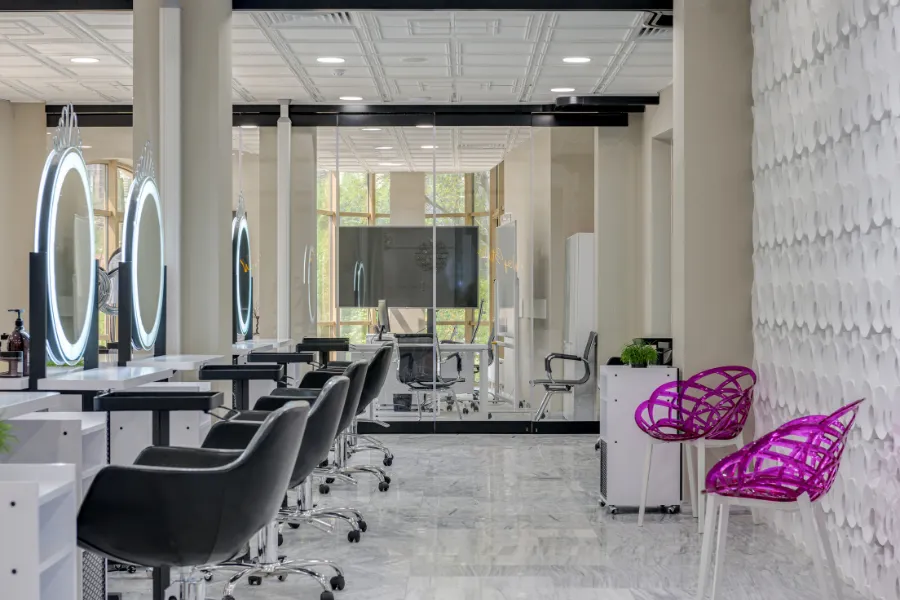
Is the Salon Layout Efficient for Daily Work
The layout of a salon directly affects technician productivity and client experience.
Even profitable salons sometimes operate with inefficient floor plans that slow workflow during busy hours.
When visiting the space, evaluate
- spacing between styling chairs and workstations
- technician movement paths between service areas
- accessibility of shampoo stations and plumbing locations
- comfort and visibility of the waiting area
- lighting quality and ventilation conditions
Typical salon layout guidelines include
- about 30 to 36 inches between styling chairs
- roughly 48 inches of working clearance behind technician stations
- at least 24 inches of side clearance around service areas
Proper spacing allows technicians to work comfortably while maintaining an organized client experience.
Are There Any Legal or Lease Issues
Legal agreements determine whether the salon can continue operating smoothly after the purchase.
Before finalizing the acquisition, review documents including
- lease agreements and remaining rental terms
- renewal options and transfer clauses
- supplier and maintenance contracts
- employee agreements or booth rental arrangements
- trademark ownership or brand registration records
Unexpected lease restrictions or unresolved legal issues can affect the long-term stability of the business.
What Is the Salon’s Reputation
Local reputation plays a significant role in maintaining client traffic after ownership changes.
Research how the salon is perceived in the community by reviewing
- ratings on platforms such as Google or Yelp
- comments and engagement on social media
- feedback from nearby businesses or customers
- technician professionalism and service consistency
A strong reputation often provides a stable foundation for continued client loyalty.
Can the Salon Still Grow
A salon purchase should not only maintain current revenue but also provide opportunities for future growth.
Potential growth strategies include
- introducing new services such as spa treatments or advanced nail art
- improving digital marketing and online booking systems
- expanding retail product offerings
- upgrading equipment to improve service capacity
During renovation or expansion phases, working with experienced equipment suppliers can simplify planning. Companies such as NovaBeauty often support coordinated salon furniture configurations that help owners upgrade equipment while maintaining a consistent workspace design.
Conclusion
Buying a hair or nail salon involves more than reviewing the purchase price. Financial stability, staff retention, equipment condition, reputation, and growth potential all influence the long-term success of the business.
Evaluating these factors carefully helps reduce risk and ensures the salon you acquire can operate efficiently while leaving room for improvement.
With thorough due diligence and thoughtful planning, purchasing an existing salon can become a stable foundation for long-term growth in the beauty industry.