
Why Equipment Selection Directly Impacts Spa Operations
Equipment selection is not a decorative decision. It determines service consistency, workflow efficiency, maintenance cost, and long-term profitability.
In commercial spa environments, equipment is used continuously for eight to twelve hours per day. Residential-grade furniture or poorly planned layouts often lead to early replacement, plumbing problems, therapist fatigue, and reduced client retention.
A well-planned equipment strategy reduces operational risk and supports sustainable growth.

Start With Your Spa Concept Before Investing in Equipment
Equipment decisions should follow positioning, not the other way around.
Different spa models require different infrastructure levels.
| Spa Type | Primary Client | Operational Priority |
|---|---|---|
| Day Spa | Local clients seeking short sessions | Efficient treatment turnover |
| Resort or Hotel Spa | Travelers and guests | Premium comfort and extended services |
| Medical Spa | Results-driven clients | Compliance, advanced devices |
| Boutique Spa | High-end personalized service | Customization and comfort |
Before purchasing advanced machines, confirm:
- Treatment room count
- Available square footage
- Plumbing and electrical capacity
- Staffing structure
- Budget allocation phase
Opening with too many specialty devices often increases financial pressure without proportional revenue.
Secure your foundational infrastructure first.
Core Equipment That Forms the Foundation of a Day Spa
Skincare Treatment Equipment
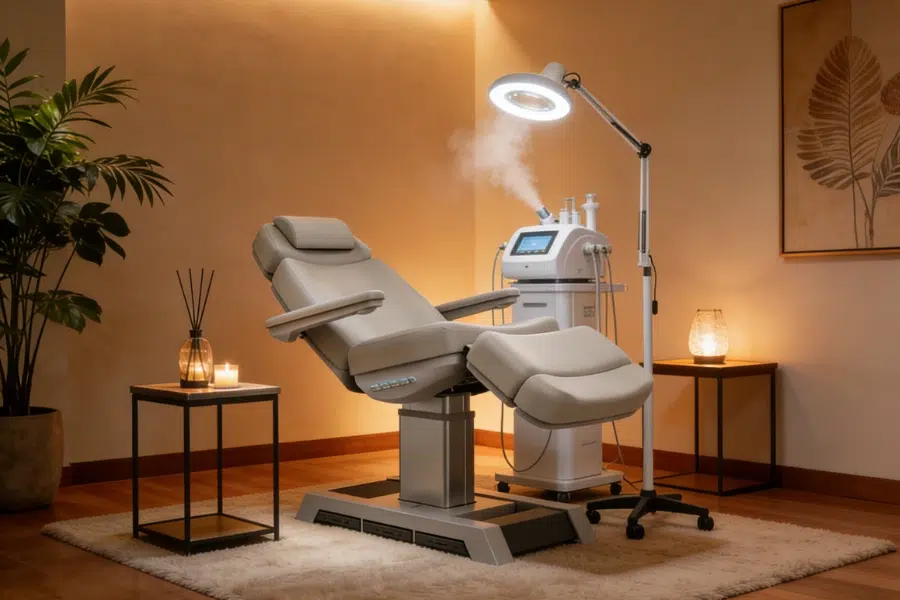
Facial Steamers
Facial steamers assist extractions and improve product penetration.
For commercial use, prioritize:
- Adjustable steam output
- Ozone function for sanitation support
- Stable rolling base
- Easy-to-clean water tank
Avoid lightweight plastic models intended for home use. Commercial durability matters more than design aesthetics.
Magnifying Lamps
Accurate skin analysis improves treatment precision.
Choose units with:
- LED lighting to reduce heat
- Adjustable arm tension
- Replaceable lenses
Proper positioning prevents technician neck strain over long sessions.
Multifunction Facial Machines
Multifunction devices combine multiple treatment modes in one unit.
They are particularly suitable for:
- Rooms under 120 square feet
- Start-up spas controlling capital expenses
- Multi-service facial rooms
However, specialized single-function machines often require less maintenance and offer longer service life.
Evaluate service volume before investing.
Hair Service Equipment
Professional Shampoo Beds
Shampoo beds require early layout planning.
Key considerations include:
- Drainage pipe positioning
- Water pressure stability
- Waterproof flooring protection
- Minimum 36-inch clearance behind the unit
Deep ceramic bowls reduce splashing. Reinforced frames prevent long-term structural instability.
Incorrect plumbing layout is one of the most expensive renovation mistakes in spa projects.
Hooded Hair Dryers
Select commercial-grade dryers with:
- Adjustable temperature
- Timer control
- Low operating noise
Units used daily for chemical treatments should prioritize motor durability over cosmetic design.
Nail Service and Pedicure Equipment
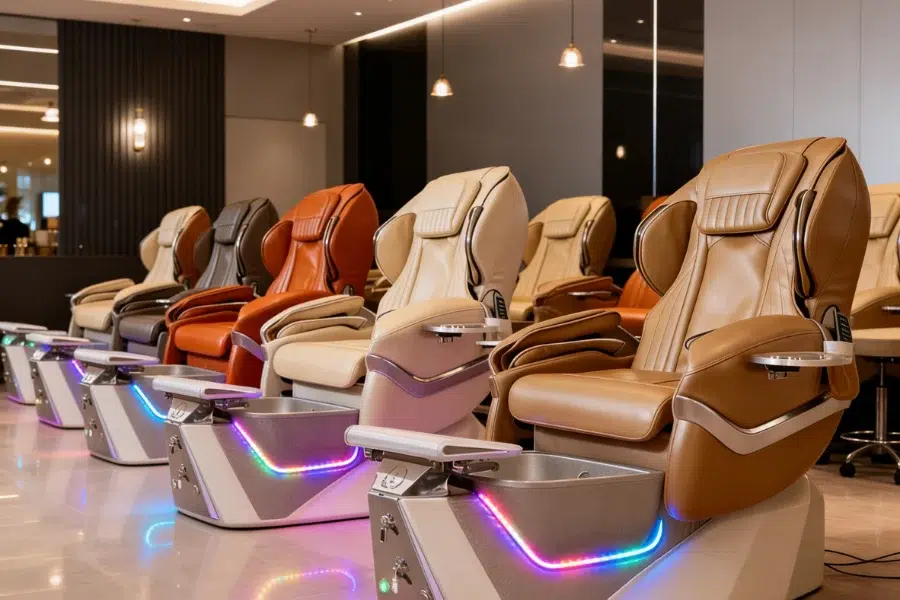
Pedicure Chairs
Pedicure areas require careful wet-zone planning.
Operational guidelines:
- At least 36 inches between chairs
- Dedicated plumbing per unit
- Proper floor drainage slope
- Easily disinfected surfaces
Low-cost pump systems frequently fail in high-traffic spas within 12 to 18 months. Commercial pump durability directly impacts maintenance cost.
LED Nail Lamps
Faster curing reduces service time and increases appointment capacity.
Dual-spectrum lamps support broader gel compatibility.
Manicure Tables
Professional nail tables should include:
- Integrated storage
- Dust extraction system
- Chemical-resistant tabletop
Proper ventilation protects both technicians and clients.
Massage and Body Treatment Infrastructure
Professional Massage Tables
Massage tables directly influence therapist longevity.
Electric or hydraulic adjustment:
- Reduces repetitive bending
- Improves treatment ergonomics
- Increases session consistency
Recommended treatment room size is no less than 8 ft by 10 ft, with 30 to 36 inches clearance around the table.
High-density foam and reinforced steel frames extend service life in commercial environments.
Manufacturers focused on commercial-grade construction, including Nova, typically reinforce internal frames for this reason.
Wax Warmers
Digital temperature control reduces burn risk and improves consistency.
Select units with insulated outer shells for safety compliance.
Laser or IPL Hair Removal Devices
Confirm regulatory licensing requirements before purchase.
Medical-grade certification and technician training are mandatory.
Microcurrent Machines
Anti-aging services remain in demand, but equipment selection should align with realistic treatment volume.
High-maintenance devices without sufficient bookings increase idle capital.
Hygiene Systems That Protect Your Clients and Your Business
Hygiene protocols are operational safeguards.
Essential systems include:
- UV sterilizers
- Hot towel cabinets
- Hospital-grade disinfectants
- Disposable linens
Surfaces should be non-porous and resistant to chemical degradation.
Establish a dedicated sterilization station separate from treatment areas to avoid cross-contamination.
Compliance protects both reputation and liability exposure.
Creating a Professional and Relaxing Environment
Atmosphere supports experience, but infrastructure supports revenue.
Invest in:
- Adjustable lighting with separate treatment and relaxation modes
- Sound insulation between rooms
- Stable reception counters
- Organized waiting area seating
Lighting should balance comfort and technical precision. Treatment rooms require task lighting in addition to ambient lighting.
Acoustic planning prevents disruption during simultaneous sessions.
Operational Furniture and Workflow Support
Efficient layout reduces wasted movement.
Mirror Stations
Provide sufficient width and integrated storage to minimize technician walking distance.
Trolleys
Mobile trolleys keep frequently used tools within arm’s reach.
This reduces session time and improves consistency.
Display Racks
Retail displays positioned near reception increase secondary revenue without expanding treatment areas.
Reception Systems
Reliable scheduling software prevents overbooking and idle treatment rooms.
Administrative efficiency directly influences profitability.
Emerging Equipment Trends Worth Considering in 2024
Technology adoption should support revenue strategy.
Current trends include:
- High-frequency acne treatment machines
- Space-efficient multifunction systems
- AI-based massage chairs
- Waterless hydrotherapy using infrared technology
Evaluate trends based on projected return on investment rather than novelty appeal.
Equipment should solve operational problems, not create new maintenance burdens.
Selecting a Long-Term Equipment Partner
Commercial spa projects require consistent supply quality and predictable durability.
When selecting a supplier, evaluate:
- Structural reinforcement
- Upholstery wear resistance
- Spare part availability
- Warranty terms
- Bulk order logistics
In commercial installations, reinforced steel frames and hydraulic stability are often prioritized. Manufacturers such as Nova focus on commercial-grade durability and project-based supply coordination.
Browse our professional-grade salon equipment and furniture at factory-direct wholesale prices:
Shop All Salon Equipment | Get Wholesale Quote
>