
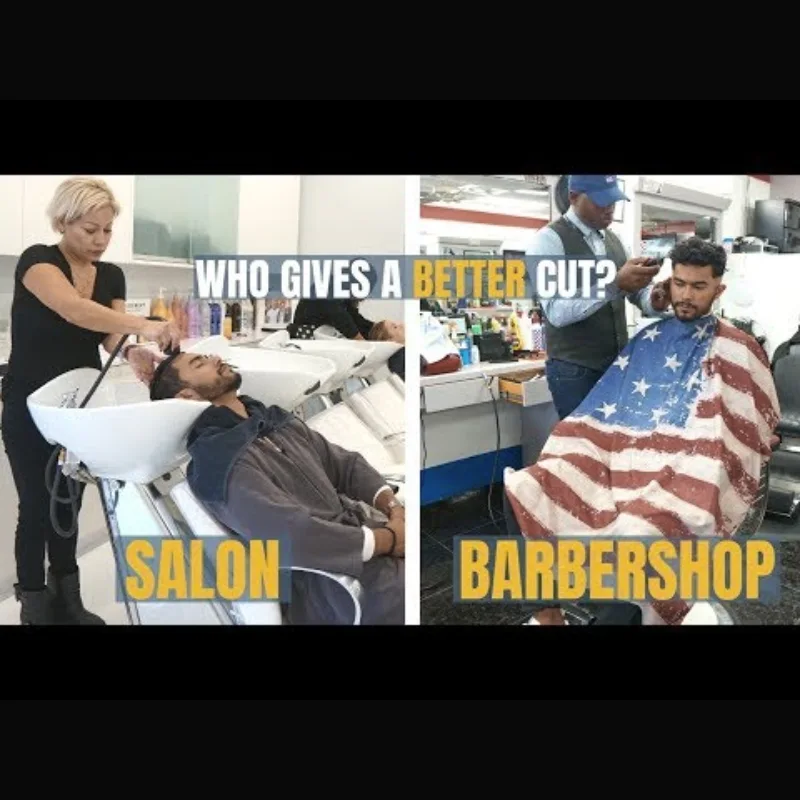
Barbershop vs Salon: What’s the Real Difference?
Quick Answer: Barbershop vs Salon — The Real Difference
A barbershop focuses on men’s hair cutting and beard grooming with licensed barbers; a salon offers hair, nails, skin and beauty services with cosmetologists and estheticians. Key differences: licensing (barber license vs cosmetology license), services (clipper cuts and straight-razor shaves vs coloring, styling and treatments), and equipment (hydraulic barber chairs vs styling chairs with shampoo bowls). You can run a hybrid business, but you need both licenses and separate equipment zones. Nova supplies factory-direct equipment for both: hydraulic barber chairs, styling chairs, shampoo bowls, and treatment beds — MOQ 1 unit, one-year warranty, 110V-240V dual voltage, CE certified options.
Understanding the difference between salon and barbershop setups helps you choose the right services, pricing and licensing before you commit to a lease. Whether you write it barbershop or barber shop, the licensing rules, clientele and service menu you build around each model are what actually shape your revenue.
If you’re opening a grooming business in the US, you’ve probably asked: what’s the difference between a barbershop and a salon? While both cut hair, they serve different clientele, require different licenses, and need different equipment setups. Understanding the salon and barbershop difference before you buy furniture helps you avoid outfitting the wrong space for your license type.
The salon vs barber question comes up constantly from owners who want to serve both communities — and the short answer is that you can, as long as you plan the space and licensing carefully. When comparing barbershop vs hair salon, the biggest practical differences show up in equipment: barber chairs with hydraulic lifts, straight razors, and clipper stations versus salon vs barbershop setups built around styling chairs, shampoo bowls, and dryer stations. Many owners also ask about the difference between barbershop and hair salon licensing rules, which vary by state. In short, the difference between barber shop and salon comes down to service focus, and the difference between barber and salon experience is what your customers will feel the moment they walk in. If you’re weighing options, our guides on barber shop vs hair salon economics and hair salon vs barber shop layouts can help you decide which model fits your market.
Quick Comparison: Barbershop vs Salon
When people search for barbershop vs hair salon or simply barber vs salon, they usually want to know which type of business fits their skills, space and budget. The answer depends on the services you plan to offer, the equipment you need, and the client base you want to attract. This guide breaks down the barbershop vs salon difference in plain terms so you can make the right call for your business.
| Aspect | Barbershop | Salon |
|---|---|---|
| Primary Clients | Men and boys | Women, men, children |
| Core Services | Haircuts, shaves, beard trims | Haircuts, color, styling, nails, facials |
| Licensing | Barber license (state-specific) | Cosmetology license |
| Key Equipment | Barber chairs, straight razors | Salon chairs, styling stations |
| Atmosphere | Casual, masculine | Varied (luxury, modern, themed) |
| Average Price | $25-50 per haircut | $45-150+ per visit |
The difference between barbershop and salon is really a difference in service focus rather than equipment alone: a barbershop centers on short, precision men’s cuts, fades and beard work, while a salon spans color, chemical services, styling, nails and skin care. That focus shapes everything from the chairs you buy to how you schedule appointments.
Key Differences Explained
1. Services Offered
Barbershops focus on short hair cutting, beard trimming, and hot towel shaves. Salons offer a wider range including haircuts for all lengths, hair coloring, highlights, perms, nail services, facials, waxing, and more. If you want both haircuts and color services, you need a salon. If you want traditional barbering and straight-razor shaves, go to a barbershop.
2. Licensing & Training
Barbers complete a barber program (typically 1,000-1,500 hours) focusing on men’s grooming, while cosmetologists complete a broader program (1,500+ hours) covering hair, nails, skin, and makeup. Most states require separate licenses — a cosmetologist cannot legally perform barber services and vice versa.
3. Equipment Differences
If you’re equipping a barbershop, you need barber chairs (hydraulic, 360-degree swivel) and barber stations. For a salon, you’ll need salon styling chairs, shampoo chairs or beds, styling stations with mirrors, and often nail and facial equipment. Browse our barber chairs or salon chairs to compare.
For the salon side, a professional shampoo bed for salon use is non-negotiable — it handles washing, coloring, and head spa services in one station. And if you offer facials, waxing, or massage, a multi-position beauty bed for salon service is the most versatile addition to your floor.
4. Atmosphere & Vibe
Barbershops traditionally lean into a masculine, often nostalgic or sport-themed vibe. Salons range from minimalist and modern to luxury spa-like environments. The design approach affects your reception desk, waiting area, and station layout choices.
Which One Should You Open?
Choose a barbershop if you specialize in men’s haircuts, want a simpler service menu, and prefer a faster turnaround per client. Choose a salon if you want to offer a full range of services (hair, nails, skin), attract a diverse clientele, and generate higher average ticket prices.
Many modern businesses are adopting a hybrid model — a “barbershop” that also offers salon services. Check your state’s licensing requirements before mixing services.
Equipment Checklist by Business Type
Barbershop Must-Haves
- Hydraulic barber chairs
- Barber station with mirror
- Straight razor and strop
- Hot towel cabinet or steamer
- Waiting area chairs
- Reception desk
Salon Must-Haves
- Salon styling chairs
- Shampoo beds or chairs
- Styling stations with mirrors
- Hooded hair dryers
- Beauty trolleys for supplies
- Reception desk
- Waiting area seating
Need help deciding what equipment fits your business? Contact Nova for a free consultation — we outfit both barbershops and salons across the US.
Salon and Barber Difference: Equipment Price Guide (2026)
Understanding the salon and barber difference extends beyond service menus; it directly impacts your capital expenditure. Barber shops require heavy-duty clippers and adjustable hydraulic chairs, while hair salons need styling stations and wash basins. Below are 2026 factory-direct wholesale prices from Nova Spa Equipment, reflecting CE certified, 110V US plug units with DDP shipping and a MOQ of 1.
| Model/Type | Price Range (USD) | Best For |
|---|---|---|
| Barber Hydraulic Chair (Vintage) | $450 – $700 | High-volume clipper cuts; 360° swivel; heavy-duty pump |
| Salon Styling Station (Dry) | $380 – $550 | Color and blow-dry services; built-in drawers |
| Shampoo Bowl with Chair | $520 – $800 | Wash services; porcelain or acrylic; backwash design |
| Barber Station (Wall-Mounted) | $290 – $420 | Compact shops; tool storage; mirrors included |
| All-Purpose Styling Chair | $210 – $340 | Dual-use; lightweight; gas lift for quick adjustments |
| Salon Wash Station (Backwash) | $610 – $900 | Luxury spas; ergonomic neck rests; LED lighting |
Salon and Barber Difference: Comparison / Buying Checklist
When sourcing equipment, the barbershop vs salon distinction dictates your layout and utility needs. Use this 6-item checklist to avoid costly missteps. Every Nova Spa unit is CE certified (not UL), wired for 110V US outlets, and ships via DDP with no hidden fees—MOQ is just 1 unit for testing.
- Licensing and Code Compliance: Verify if your state requires separate ventilation for chemical services (salon) versus dry cutting (barber shop). Barber chairs need floor anchors; salon stations need GFCI outlets near wash basins.
- Chair Hydraulics vs. Electric Lift: Barber shop hydraulic pumps handle 500 lbs daily; salon electric lifts are quieter but slower. Choose based on your primary service—fades versus color treatments.
- Station Storage Capacity: Barbers need open shelves for clippers and combs; stylists need closed drawers for color tubes and irons. Confirm drawer depth before ordering.
- Wash Basin Plumbing Requirements: If you offer shampooing, you need a backwash unit with water supply lines. Pure barbershops can skip this entirely, saving $600+ per station.
- Seat Width and Armrests: Barber chairs have wider seats (22″) for male clients; salon chairs are narrower (18″) for female clients. Measure your client demographic.
- Warranty and Spare Parts: Factory-direct wholesale means you buy replacement pumps and casters directly—no middleman. Confirm the warranty period covers commercial daily use.
Frequently Asked Questions
What is the main difference between a barber shop and a hair salon?
The core difference is service scope. Barbers focus on short hair, clipper cuts, fades, and straight-razor shaves for men. Salons offer coloring, chemical treatments, styling, and long-hair cutting for all genders. This affects your equipment choices—barbers need heavy-duty clipper chairs, while salons need wash basins and styling stations. Browse our salon chairs for dual-purpose options.
Can one chair serve both barber and salon services?
Yes, but with compromises. An all-purpose styling chair with a gas lift works for basic cuts and blow-dries, but lacks the heavy-duty swivel for extended clipper work. If you plan to offer both, buy a hydraulic barber chair for cutting and a separate shampoo chair for washing. This hybrid layout is common in modern unisex shops.
Do barber chairs require special electrical wiring?
Most barber chairs are hydraulic, so no wiring is needed. Electric lift chairs require a standard 110V US plug. However, you must ensure your floor can support the weight and that you have proper anchoring for safety. Nova Spa equipment ships with CE certification and clear wiring diagrams for your electrician.
How does factory-direct wholesale pricing affect the salon and barber difference?
Factory-direct pricing lets you buy specialized equipment for each space without retail markups. For example, you can purchase a dedicated barber station and a separate salon wash basin for the same cost as one retail combo unit. With DDP shipping and MOQ 1, you can test one unit before committing to a full build-out. Explore our full barber chair collection for specific needs.