
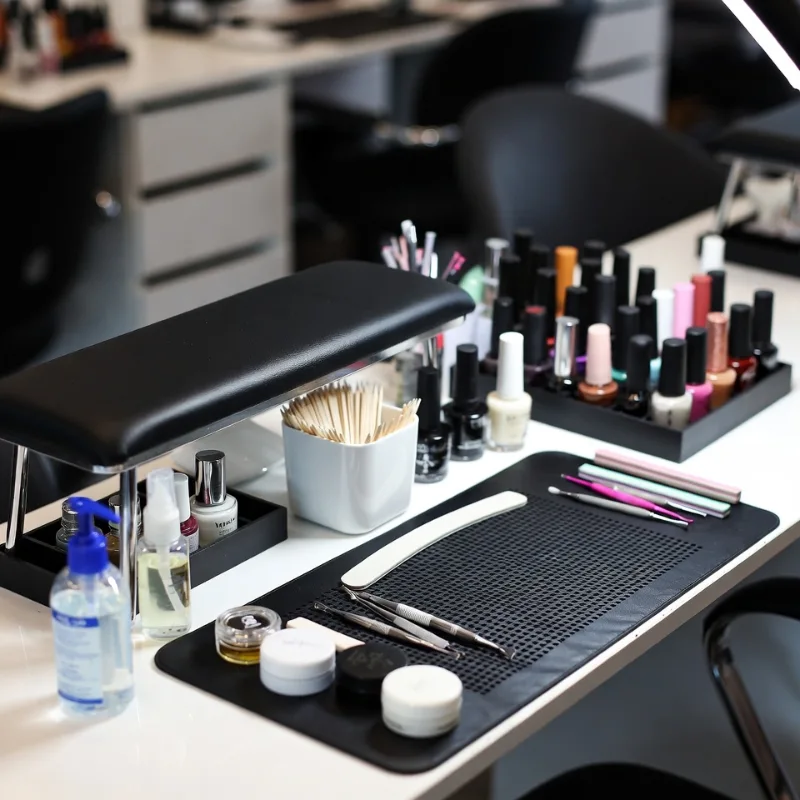
A manicure is not only a technical service. It is a close, hands-on process that depends heavily on how the workstation is set up. Clients may remember the final result, but their comfort, sense of cleanliness, and ease during the service often determine whether they return.
Whether you run a home studio or a busy salon, manicuring a table is far easier when the station is planned around your workflow: dust collection, safe lighting and reachable storage all matter before your first client sits down. Nova’s manicure tables ship with MOQ 1, one-year warranty and DDP delivery.
A clean, organized, and well-planned manicure table supports consistent results, smoother workflow, and fewer interruptions throughout the day. Poor setup usually leads to fatigue, inefficiency, and avoidable mistakes over time.
This guide approaches manicure table setup from three practical angles: hygiene, efficiency, and comfort. Each section focuses on decisions that affect daily operations and long-term usability.
How to Set Up a Manicure Table
To set up a manicure table, clean the surface, place a lamp and towel at the client side, keep disinfectant and tools within reach, and arrange your most-used products in front of your dominant hand. Divide the table into clean and used zones, and keep sanitation supplies within arm’s reach so every client gets a hygienic station. When you are choosing the table itself, a luxury white marble-top manicure table with gold trim gives you a wipe-clean marble counter and multi-drawer storage.
- Clean and sanitize the tabletop and wipe down all surfaces.
- Set the client zone: arm rest, towel, and lamp on the far side.
- Organize tools by frequency — daily-use items closest, backups stored below.
- Create clean vs used zones so contaminated tools never touch fresh supplies.
- Place sanitizer and gloves within reach of your dominant hand.
Setting Up a Clean and Safe Manicure Workstation
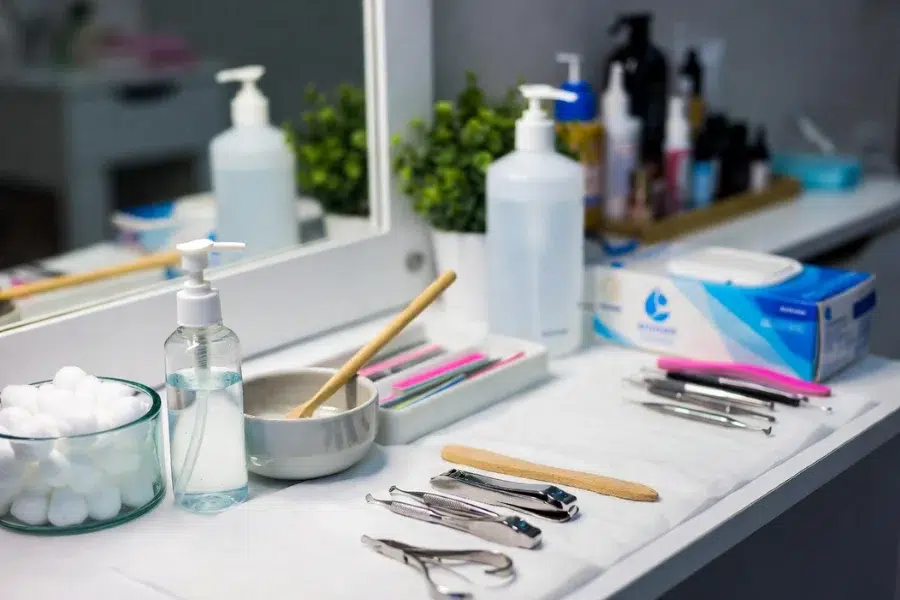
A manicure table is a high-contact workstation. Hygiene is not an optional feature, it is the foundation of professional service and client trust.
Keep sanitation supplies within reach
Disinfecting wipes and hand sanitizer should be placed directly on the table or within arm’s reach. This allows hands and contact surfaces to be cleaned before and after every client without breaking the workflow.
In busy schedules, sanitation tools that are easy to reach are more likely to be used consistently.
Create clearly defined clean and used zones
A lidded trash can should sit next to the table and be emptied regularly to prevent odor and contamination. Used tools must never share space with disinfected ones.
Use a dedicated container for sanitized tools and a separate area for items waiting to be cleaned. This clear separation reduces mistakes and keeps hygiene routines consistent.
After each service, disinfect the tabletop, finger bowls, wrist supports, and all frequently touched surfaces.
Use disposable or easy-to-clean materials
Each client should have a clean towel or disposable liner placed under their hands. Finger bowls should either use disposable liners or be fully cleaned and disinfected after every use.
Materials that wipe down quickly reduce turnaround time between appointments and help maintain hygiene standards throughout long service days.
Protect air quality when using chemical products
If acrylics, gels, or other chemical products are used frequently, airflow becomes a health consideration. In high-volume salons, a small ventilation fan or air purifier placed near the workstation can significantly reduce airborne dust and fumes. When two technicians share one room, a two-station manicure desk with vacuum and marble top pulls dust away at the source for both stations.
This protects both technicians during extended working hours and clients during longer services.
How to Arrange Your Manicure Table for Daily Efficiency
An efficient manicure table layout reduces unnecessary movement and keeps the service flow steady. The goal is not to store everything at the table, but to place items where they support how you actually work.
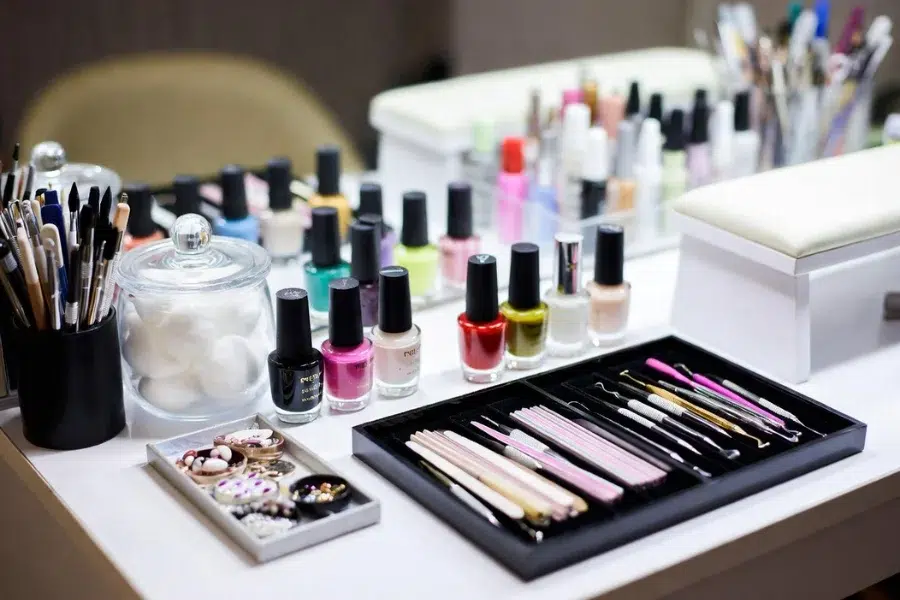
Organize supplies by how often they are used
Dividing tools into zones based on usage frequency creates a predictable and repeatable setup. For a single station, a white manicure table set with dust collector keeps the dust collector and drawer storage in one unit.
- Primary zone, tabletop
Items used for every client should remain on the table. These typically include base and top gels, primary brushes, cuticle pushers, nail files, dusting brushes, curing lamps, and electric files. - Secondary zone, drawers or a nearby trolley
This area holds tools that are used regularly but not during every service, such as specialty gels, nail art materials, backup brushes, and additional drill bits. - Storage zone, cabinets or shelving away from the table
Bulk items like large bottles of alcohol or acetone, gloves, wipes, and replacement stock belong here. Keeping them off the workstation prevents clutter and visual overload.
In small studios with limited space, this zoning helps prevent the table from becoming a general storage surface. In commercial projects that require consistent layouts across multiple workstations, manufacturers such as Nova often design manicure tables with modular storage options to support this kind of daily workflow without overcrowding the table.
Design the layout around your dominant hand
Right-handed technicians generally work more efficiently when primary tools are placed on the right side of the table. Left-handed technicians benefit from mirroring this layout.
Over long service days, even small reductions in crossing or reaching movements can noticeably reduce shoulder and wrist strain.
Use vertical and hidden space carefully
The area beneath the table can hold hooks or small baskets for trash bags or clean towels. A narrow shelf behind the table works well for appointment books, a computer, or color displays that need to stay accessible but off the main work surface.
This approach keeps essential items close without crowding the tabletop.
Choose clear organizers for better visibility
Transparent organizers are especially practical for gel colors and small tools. Sorting colors by brand, number, or color family allows faster selection and reduces time spent searching during appointments.
Clear containers also make routine cleaning easier by protecting products from dust.
Keep the tabletop intentionally minimal
Only items needed for the current service should stay on the table. Everything else should return to drawers or carts once it is no longer in use.
In high-volume salons, a clear tabletop supports faster cleaning between clients and reduces the chance of knocking over tools or products.
Protecting Your Body and Keeping Clients Comfortable
A manicure table setup should support the technician’s posture while keeping clients stable and relaxed. Comfort directly affects precision, consistency, and endurance.
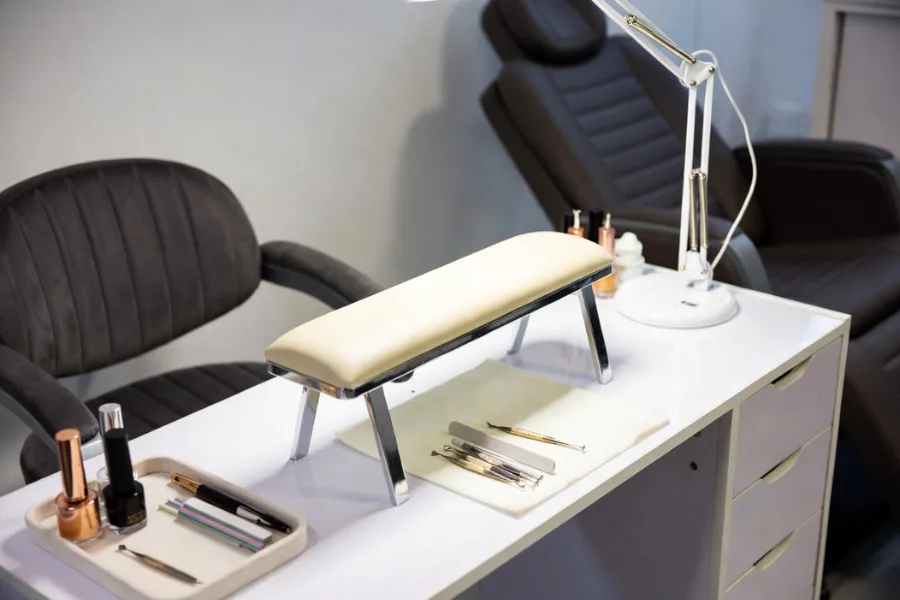
Choose adjustable furniture
The technician’s chair should be height-adjustable, mobile, and provide proper lower back support. This allows smooth movement, easy repositioning, and less strain throughout the day.
Manicure table height should fall between 28 and 32 inches, or be adjustable. This allows the forearms to rest naturally at about a 90-degree angle, reducing shoulder lift and forward bending.
In long service days, adjustable furniture becomes especially important. From a manufacturing perspective, suppliers like Nova typically account for technician posture, table height range, and chair mobility when developing manicure stations intended for full-day commercial use.
Optimize the client’s seating
Clients should sit on a stable, stationary chair that does not roll or shift during the service. Stability improves hand positioning and reduces interruptions.
Adding cushions, light blankets, or arm supports helps clients remain comfortable during longer appointments.
Add practical comfort details
- Wrist support
Soft wrist cushions allow clients to relax their hands while maintaining a stable working position. - Refreshments
Offering water or tea supports comfort without interfering with the service. - Warmth support
In cooler conditions, a heating pad or hand warmer helps clients stay comfortable and supports consistent product application. - Personal item space
A small side table or stool near the client’s chair provides a place for bags, phones, or drinks without cluttering the workstation.
Maintain a calm service environment
A small plant, low-volume background music, or subtle scent can help clients relax. These elements should never interfere with airflow, lighting, or cleaning routines.
The working environment should support focus and consistency, not distraction.
FAQ
What is the ideal size for a manicure table?
A manicure table should balance comfort and reach. Most setups work best with a width of 20–24 inches and a length of 36–48 inches. Table height should fall between 28–32 inches or be adjustable. Proper sizing helps reduce shoulder strain and allows stable hand positioning during longer services.
What tabletop material works best for manicure services?
The tabletop must resist acetone, monomer, and frequent cleaning. Many professionals add a custom glass top over a standard surface. Glass is easy to sanitize, protects the table from chemical damage, and maintains a clean appearance over time without requiring frequent replacement.
What lighting is best for a manicure table?
An adjustable LED task lamp with consistent brightness provides the best working conditions. It improves visibility, reduces eye strain, and supports precision work. Slim-profile lamps are preferred, as large fixtures can block sightlines and interfere with communication between technician and client.
Is ventilation necessary at the manicure table?
Ventilation is strongly recommended when acrylics, gels, or other chemical products are used regularly. Options include manicure tables with built-in extraction or placing a high-quality air purifier nearby. Proper airflow helps reduce dust and fumes, supporting long-term comfort and health for both technicians and clients.
How can nail dust buildup be reduced?
Using light-colored surfaces makes dust less visible during services. Cleaning the table after each client with a damp wipe or small vacuum prevents buildup. Positioning a tabletop dust collector near the electric file is especially practical in keeping the workstation clean and reducing airborne particles.
What layout works best for small spaces or busy schedules?
In limited spaces, L-shaped tables or designs with side cabinets increase storage without expanding the footprint. For busy studios, a secondary workstation allows preparation or quick repairs while another client is finishing, helping maintain smooth scheduling and reducing service delays.
Final Thoughts on Building an Effective Manicure Table Setup
An effective manicure table setup balances hygiene, efficiency, and comfort. Each element supports consistent service quality, smoother workflows, and healthier working conditions over time.
Thoughtful planning reduces daily friction, protects your body, and improves the client experience in practical ways. Use this framework to refine your setup step by step and build a workstation that supports how you work every day.
Related Products for Your Salon
Browse our selection of professional salon equipment and furniture designed for your business:
Shop All Salon Equipment | Request Wholesale Quote
Manicure Table FAQ
What is the standard size of a manicure table?
Standard manicure tables are 36-48 inches wide and 18-24 inches deep. L-shaped tables are larger at 48-60 inches per side. Consider your salon layout before choosing size.
Do I need a dust collector manicure table?
If you offer acrylic or gel nail services, a dust collector table is strongly recommended — it keeps the workspace cleaner and reduces airborne particles for better air quality.