
I’ve spent time talking to tattoo artists about their equipment, and the one thing everyone agrees on: most tattoo chairs on the market are designed for people who’ve never spent eight hours hunched over a client’s ribcage.
A tattoo chair needs to survive ink, disinfectant, blood, and long sessions where nobody moves. It needs to position the client so the artist has good access — and it needs to do all that without breaking. Here’s what artists actually look for.
Types of Tattoo Chairs & Beds
| Type | Best For | Price (2026) |
|---|---|---|
| Electric Tattoo Chair | The standard for serious shops. Motorized height and backrest. Adjust mid-session without pausing. Essential for back pieces and large-scale work. | $800 – $2,500 |
| Hydraulic Tattoo Chair | A reliable, lower-cost alternative. Foot pump adjusts height. Fewer electronics to fail in a shop environment. Many artists prefer the simplicity. | $400 – $1,200 |
| Tattoo Bed Chair | Converts from seated to fully flat. Essential for back, leg, and full-body tattooing. The ability to lay a client flat changes how you approach large pieces. | $600 – $2,000 |
| Artist Chair / Stool | Your own seat. Saddle stools are popular — they let you glide around the client smoothly. Get one with back support and adjustable height. | $300 – $800 |
| Portable Tattoo Bed | Guest artists, conventions, pop-ups. Lightweight, folds up, fits in a car. Not as sturdy as a stationary bed but necessary if you travel. | $200 – $600 |
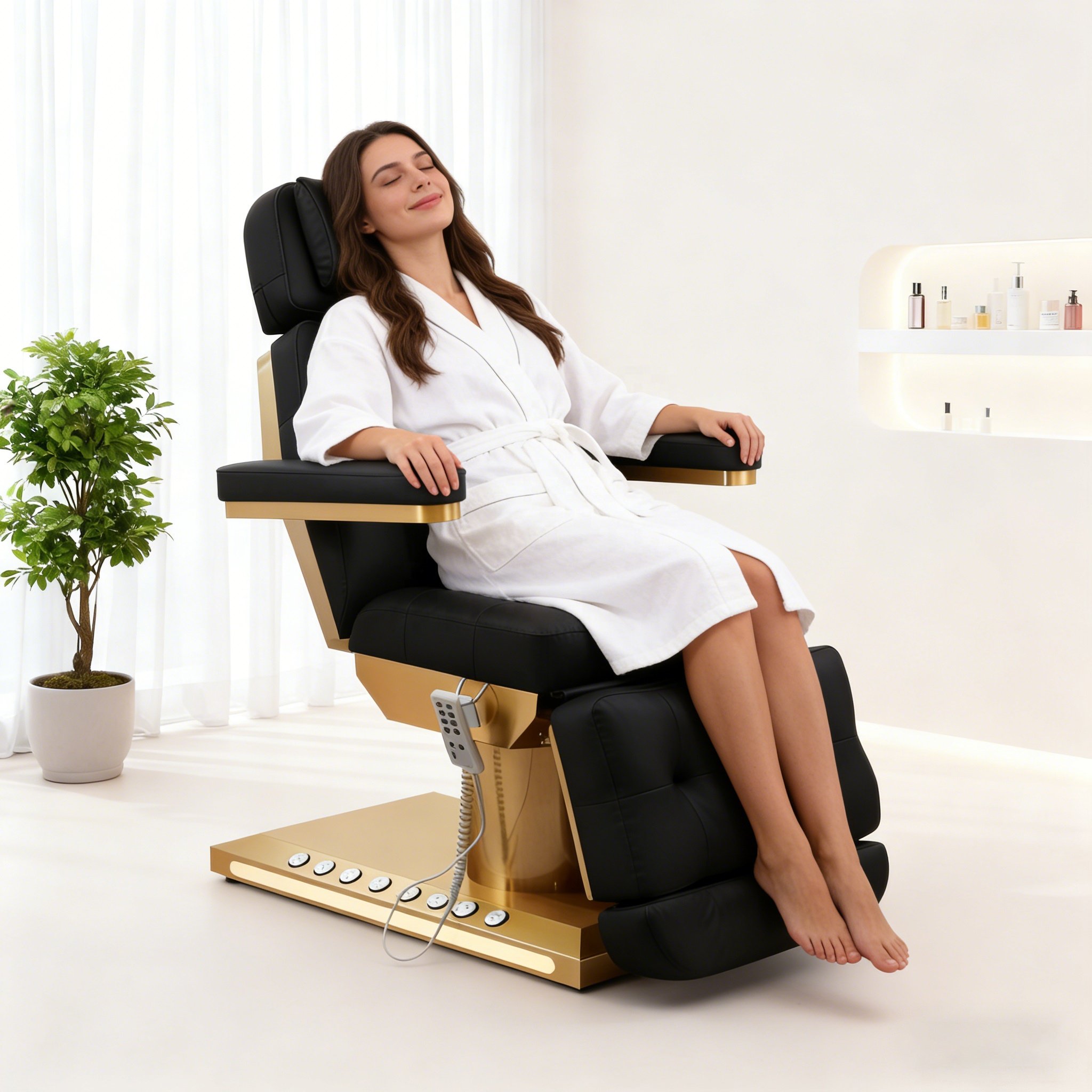
Electric Tattoo Chairs — Worth It for Full-Time Artists
If you tattoo full-time, an electric chair changes how you work. The ability to raise and lower the client with a foot pedal means you never have to stop and manually crank. When you’re in the middle of a 6-hour back piece and need to switch from the upper back to the lower back, being able to tilt the chair by a few degrees without interrupting your motion is a game-changer.
I’ve talked to artists who bought hydraulic first and upgraded to electric within a year. They all say the same thing: they wish they’d bought electric from the start. The extra cost ($400-$800 more) pays for itself in reduced physical strain within three months.
Hydraulic Chairs — Not a Bad Choice
That said, hydraulic tattoo chairs are not a bad choice. They’re simpler. Less can go wrong. In a shop where ink, cleaning chemicals, and moisture are everywhere, fewer electronics means fewer failure points. A good hydraulic chair from a reputable brand will last a decade with basic maintenance.
The downside is that you have to pump the foot pedal to adjust height, and the adjustment range is usually less precise than electric. If you see 3-4 clients a day and don’t need constant repositioning, hydraulic is fine. If you do 8-hour sessions daily, go electric.
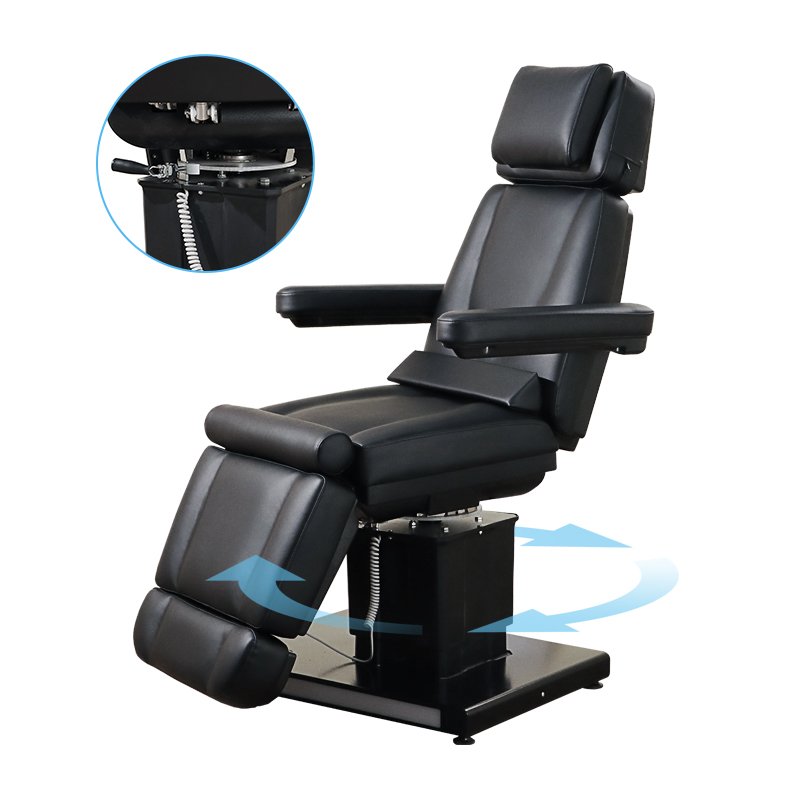
Tattoo Bed Chairs — Essential for Large Work
A tattoo bed chair that goes fully flat is not optional if you do back pieces, leg sleeves, or any large-scale work. Trying to tattoo a full back piece with the client sitting up is miserable — for both of you. The client can’t relax, and you’re reaching at awkward angles.
The bed should have at least three adjustable sections: head, torso, and legs. The upholstery needs to be waterproof PU leather — not fabric. Fabric absorbs ink and blood and is impossible to fully sanitize. Look for seamless surfaces where possible — fewer places for fluids to seep into.
What Artists Told Me They Wish They’d Known
Weight capacity. Several artists mentioned buying chairs with a 300-pound limit and later having to turn away clients. Get a chair rated for at least 400 pounds. The extra cost is minimal, and you never have to have an awkward conversation.
Armrests that remove. If the armrests are fixed and can’t be removed, you can’t access the armpit or inner arm area properly. Removable or flip-away armrests give you full access when you need it.
Headrest adjustability. A good headrest adjusts in multiple directions — forward, backward, up, and tilt. A fixed headrest forces clients to crane their neck during prone work, and they’ll fidget.
Caster quality. Cheap casters jam or break within months. Get locking casters with rubber wheels. Lockable is important — a chair that rolls during tattooing is dangerous.
Artist Chairs — Don’t Ignore Your Own Seat
Artists spend hours sitting. If your stool is uncomfortable, your work will suffer. Saddle stools are the most popular choice among tattoo artists — they promote better posture, allow free movement, and reduce sitting fatigue. But they take a week or two to get used to.
Whatever you choose, make sure it has: adjustable height (gas lift), a comfortable seat that doesn’t go numb after two hours, and smooth-rolling casters. Some artists add a foot ring for extra stability.
Real Prices (2026)
| Type | Factory Direct | US Distributor |
|---|---|---|
| Basic Hydraulic Chair | $250 – $600 | $400 – $1,200 |
| Electric 3-Motor Chair | $600 – $1,500 | $1,000 – $2,500 |
| Tattoo Bed (Full Flat) | $400 – $1,200 | $600 – $2,000 |
| Artist Saddle Stool | $80 – $250 | $150 – $500 |
| Portable Folding Bed | $150 – $400 | $200 – $600 |
Related Guides
- Read our Hydraulic Salon Chairs Guide for more information.
Final Word
Your tattoo chair is where you spend your career. Don’t cheap out. Electric if you can afford it, hydraulic if you prefer simplicity. Removable armrests, adjustable headrest, and good casters are non-negotiable. And don’t forget your own seat — a good artist chair pays dividends in your long-term health.
Frequently Asked Questions
What’s the best tattoo chair material?
Premium PU leather with stainless steel frame is best for tattoo chairs — easy to clean, durable, resistant to ink stains.
How much does a professional tattoo chair cost?
Factory-direct: basic $300-$800, electric adjustable $800-$1,500. Save 40-60% vs retail pricing.
Electric vs manual tattoo bed?
Electric beds offer hands-free adjustment for back tattoos. Manual beds are lighter and portable for guest artists.
What weight capacity do I need?
Standard 300-400 lbs. Heavy-duty up to 550 lbs. Always check capacity for client safety.
Related Buying Guides
Complete your salon setup with these guides:
Browse our treatment beds and therapy tables that work well for tattoo studio setups.