
I’ve watched estheticians buy three beds before they found the right one. First one was too low. Second one had a face cradle that felt like a brick. Third one was perfect — but they’d already spent two grand figuring it out. You don’t need to make those same mistakes.
Whether you’re doing facials, waxing, lash extensions, or all three, the bed you work on every day has a huge impact on your energy, your body, and how your clients feel. Here’s the honest breakdown.
The Main Types — And Which One You Actually Need
| Type | Best For | Price Range (2026) |
|---|---|---|
| Electric Esthetician Bed | Day-in, day-out facials and body treatments. You’ll adjust the height between every client — sometimes mid-treatment. Electric makes that effortless. | $800 – $2,500 |
| Standard Facial Bed | Basic facials, extractions, masks. Works fine if you’re in a small space and don’t need a lot of bells and whistles. | $600 – $2,000 |
| Waxing Bed | Body waxing. Wider than a facial bed. Heat-resistant upholstery. Easy to wipe wax off. If waxing is 40%+ of your income, buy a dedicated one. | $500 – $1,800 |
| Bed with Face Hole (the cutout) | Prone-position treatments. Some clients hate face cradles and prefer to breathe through a hole. More common in Europe, but growing in the US. | $700 – $2,200 |
| Portable Folding Bed | Mobile estheticians, pop-ups, rental chairs. Sets up in 30 seconds, packs into a car trunk. | $300 – $800 |
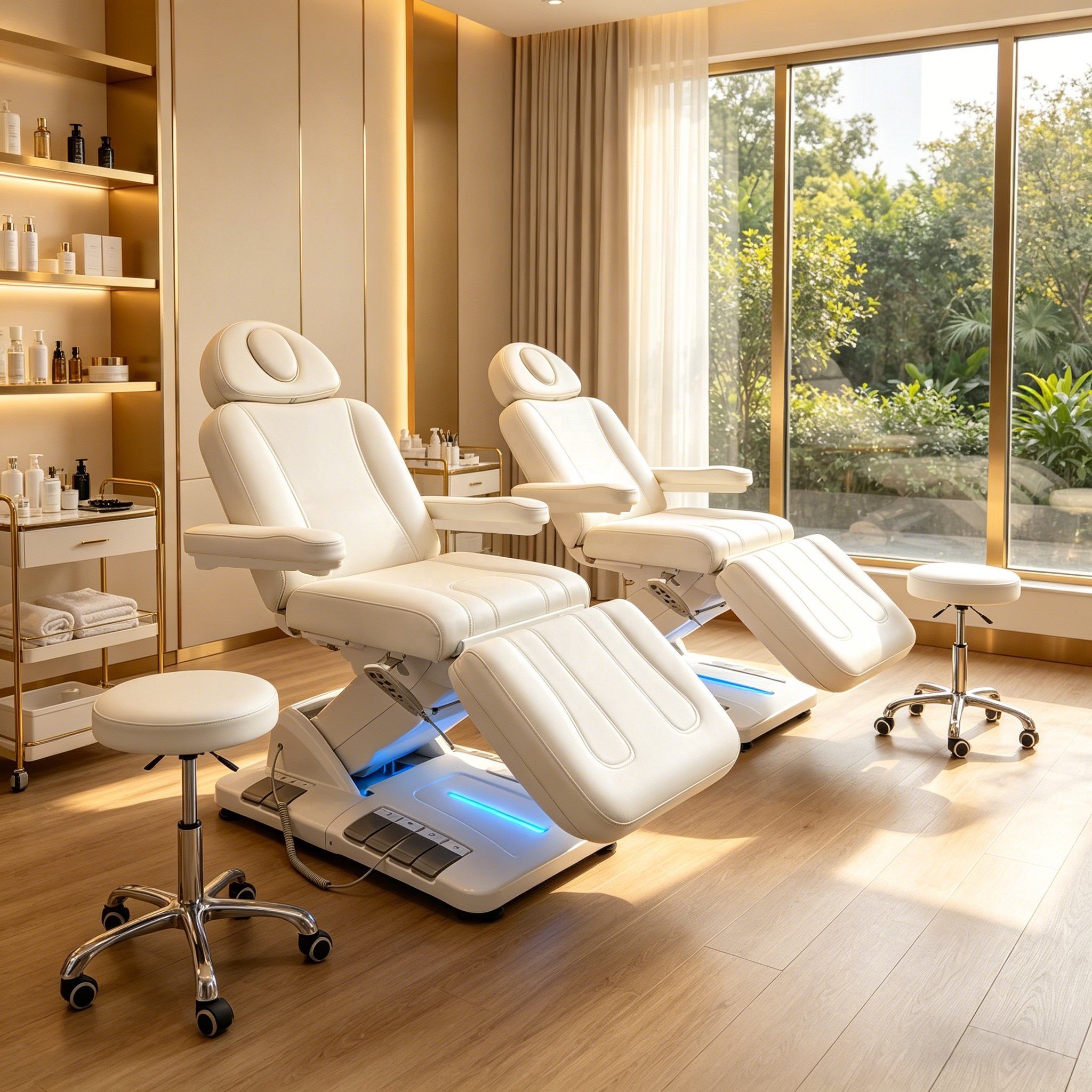
Features That Matter When You’re Doing Six Facials a Day
Electric Height Adjustment Is Not a Luxury. I’ve heard estheticians say “I’ll just manual crank, it’s fine.” After the third client of the day, you won’t think that. An electric esthetician bed lets you raise and lower with a foot pedal. Your back doesn’t twist. Your shoulders don’t hunch. If you’re doing this job for more than a year, electric pays for itself in reduced pain. I’ve seen too many estheticians burn out before thirty because they wouldn’t spend the extra four hundred dollars.
The Face Cradle. This is where most cheap beds fail. A bad face cradle has hard foam that presses into your client’s cheekbones. After 45 minutes of a facial, they’re uncomfortable and shifting around. A good one has memory foam and adjustable angles — tilt, height, and forward/backward. Test it before you buy. If you can’t test it, read reviews specifically about the face cradle.
Heating — Worth It for Facials. Not essential, but if you’re in a colder climate or your treatment room has AC blasting, a heated bed makes a massive difference. Clients relax faster. Muscles soften for extractions. And honestly, it feels luxurious. Some electric esthetician beds come with a built-in heater pad. Others let you add one aftermarket.
Waxing Upholstery — Don’t Use Fabric. If you do any waxing, your upholstery matters. Hard PU leather or vinyl that’s heat-resistant and wipes clean with a little alcohol. If you use fabric, you’ll be scrubbing wax out of it within a month. The best waxing beds have a seamless surface — no seams where wax can get trapped.
Are Electric Esthetician Beds Worth It?
Short answer: yes. Long answer: I’ve worked with both. A manual bed works fine — until it doesn’t. The issue is that you’ll find yourself skipping adjustments because cranking is annoying. And that means you’re working in a suboptimal position. Two years of that and your neck and shoulders will remind you every morning.
An electric esthetician bed costs more upfront, but it removes every friction point in your setup. You stand straight. The client gets on and off easily. You can tilt the head section during a back treatment. It just works.
Waxing Beds — When to Buy a Separate One
If waxing is part of your menu, you have two choices: one bed for everything, or dedicated beds. A dedicated waxing bed is wider — 30 to 32 inches instead of the standard 28. That extra width matters when you’re doing full leg waxes or Brazilian services. The upholstery is designed for hot wax. And they usually have better drainage in case of spills.
But if you’re in a small studio and space is tight, one good esthetician bed with the right upholstery can do both. Just be religious about cleaning it between services.
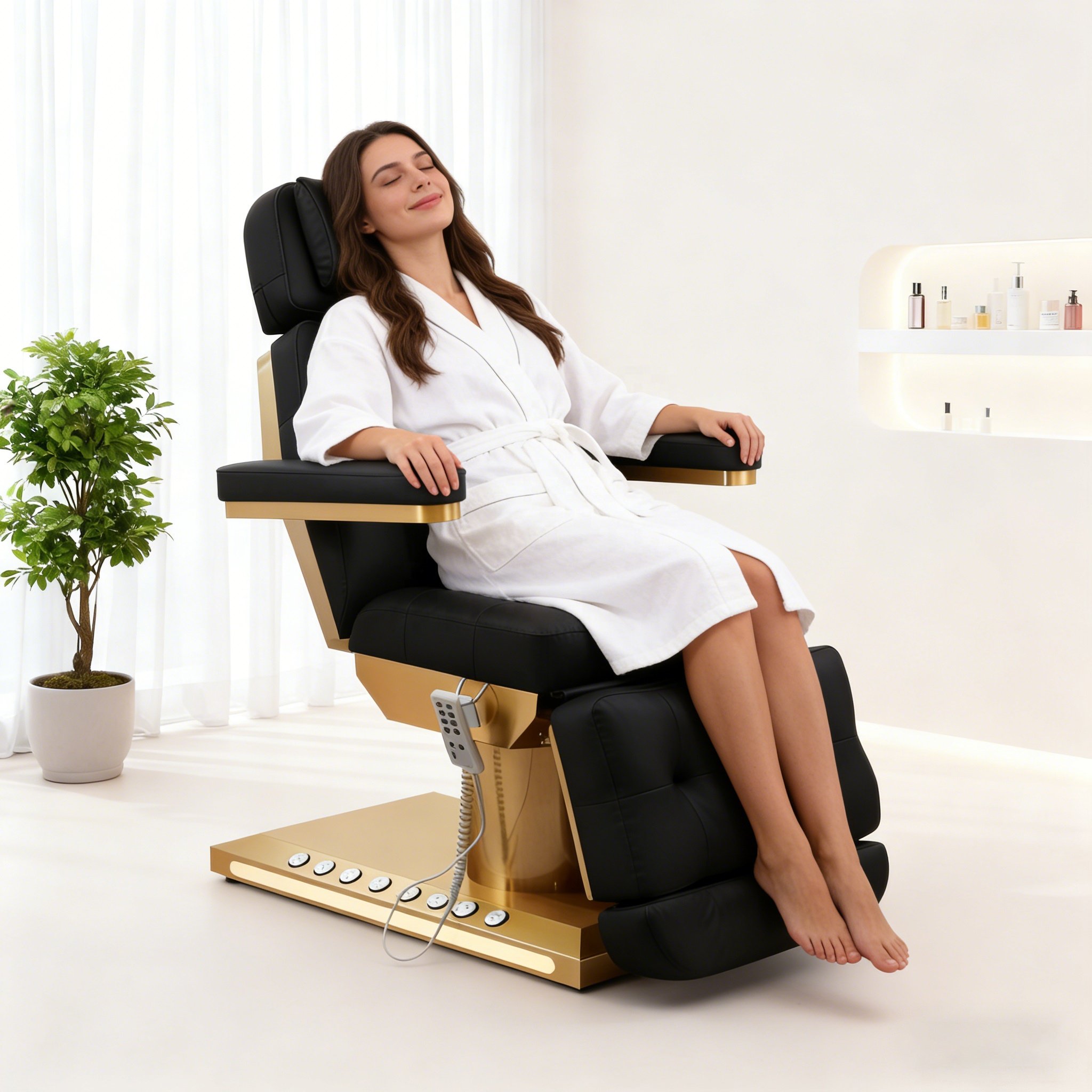
What You’ll Actually Pay in 2026
| Type | Factory Direct Price | US Distributor Price |
|---|---|---|
| Basic Manual Facial Bed | $300 – $600 | $500 – $1,000 |
| Electric Esthetician Bed | $600 – $1,500 | $1,200 – $2,500 |
| Electric with Heating | $800 – $1,800 | $1,500 – $2,800 |
| Electric Waxing Bed | $700 – $1,600 | $1,200 – $2,200 |
| Portable Folding Bed | $200 – $500 | $300 – $800 |
Related Guides
- Read our Salon Bed Accessories Guide for more information.
- Read our Heated Beds & Warmers Guide for more information.
Bottom Line
Buy the best esthetician bed you can afford. Electric, with a good face cradle, and upholstery that matches your services. Don’t cheap out on padding — your clients will feel it. And don’t ignore the ergonomics — your body is your most expensive equipment.
Frequently Asked Questions
Esthetician bed vs facial bed difference?
Esthetician bed is a broader term (facial, waxing, treatment). Facial beds are designed specifically with face cradle and armrests for facial treatments.
How much does a facial bed cost?
Manual $200-$500, electric 2-motor $400-$800, 3-motor $600-$1,500, luxury 4-motor $1,200-$3,000.
What motor configuration do I need?
2-motor adjusts height + backrest. 3-motor adds foot section. 4-motor adds leg adjustment. 3-motor is the sweet spot.
Best upholstery for facial beds?
PU leather is standard. Premium soft-touch for luxury. Avoid fabric which absorbs facial oils and products.
Related Buying Guides
Complete your salon setup with these guides:
Browse our facial beds and multi-purpose beauty beds for your practice.