
There’s nothing worse than being three hours into a full-volume set and realizing your back is screaming because your lash bed is the wrong height. Or watching your client shift around because the face cradle feels like concrete.
Lash beds are specialty equipment — regular treatment beds don’t work well for lash work because the positioning is different. You need to be able to adjust height and angle frequently. Your client needs to be comfortable lying still for two hours. And you need easy access to the eye area. Here’s what to look for.
Types of Lash Beds
| Type | What It’s Actually Good For | Price (2026) |
|---|---|---|
| Electric Lash Bed | The standard for serious lash techs. Motorized height adjustment — you can dial in the perfect position for upper lashes, lower lashes, and everything in between. Foot pedal control means you never have to stop working. | $1,000 – $2,800 |
| Curved Salon Bed | The curved shape naturally positions the client’s head at a slight recline, opening up the eye area. Lash techs love these because they reduce the angle you have to work at. Less neck strain. | $600 – $1,800 |
| Luxury Eyelash Bed | Extra padding, premium upholstery, heating option. If you’re charging $200+ per set, your bed should reflect that price point. Clients notice. | $1,500 – $3,500 |
| Pink or Black Electric Lash Bed | Same internals as any electric bed, just different colors. Pink for a girly, welcoming salon. Black for a sleek, modern look. Pick what fits your brand. | $1,000 – $2,500 |
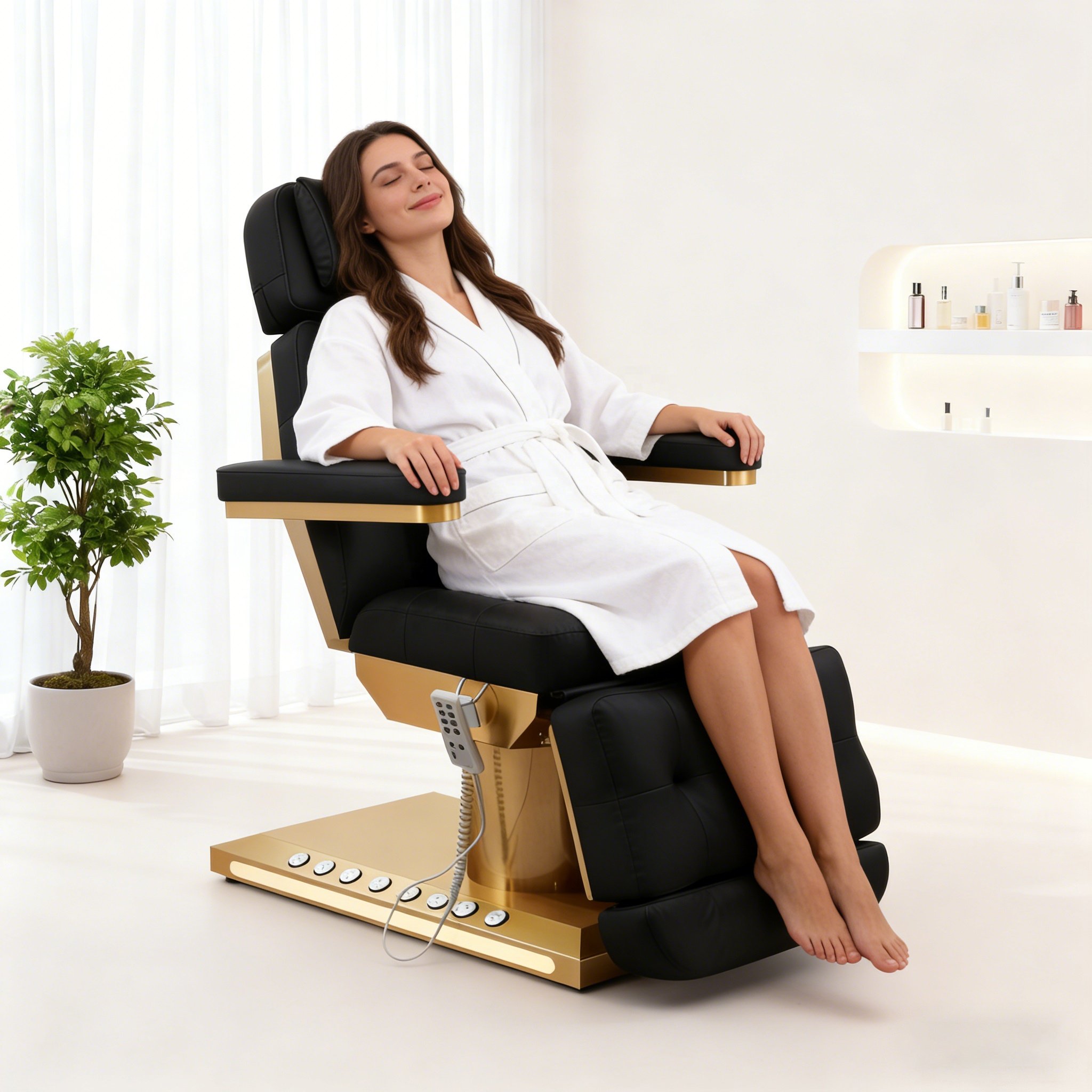
Why Electric Lash Beds Beat Manual
Here’s what happens with a manual lash bed: you set the height when you start, and you’re stuck with it for the whole appointment. But your client’s position changes throughout the set — you start with the left eye, then the right eye, then you need a different angle for the inner corners. With an electric lash bed, you can raise or lower by an inch without the client even knowing you did it. It makes a huge difference in the last hour of a long set.
I’ve had techs tell me they switched from manual to electric and immediately noticed that their shoulder pain went away. That’s not a placebo — when you can work at exactly the right height, your body stops compensating.
Curved Beds — Are They Worth the Hype?
Yes and no. A curved salon bed positions the client with a slight bend through the spine, which opens up the face and gives you better access. For lash work, that’s genuinely useful. But the curve also means the bed is less versatile for other services — facials, massages, waxing. If your room is dedicated to lashes only, a curved bed is great. If you’re renting a chair and need to do multiple services, go straight.
Key Things That Matter for Lash Work
Face Cradle Comfort. Your client is going to be face-up for 90 to 180 minutes. If the face cradle digs into their occipital bone or the padding is too firm, they will fidget. And every time they fidget, your lash application gets harder. Memory foam is worth the extra cost.
Upholstery that Resists Adhesive Fumes. Lash glue fumes settle on everything. Your bed upholstery should be non-porous and easy to wipe down. PU leather works. Fabric traps fumes and gets tacky over time.
Width. Most lash beds are 28-30 inches wide. If you work on larger clients, 32 inches is better. Check the weight capacity too — 350 pounds minimum for commercial use.
Motor Noise. Some electric lash beds have loud motors. When a client is relaxed with eyes closed, a screeching motor wake them up. Look for “quiet motor” or “silent operation” in the specs.
Real Prices (2026)
| Type | Factory Direct | US Distributor |
|---|---|---|
| Manual Curved Lash Bed | $400 – $800 | $600 – $1,200 |
| Hydraulic Lash Bed | $500 – $1,000 | $800 – $1,500 |
| Electric Lash Bed | $800 – $1,800 | $1,200 – $2,800 |
| Electric with Heating | $1,000 – $2,200 | $1,500 – $3,500 |
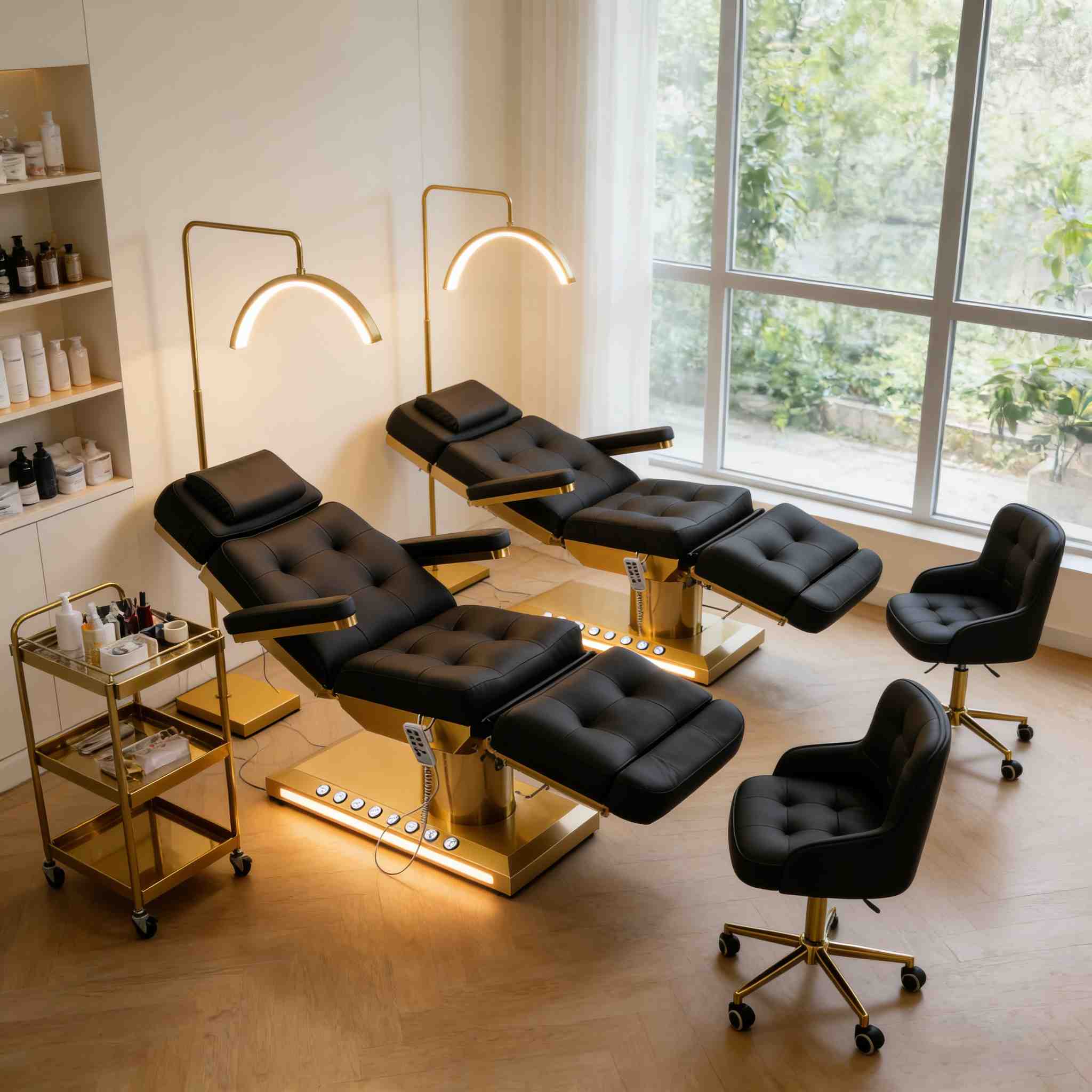
Real Talk: What I’ve Seen Lash Techs Get Wrong
I’ve seen lash techs buy a $3,000 luxury bed and pair it with a $40 stool that wrecks their posture. Others buy the cheapest manual bed from a discount marketplace and wonder why clients keep shifting mid-set. Balance your budget — spend on the bed and face cradle first, then the stool, then accessories.
Test the bed for a real session before committing. Lie on it for 90 minutes. Find the pressure points. Check how easy sections adjust. If it doesn’t work during a test, it won’t work when you’re fully booked.
Lash adhesive fumes settle on upholstery. Wipe the bed down between clients with a gentle adhesive remover. Regular cleaning extends the bed’s life.
Final Word
If you do lashes full-time, buy an electric lash bed with a comfortable face cradle and quiet motor. Your body will last longer, your clients will be more comfortable, and you’ll produce better work. Curved or straight is a matter of preference and space — both work well.
Frequently Asked Questions
Electric vs manual lash beds?
Electric: motorized height and backrest (hands-free). Manual: hydraulic pump. Electric preferred for lash studios.
How much does a lash bed cost?
Manual $200-$400, electric 2-motor $400-$800, curved electric $600-$1,200, premium w/LED $800-$1,800.
What is a curved lash bed?
Contoured surface for optimal client positioning during eyelash extensions. Reduces neck strain during long sessions.
What weight capacity for lash beds?
Standard 300-400 lbs. Heavy-duty electric 450-550 lbs.
Related Buying Guides
Complete your salon setup with these guides:
Check out our lash bed collection designed specifically for lash and brow services.
Browse related: Facial Beds | Wholesale Quote.