
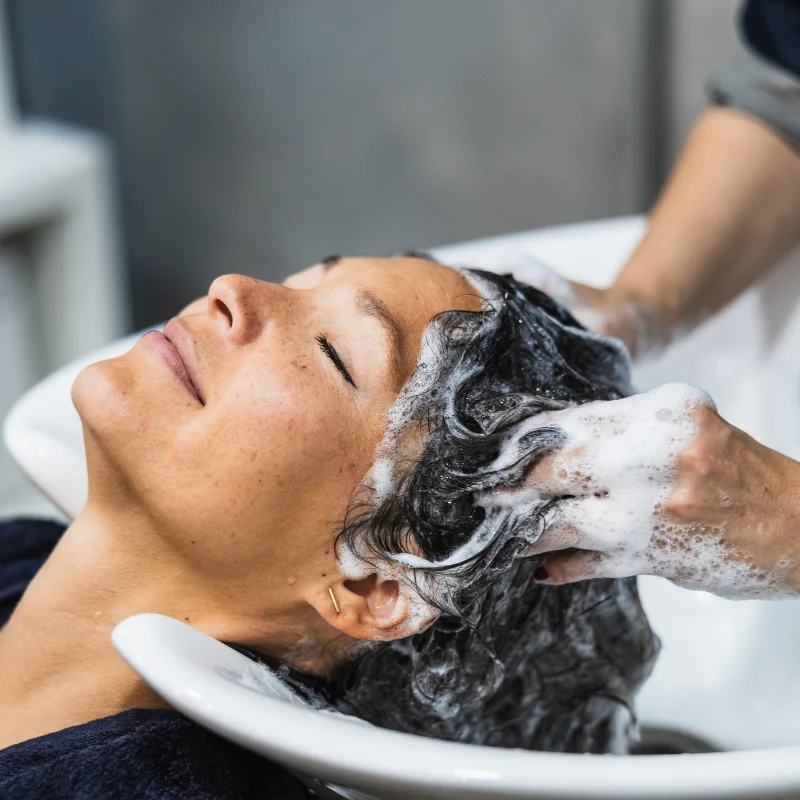
Head spa services only succeed when they are consistent, efficient, and repeatable across your team.
The goal is not to teach a technique, it is to build a service your staff can deliver the same way every time, even during peak hours when timing and pressure increase.
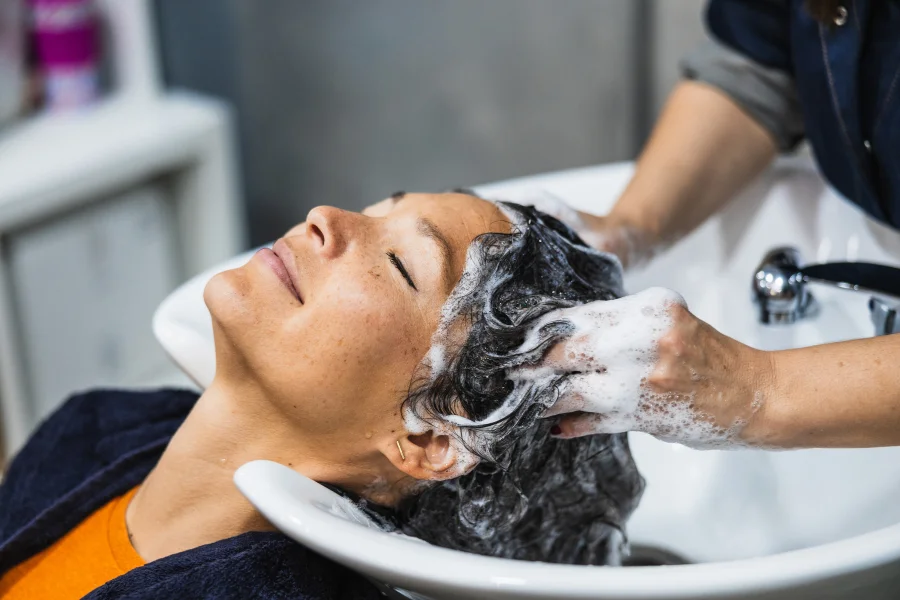
Why Most Head Spa Training Fails in Real Salon Settings
Many salons focus only on massage techniques and product use.
This leads to inconsistent service quality, uneven timing, and client experiences that depend too much on individual stylists rather than a reliable system.
Common issues include:
- No clear service structure or timing, which causes services to run over schedule
- Different techniques between stylists, creating uneven client expectations
- Equipment that does not support longer treatments, leading to staff fatigue and rushed execution
A reliable head spa service starts with a defined system, not individual skill.
Set Up Your Head Spa Service Before Training Your Team
Before training begins, define exactly what your head spa service includes.
Without this step, training often leads to inconsistent delivery because each stylist interprets the service differently.
Set clear service parameters
- Service length, typically 45, 60, or 90 minutes, which directly determines pricing and daily capacity
- Positioning, standalone service or add-on to wash and style, which affects scheduling flow
- Target outcome, relaxation, scalp care, or both, which guides product and technique choices
Plan daily capacity
- A 60-minute service allows 6–8 clients per stylist per day under stable conditions
- Include buffer time for cleaning and reset, especially during high-traffic periods
- Avoid overbooking, as even a 10-minute delay per client can disrupt the entire day’s schedule
Build pricing logic
- Base service for core treatment
- Add-ons such as masks, steam, or extended massage
- Package options to encourage repeat visits and stabilize revenue
A defined structure makes training more focused and prevents operational bottlenecks later.
Set Up the Right Space and Equipment for Head Spa Services
Your setup directly affects both service quality and staff performance.
If the space is not designed for longer treatments, staff will compensate by rushing or adjusting posture, which reduces service consistency over time.
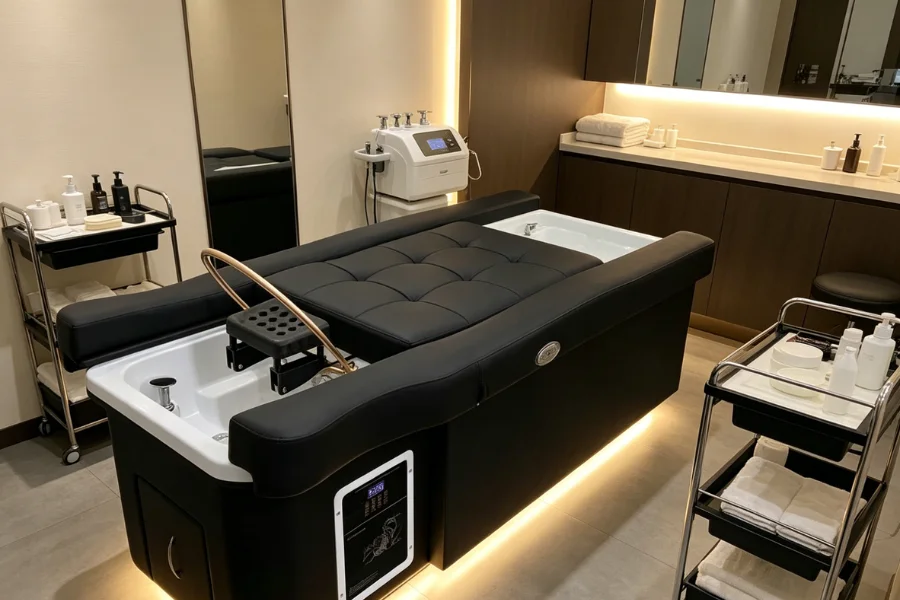
Shampoo bed and ergonomics
A fully reclined shampoo bed supports the client’s entire body and reduces neck strain during longer sessions.
For staff, it minimizes repetitive bending, which is one of the main causes of fatigue in head spa services lasting over 45 minutes.
In projects where extended treatments are part of the service design, fully reclined systems are often selected to maintain both client comfort and staff endurance. NovaBeauty setups are commonly used in these cases because they support stable positioning and consistent water flow throughout the service.
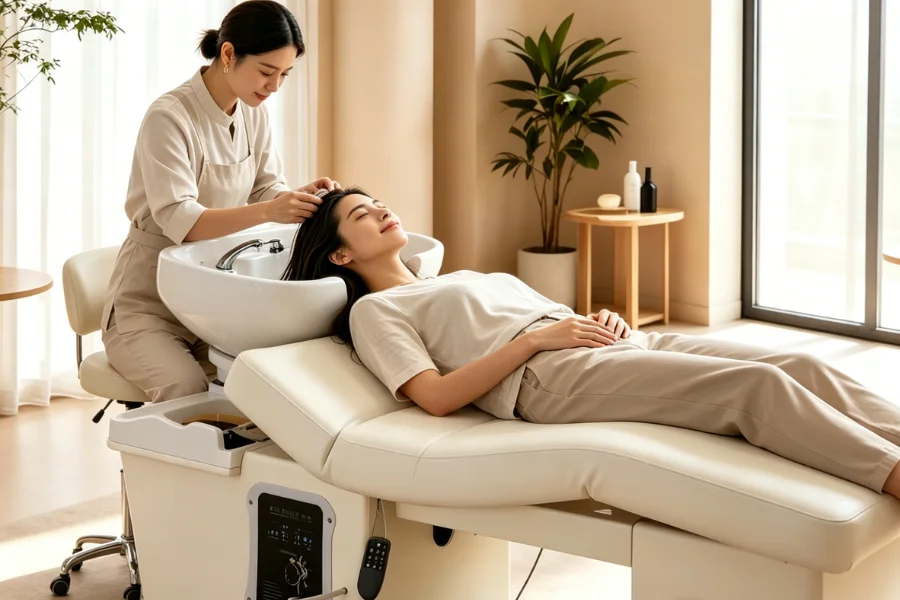
Space layout and flow
- Maintain at least 900 mm of walking clearance to prevent interruptions during service
- Separate head spa areas from high-traffic styling zones to avoid noise and distraction
- A quieter zone helps justify longer service time and higher pricing
Supporting equipment
- Steam devices improve product absorption and reduce treatment variability
- Adjustable lighting reduces eye strain during detailed work
- Towels and support items within reach reduce unnecessary movement and time loss
A practical setup reduces physical strain and helps maintain consistent service quality throughout the day.
Turn Head Spa Into Simple Steps Your Team Can Learn
Training becomes more effective when the service is divided into clear, repeatable steps.
Without this structure, stylists tend to rush certain parts and overextend others, leading to inconsistent timing.
Consultation and scalp check
- Focus, identifying scalp condition and client goals
- Common issue, skipping consultation and applying generic treatments, which reduces perceived value
- Time guide, 5–10 minutes
Scalp massage
- Focus, pressure control and rhythm consistency
- Common issue, uneven pressure or rushed pacing, which directly affects client satisfaction
- Time guide, 10–15 minutes
Cleansing and exfoliation
- Focus, correct product selection and controlled application
- Common issue, over-exfoliation or incorrect product use, which may irritate the scalp
- Time guide, 10–15 minutes
Treatment and steam
- Focus, even product distribution and timing control
- Common issue, inconsistent steam use, which reduces treatment effectiveness
- Time guide, about 10 minutes
Rinse and finishing
- Focus, thorough rinsing and clean finishing
- Common issue, incomplete removal of products, which affects both comfort and results
- Time guide, 10–15 minutes
Breaking the process into steps allows you to train, measure, and improve each part independently.
Train Your Team to Deliver the Same Experience Every Time
Consistency is more important than individual technique.
Clients notice differences between stylists quickly, and inconsistency is one of the main reasons they do not rebook.
Standardize the process
- Use a fixed sequence for every service to reduce variation
- Define time ranges for each step to control service duration
- Create simple checklists for staff
Build a structured training path
- Week 1, theory and scalp knowledge
- Week 2, massage techniques and pressure control
- Week 3, full service practice with timing control
- Week 4, supervised client sessions
Reinforce through observation
- Review services regularly across different staff
- Identify where timing or technique deviates
- Adjust methods to maintain a consistent experience
This approach reduces variability and ensures predictable service quality.
Build a Head Spa Service Clients Will Book Again
A head spa service becomes profitable when clients return regularly.
Retention depends on whether the experience feels consistent and delivers noticeable results over time.
Create repeatable treatment plans
- General maintenance, every 3–6 weeks to support scalp balance
- Targeted care, every 2–4 weeks for specific concerns
Structure your offerings
- Core service as the foundation
- Add-ons for customization and upsell opportunities
- Multi-session packages to stabilize booking patterns
Improve experience details
- Adjust water temperature and pressure throughout the service
- Check client positioning to prevent discomfort during longer sessions
- Provide specific aftercare recommendations to extend results between visits
Small operational details often determine whether a client returns.
Promote Your Head Spa Service Without Overcomplicating It
Marketing should reflect the real service experience and remain easy to understand.
Overpromising often leads to mismatched expectations and lower satisfaction.
Focus on clarity
- Show actual service steps and setup so clients know what to expect
- Explain duration and realistic outcomes to avoid confusion
Use real examples
- Before and after scalp conditions
- Short clips of massage techniques
- Client feedback focused on comfort and results
Support offline engagement
- Offer introductory pricing to lower first-time hesitation
- Encourage referrals with simple incentives rather than complex promotions
Clear communication helps clients make confident decisions.
Start Small and Improve Your Head Spa Service Over Time
You do not need a complex setup to begin offering head spa services.
Start with a defined structure, train your team step by step, and refine the process based on actual service performance.
A well-trained team, supported by the right setup, delivers a consistent experience that clients will return for.