
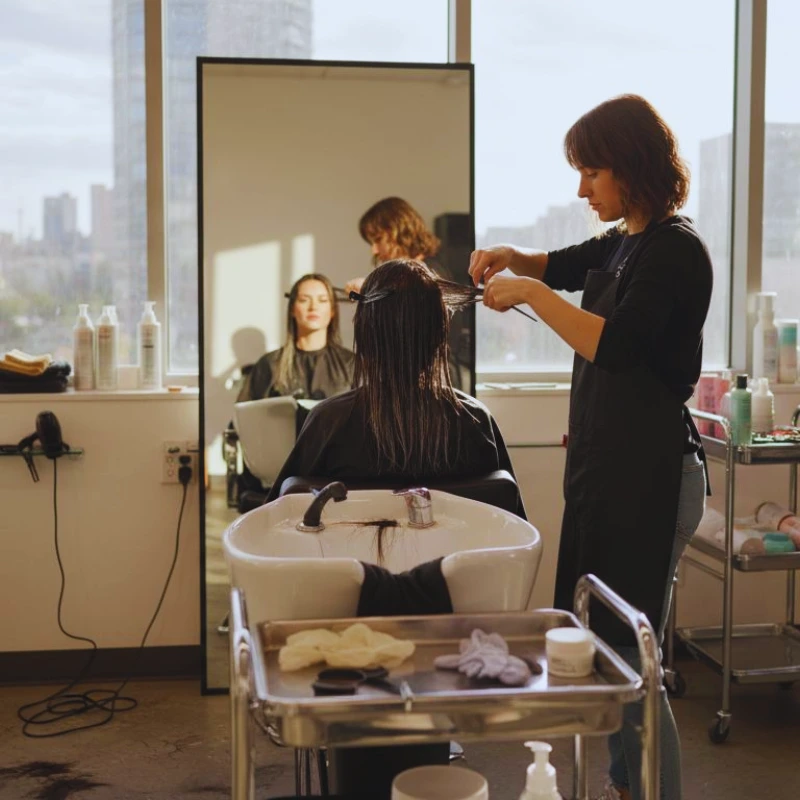
Is Keratin Treatment Worth Adding to Your Service Menu
Keratin treatments are a strong fit for salons serving clients who struggle with frizz, humidity, or time-consuming styling routines. The service delivers visible smoothing results and reduces daily maintenance, which supports repeat visits and premium pricing.
However, the service requires extended chair time and controlled working conditions. If your salon depends on fast turnover, adding keratin treatments without adjusting scheduling can reduce overall daily capacity.
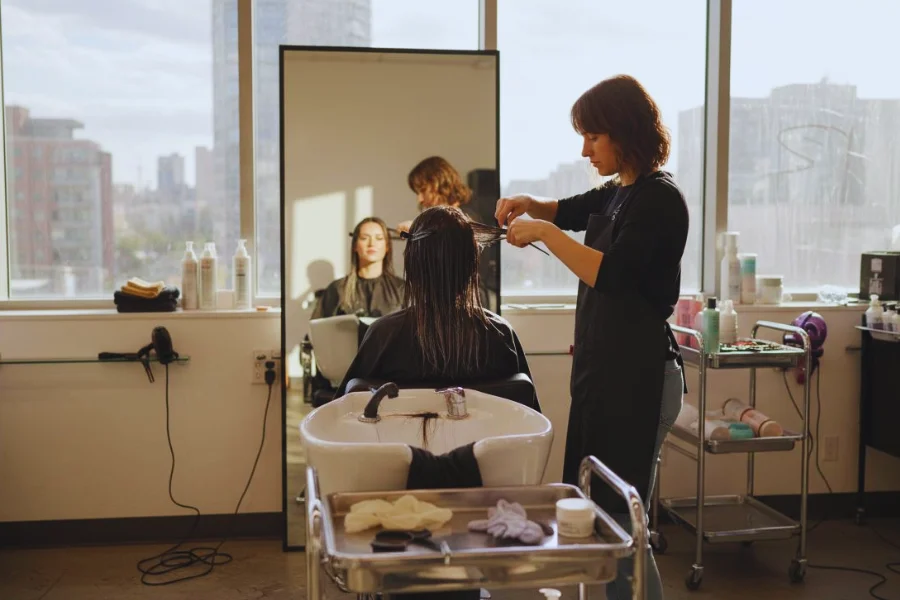
What Keratin Treatments Really Do to the Hair Structure
Keratin is a structural protein that supports hair strength and surface smoothness. Heat styling, chemical services, and environmental exposure gradually reduce keratin levels, increasing porosity and frizz.
A keratin treatment applies a liquid protein formula and seals it into the hair with heat. This process smooths the cuticle and limits moisture penetration, which improves manageability and reduces styling variability.
When Keratin Treatments Make Sense for Your Clients
Keratin treatments are most effective when the goal is to control frizz and reduce styling time while maintaining some natural movement.
Best suited for
- Clients with frizzy, coarse, or humidity-sensitive hair
- Clients who rely on daily blow-drying or straightening
- Hair that has been chemically processed or heat-damaged
Less suitable for
- Clients who want to preserve tight curls or defined texture
- Clients unwilling to follow aftercare guidelines
- Clients sensitive to chemical exposure or strong odors
A thorough consultation helps prevent mismatched expectations and improves satisfaction.
What Benefits Clients Actually Notice After the Service
The value of keratin treatments is reflected in daily usability rather than immediate appearance.

Practical outcomes
- Styling time reduced by 40 to 60 percent
- More consistent results in humid conditions
- Longer-lasting blowouts and smoother finishes
- Reduced reliance on frequent high-heat styling
These outcomes improve client satisfaction and reduce the need for corrective services between visits.
What Can Go Wrong During a Keratin Treatment
Keratin treatments combine chemical exposure with high heat, so control at each step is critical.
Primary risks
- Vapors released during heat sealing, especially in poorly ventilated areas
- Excessive heat causing damage on fine or pre-treated hair
- Uneven application leading to inconsistent results
Control measures
- Maintain consistent airflow and avoid directing heat or fumes toward the client
- Adjust flat iron temperature based on hair condition
- Fine hair – 180 to 200°C
- Medium to coarse hair – up to 230°C
- Use consistent sectioning to ensure even product distribution
Managing these variables reduces risk and improves repeatability.
How Keratin Treatments Affect Your Daily Schedule
Keratin treatments require longer service blocks and should be planned accordingly.
Typical timing
- Express treatments – around 1.5 hours
- Full treatments – 2.5 to 4 hours depending on hair length and density
Operational impact
- Extended chair occupancy reduces total appointment capacity
- Heat sealing requires uninterrupted attention, limiting multitasking
- Poor scheduling can create bottlenecks during peak hours
Salons often assign keratin services to off-peak hours or dedicate specific stations to maintain workflow balance.
What Setup You Need for a Smooth Keratin Service
A stable and well-organized setup improves both service quality and client comfort during long sessions.
Key considerations
- Adjustable chairs that support consistent working height and angle
- Wash units that reduce neck strain during extended rinsing stages
- Clear tool organization to avoid interruptions during heat work
- At least 1 meter of spacing between stations when using high-temperature tools
In longer services, small setup issues become more noticeable. Many salons standardize their layout and equipment configuration to maintain consistent working posture and reduce repositioning during application and sealing stages.
Aftercare Rules Clients Need to Follow
Aftercare determines how long the results last and how clients evaluate the service.
Immediate care
- Do not wash hair for 48 to 72 hours
- Avoid tying, clipping, or bending the hair
- Avoid moisture exposure, including sweating and swimming
Ongoing care
- Use sulfate-free and sodium chloride-free shampoos
- Limit washing to two or three times per week
- Apply deep conditioning treatments regularly
- Reduce additional heat styling where possible
Clear guidance at this stage helps prevent premature result loss and client dissatisfaction.
Keratin vs Other Smoothing Treatments – What’s the Difference
Different treatments serve different levels of smoothing and permanence.
| Treatment Type | Duration | Result | Effect on Curl Pattern | Chemical Intensity |
|---|---|---|---|---|
| Keratin Treatment | 3–6 months | Smooth, reduced frizz | Loosens curls | Moderate |
| Brazilian Blowout | 3–4 months | Smoother with movement | Partially reduces curls | Moderate |
| Japanese Straightening | Permanent | Fully straight | Eliminates curls | High |
| Chemical Relaxer | Permanent | Fully straight | Eliminates curls | High |
Keratin treatments provide a balance between manageability and texture retention, making them suitable for clients who want smoother hair without a fully straight finish.
Common Misunderstandings About Keratin Treatments
Keratin treatments damage hair
When performed with proper heat control and formulation, they improve surface smoothness. Damage usually results from excessive heat or incorrect technique.
They are only for straight hair
They are effective on curly and textured hair, though the curl pattern becomes more relaxed.
Results are permanent
The effect gradually fades over several months and does not permanently change new growth.
Hair can be washed immediately after treatment
Most treatments require a waiting period of 48 to 72 hours.
How to Decide if Keratin Is Right for Your Client
Keratin treatments are a practical option for clients who want to reduce frizz, shorten styling time, and achieve more consistent daily results.
They are less suitable for clients who want to maintain strong natural curls, avoid chemical exposure, or prefer minimal aftercare routines.
A structured consultation remains the most reliable approach. Hair condition, lifestyle, and expectations should be aligned before proceeding, ensuring the service delivers consistent and predictable results.