
Why Shampoo Bowl Cleanliness Directly Affects Client Trust and Operating Costs
Shampoo bowls are one of the few pieces of salon equipment where clients remain stationary, relaxed, and physically connected for several minutes. Because of that, even minor hygiene issues are noticed immediately.
When shampoo bowl maintenance is inconsistent, the impact shows up in three places first—client confidence, staff efficiency, and unplanned repairs. Clean bowls support a professional image, reduce odor complaints, and help prevent drainage and plumbing failures that often lead to service interruptions.
For high-traffic salons, neglecting routine care accelerates wear. For lower-volume salons, irregular cleaning allows residue to harden over time, creating the same risks more slowly but just as predictably.
What Daily Shampoo Bowl Cleaning Should Look Like in Real Operations
Between-Client Cleaning That Prevents Visible Issues
Between clients, the goal is not deep sanitation—it is eliminating visible residue before it becomes a client-facing problem.
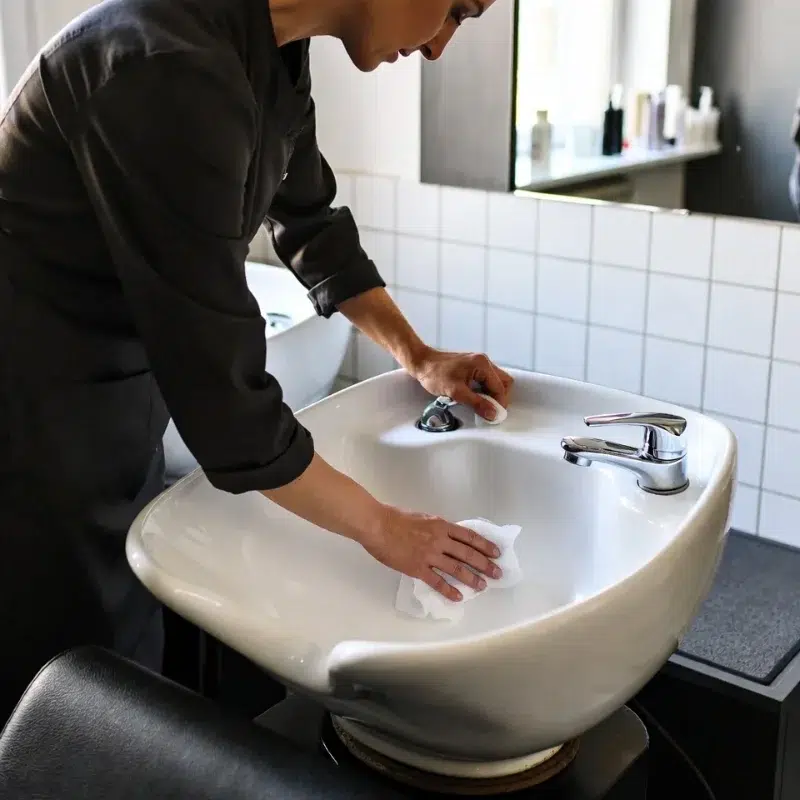
Wipe the bowl interior and exterior with a mild, household-grade cleaner. Remove shampoo residue, loose hair, and splashed product immediately. Use neutral or lightly scented cleaners such as soft citrus or subtle floral scents to avoid overwhelming sensitive clients.
In multi-station salons with continuous backwash use, skipping this step even once increases odor buildup and surface staining by the end of the day.
End-of-Day Cleaning Before Problems Set In
At closing, cleaning should shift from appearance to prevention.
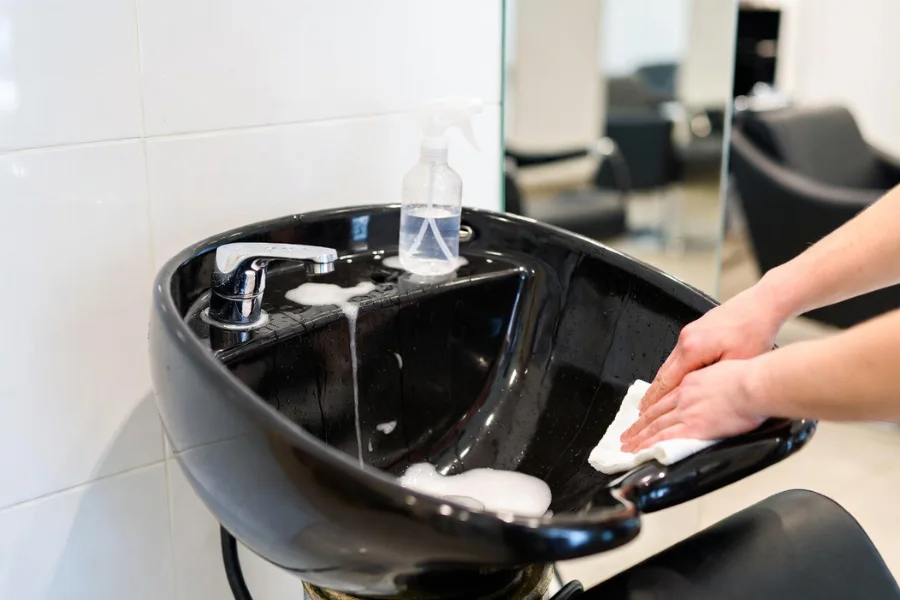
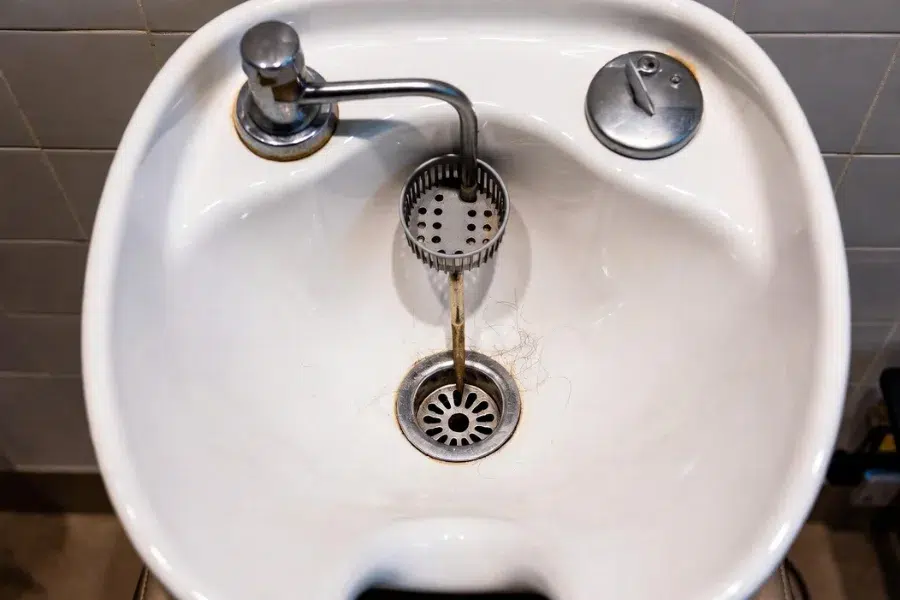
Wash the entire bowl with warm water and dish soap using a soft brush or cloth. Focus on the drain opening and surrounding surface, where residue accumulates fastest.
This daily reset reduces the likelihood of hardened buildup that requires aggressive cleaning later.
Weekly Deep Cleaning That Prevents Downtime and Repairs
Keeping Drains and Pipes Clear Before They Slow Down
Drain issues rarely appear suddenly. They develop from gradual residue buildup that restricts water flow over time.
Pour boiling water down the drain, then add baking soda followed by a 1:1 vinegar and water solution. Cover the drain and allow it to sit for 5–10 minutes before flushing again with boiling water.
In high-volume salons, this step is critical. Slow drainage during peak hours disrupts workflow and increases cleanup time between clients.
Maintaining Bowl Surfaces and Key Components
Weekly maintenance should include removable components, not just visible surfaces.
Detach sprayers and hoses and soak them in a non-abrasive, salon-safe or hospital-grade disinfectant. Inspect spray holes for mineral buildup that causes uneven water flow.
Ignoring sprayer maintenance often leads to customer discomfort before staff notices a technical issue.
How to Choose Safe Cleaning Tools and Products Without Damaging Equipment
Tools and Cleaners That Protect Long-Term Performance
The right cleaning products preserve finishes and reduce maintenance frequency.
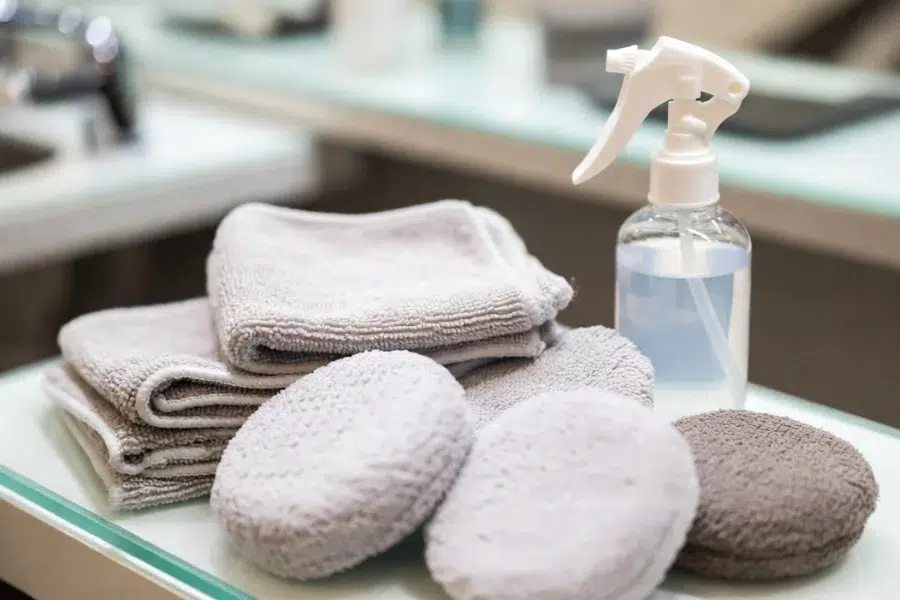
Use mild, neutral cleaners with light fragrance. Choose non-abrasive sponges or soft microfiber cloths. Select bowl-safe spray cleaners designed for professional salon equipment.
Cleaning Materials That Create Hidden Damage
Surface damage is one of the most common causes of long-term sanitation problems.
Avoid steel wool, stiff brushes, or abrasive pads. Do not use strong acids, bleach-based products, or chemical drain cleaners. Overly scented cleaners that linger during services can also reduce client comfort.
Scratched surfaces trap residue more easily, making bowls harder to keep clean over time.
Preventive Maintenance That Reduces Costly Interruptions
Why Hair Traps Matter More in Busy Salons
Hair traps are a low-cost solution with a high operational payoff.
Remove collected hair daily in high-traffic salons. Clean the trap thoroughly at least once a month.
In multi-chair backwash setups, a single clogged drain can slow multiple stations.
How Bowl Color Affects Ongoing Maintenance
Color choice influences cleaning visibility and effort.
White bowls highlight stains quickly and require more frequent visual checks. Black bowls conceal discoloration but make loose hair harder to detect.
The right choice depends on staffing levels and cleaning discipline, not aesthetics alone.
Routine Plumbing and Sprayer Checks That Prevent Service Disruptions
Check weekly for leaks or reduced water pressure. Inspect sprayers monthly for mineral buildup and soak as needed using vinegar and water.
These checks prevent issues from escalating during peak business hours.
When Disposable Neck Covers Make Sense
Disposable neck covers can improve hygiene consistency during high-volume service periods or in shared backwash environments.
Frequently Asked Questions
Which maintenance step is most often skipped and causes problems later
Drain and hair trap cleaning are most frequently overlooked. When neglected, residue and hair buildup restrict water flow, leading to slow drainage and unpleasant odors. These issues often surface during peak service hours, disrupting workflow and increasing cleanup time between clients.
How often should shampoo bowls be deep cleaned
Shampoo bowls should be deep cleaned at least once per week to prevent residue and internal buildup. High-traffic salons benefit from more frequent drain maintenance, as heavier daily use accelerates accumulation inside pipes and increases the risk of slow drainage.
Can steel wool or abrasive pads be used on shampoo bowls
No. Abrasive tools scratch the bowl surface, creating micro-damage that traps residue and makes sanitation harder over time. Surface damage also shortens the lifespan of shampoo bowls and increases the likelihood of stains and recurring hygiene issues.
What causes weak water flow from shampoo sprayers
Mineral buildup inside the spray head is the most common cause of weak or uneven water flow. Regular descaling helps maintain consistent pressure and client comfort. Ignoring buildup often leads to discomfort before staff recognizes a maintenance issue.
Is bowl color a maintenance decision or a design choice
Both factors matter. White bowls show stains more quickly and require frequent visual checks, while black bowls conceal discoloration but make loose hair harder to detect. The best choice depends on staffing levels, cleaning discipline, and long-term maintenance capacity.
Long-Term Shampoo Bowl Care Starts With Daily Habits
Preventive care consistently costs less than reactive repairs. Daily cleaning combined with scheduled deep maintenance extends equipment lifespan and minimizes service disruptions.
From a manufacturing perspective, long-term usability and ease of maintenance are central considerations in professional shampoo bowl design. Brands such as Nova account for real salon usage patterns when developing commercial-grade backwash equipment.
Maintaining clean shampoo bowls is not only about hygiene. It reflects operational discipline, protects workflow efficiency, and reinforces a salon’s professional standards over time.
Related Products for Your Salon Business
Browse our professional-grade salon equipment and furniture at factory-direct wholesale prices: