
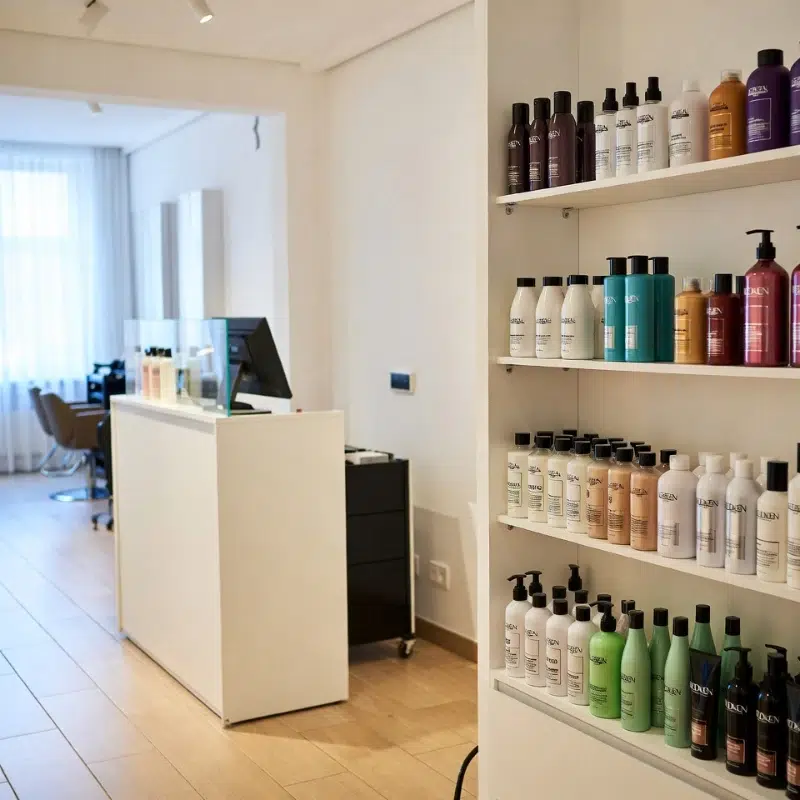
Retail performance in a salon is rarely limited by product quality. More often, it is constrained by how products are presented, how easily clients can interact with them, and how naturally retail fits into the service flow. In many projects, retail underperforms not because clients are uninterested, but because the space quietly discourages browsing.
A well-considered retail area reduces hesitation, supports professional credibility, and helps clients make decisions without feeling sold to. The following framework reflects patterns commonly seen across working salons, including what tends to work and what frequently creates friction over time.
Why Your Retail Area Has More Impact Than You Think
Clients form impressions of a salon long before a recommendation is made. Retail displays play a role in that first judgment, whether intentionally designed or not.
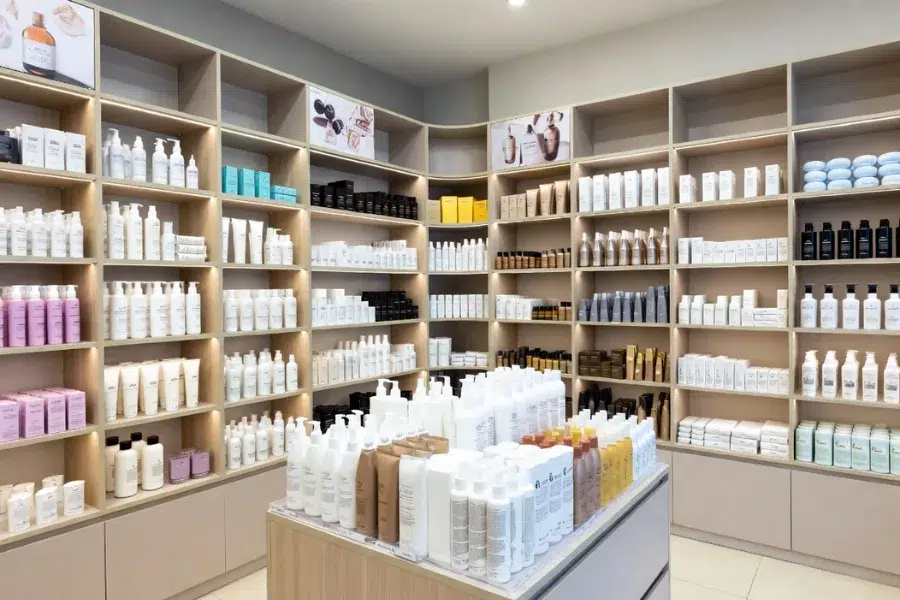
Clear and organized shelving signals operational control. When displays feel cluttered or inconsistent, clients often assume the same lack of structure extends to service quality. In practice, this perception alone can suppress retail interest.
Impulse purchases are influenced less by persuasion and more by access. Products placed within easy reach, along natural walking paths, are far more likely to be considered than those requiring effort to approach.
Retail also carries brand weight. Displays reflect how a salon positions itself, whether as routine-driven, results-focused, or detail-oriented. In many projects, sales improve not after adding new products, but after removing visual noise.
Cleanliness is non-negotiable, but the reason matters. Dusty shelves often signal low turnover to clients, even when products are still relevant. Once that impression forms, trust erodes quickly.
Start With the Clients You Actually Serve
Effective retail begins with alignment, not aspiration.
Observations from daily interactions often reveal more than formal research. Listening to recurring concerns, styling frustrations, and maintenance habits provides direct guidance on what belongs on the shelf.
Practical client profiles help narrow decisions. Age range, service frequency, and lifestyle patterns should influence which products are emphasized. Displays that reflect real usage tend to convert more consistently.
Product selection should follow demand rather than trend. Carrying items that staff rarely recommend usually leads to stagnant shelves, which in turn discourages browsing across the entire retail area.
For salons serving multiple client segments, organizing by concern rather than brand reduces confusion. This approach allows different clients to engage without overwhelming the space.
How to Build a Retail Display Clients Want to Explore
Layout Rules That Reduce Hesitation
Retail displays perform best when restraint is built into the layout. Excessive choice increases decision fatigue, often resulting in no purchase at all.
Grouping products by function simplifies comparison and shortens decision time. Eye-level placement should be reserved for the products most frequently used during services, not necessarily the widest assortment.
Lighting supports clarity more than drama. Clients are less likely to engage with products if labels are difficult to read or shelves feel visually dense.
Placement along natural circulation paths increases exposure without disrupting operations. Displays that require clients to step out of flow are often ignored.
Display Formats That Consistently Perform Well
Cross-merchandising works because it mirrors how products are actually used. Pairing complementary items reduces mental effort and supports bundled purchasing.
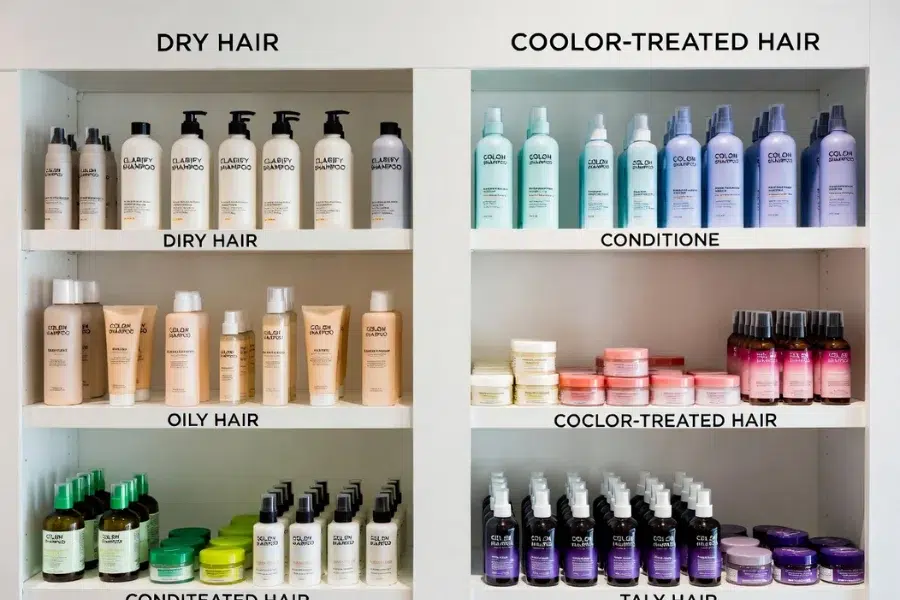
Single-product focal displays are effective when rotation is intentional. Highlighting one product for too long can make the rest of the shelf feel secondary.
Checkout displays remain reliable for small, practical items. Their success depends on relevance, not novelty.
Seasonal or themed displays perform best when tied to client routines rather than decoration alone. Subtle updates signal activity without requiring full resets.
Practical Tools for Limited Salon Space
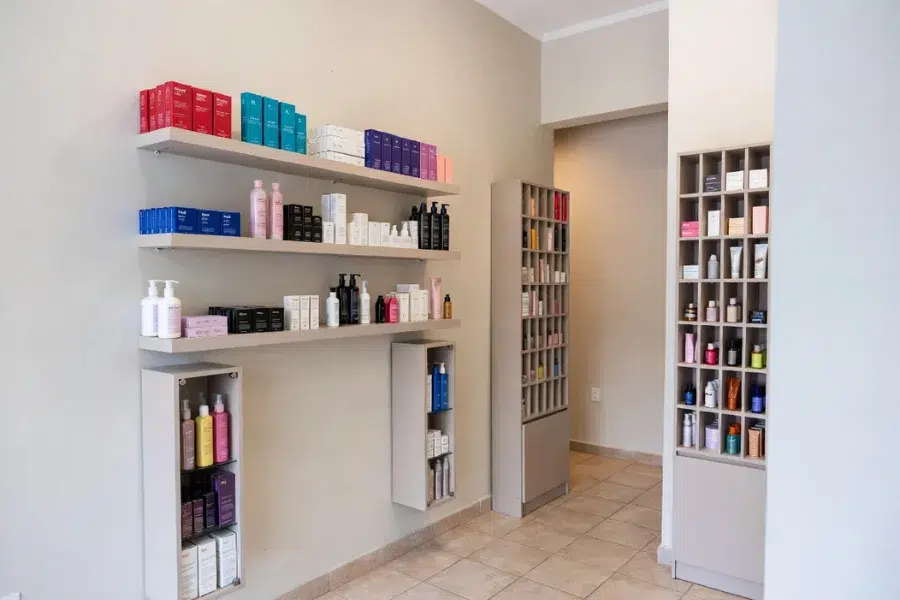
Wall-mounted systems, narrow shelving, and rotating units help preserve circulation space. In smaller salons, blocking walkways is one of the most common reasons retail underperforms.
Maintaining a full visual presence matters. When inventory runs low, placing empty containers behind front-facing products helps avoid the impression of declining relevance.
Clear labeling reduces friction. Clients rarely ask about price, and unclear pricing often stops purchases altogether.
From a manufacturing perspective, modular display systems tend to outperform fixed installations over time. In long-term projects, brands such as Nova often see salons benefit from fixtures that can be adjusted or replaced as layouts evolve, rather than rebuilt entirely.
Where Retail Fits Naturally Into the Service Flow
Retail integrates most effectively when it supports the service, not when it follows it.
Mentioning products during washing, treatment, or styling allows clients to connect the recommendation to results. Outside this context, even accurate advice can feel intrusive.
Hands-on interaction matters. Clients are far more likely to purchase products they have held, smelled, or applied during the service.
Education reduces uncertainty. Demonstrating how products are used at home reframes retail as continuity of care rather than an add-on.
At styling stations, outward-facing labels reinforce familiarity without repetition. This quiet reinforcement often carries more weight than verbal reminders.
How Atmosphere Influences Retail Decisions
Retail performance is closely tied to environmental cues.
Waiting areas positioned near retail displays encourage browsing during natural pauses. Seating should invite comfort without blocking access.
Music and scent influence pacing. Slower tempos tend to increase dwell time, while overpowering fragrances can shorten it.
Maintenance affects perception. Displays that appear neglected often communicate that products are outdated or rarely purchased.
Visual consistency across furniture, fixtures, and shelving reinforces trust. In projects where salons replace retail furniture frequently, costs tend to rise without improving sales. Adjustable systems generally offer better long-term value.
Using Promotions Without Undermining Value
Promotions should simplify decisions, not create urgency.
Bundled offerings work when they reflect real routines. Clients are more receptive to sets that solve a specific problem.
Seasonal incentives perform best when they feel expected rather than aggressive. Overuse of discounts supports short-term spikes but weakens perceived value.
Loyalty programs reward consistency and encourage repeat behavior when they remain easy to understand.
Gift cards and curated sets introduce new clients while maintaining pricing integrity.
Extending Retail Visibility Beyond the Salon
Digital channels reinforce in-salon exposure.
Sharing retail layouts on social platforms keeps products visible between visits. Short-form video often communicates usage more clearly than static images.
Client-generated content adds credibility. Encouraging photos and tags provides social proof without direct promotion.
Online shops support replenishment between appointments. Consistency between digital and physical displays helps reduce confusion.
Salon software enables targeted follow-ups when communication aligns with service history rather than generic campaigns.
Why Stagnant Displays Stop Converting
Retail displays require ongoing attention.
Monthly reviews allow adjustments based on sales patterns and seasonal shifts. Displays left unchanged often become visually invisible to regular clients.
Tracking product movement informs placement decisions. Items that sell well deserve visibility rather than storage.
Staff training maintains consistency. Retail performance often declines when display upkeep becomes an afterthought.
Client feedback frequently highlights issues that internal teams overlook, particularly around accessibility and clarity.
FAQ
How can a salon increase retail sales?
Salons increase retail sales most effectively by reducing friction, not by selling harder. Clear product grouping, visible pricing, and recommendations tied directly to services help clients decide with confidence. Retail performs best when it supports results clients already value, rather than introducing unfamiliar products at checkout.
Is salon retail display really that important?
Yes. Retail displays shape how clients perceive professionalism, product relevance, and trust. Disorganized or dusty shelves often signal low turnover, even when products are effective. Clear, intentional displays increase browsing time and impulse consideration, which directly impacts retail conversion without requiring active selling.
How can small salons create effective retail displays?
Small salons benefit from vertical and modular solutions such as wall-mounted shelves, narrow units, and checkout displays. These preserve circulation space while keeping products accessible. Limiting visible options and grouping by function helps avoid clutter, making the retail area easier to browse and more likely to convert.
How do I recommend products without sounding pushy?
Retail feels natural when it is integrated into the service itself. Demonstrating products during washing or styling, explaining how they maintain results at home, and allowing clients to handle them reduces pressure. Education and context consistently outperform direct sales language in building trust.
How often should retail displays be updated?
A monthly review is a practical benchmark for most salons. Displays left unchanged often become visually invisible to regular clients. Updates do not require full resets. Small adjustments based on seasonality, inventory movement, or client feedback help keep retail areas active and relevant over time.
Related Products for Your Salon Business
Browse our professional-grade salon equipment and furniture at factory-direct wholesale prices: