
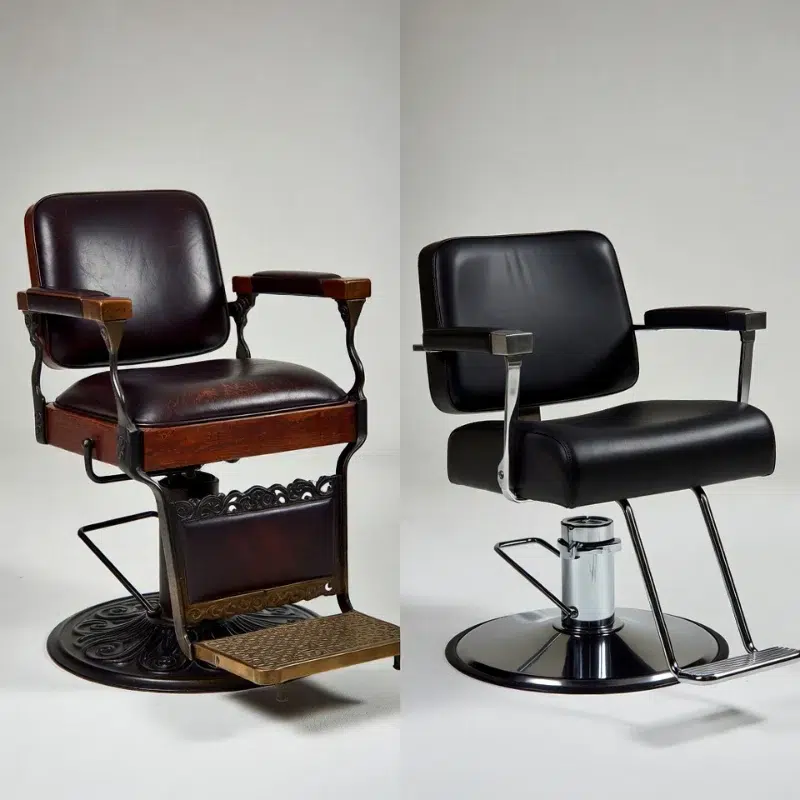
How Salon Chairs Changed With Technology and Use
A hair salon chair is more than a piece of furniture. It reflects how the industry balances tradition, craftsmanship, hygiene, and client care. From early barbers working with simple wooden stools to today’s technology-driven salon environments, the chair has evolved alongside professional grooming itself.
At its core, the salon chair supports two essential needs. It enables stylists to work efficiently and it provides clients with comfort, stability, and cleanliness. While salon chairs still carry cultural meaning rooted in familiar shop environments, their modern value lies in how well they support daily operations, long service hours, and long-term investment decisions.
Understanding how salon chairs evolved helps salon owners and managers make clearer choices today. Many current design standards exist for practical reasons, not aesthetics alone, and knowing why those changes occurred reduces uncertainty during equipment selection.
How Hair Salon Chairs Have Changed Over Time
When Salon Chairs Were Simple and Unadjustable
In the earliest salons and barbershops, seating consisted of basic wooden stools or household chairs. These options provided minimal stability and offered no adjustability or ergonomic support.
By the time of the American Civil War, engravings and early photographs already showed chairs designed specifically for barber use. These early chairs were still wooden, unpadded, and fixed in height.
In some settings, the same chairs were used for dental procedures, which explains early interest in stability and partial recline even before comfort was prioritized.
Why this still matters today — modern expectations for adjustability emerged directly from the limits of fixed seating.
The Shift Toward Adjustable and Mechanical Chairs
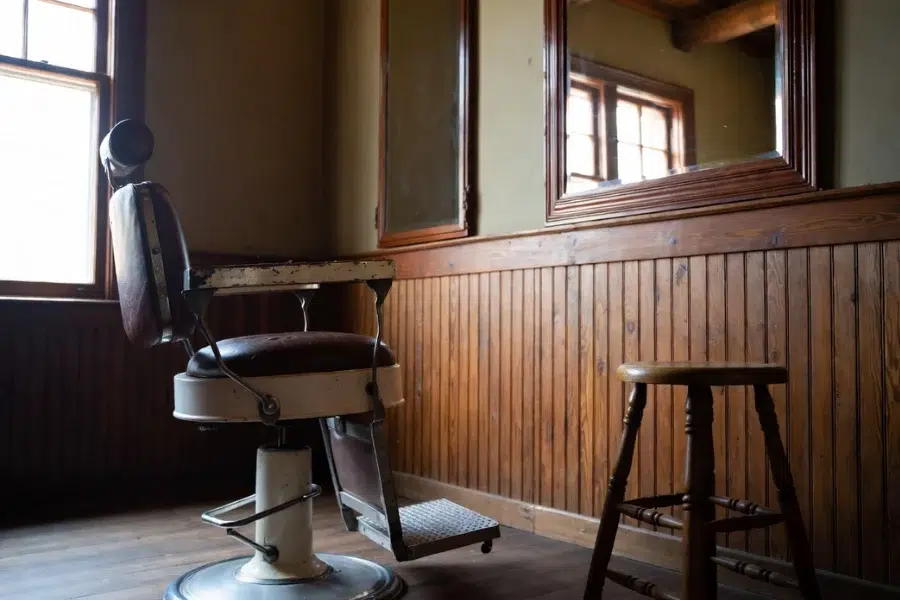
Toward the late 19th century, adjustable salon chairs became the focus of patent competition. This period marked a turning point from static furniture to mechanically assisted equipment.
Designs began to include tilting backrests, integrated footrests, and early height-adjustment systems. Metal frames gradually replaced wood, improving durability and load capacity.
Early hydraulic mechanisms allowed stylists to adjust working height with greater control. The manufacturers of that era helped define it by pairing mechanical innovation with leather upholstery and refined detailing.
Why this still matters today — height adjustment remains central to stylist ergonomics and service consistency.
When Salon Chairs Became a Visual Centerpiece
From the 1940s through the 1960s, salon chairs became more visually prominent. Chrome accents, smoother profiles, and expanded color options reflected broader interior design trends.
Reclining backs, adjustable headrests, and footrests became standard features. Chairs were designed not only for function but also to communicate professionalism and permanence.
During this period, the chair became a visual anchor within the salon, reinforcing trust through appearance as well as performance.
Why this still matters today — chair design still influences how clients perceive service quality before a service begins.
Why Comfort and Efficiency Became a Priority
By the late 20th century, salon operations placed greater emphasis on efficiency and ergonomics. Hydraulic systems became smoother and more reliable.
Manufacturers adopted materials such as vinyl upholstery and high-density foam, improving durability and simplifying cleaning. These changes supported higher client turnover without sacrificing comfort.
At the same time, retro aesthetics returned. Many salons restored classic chairs while upgrading internal systems with modern hydraulics or swivel bases.
Why this still matters today — ergonomic design directly affects stylist fatigue and long-term productivity.
How Modern Technology Reshaped Salon Chair Design
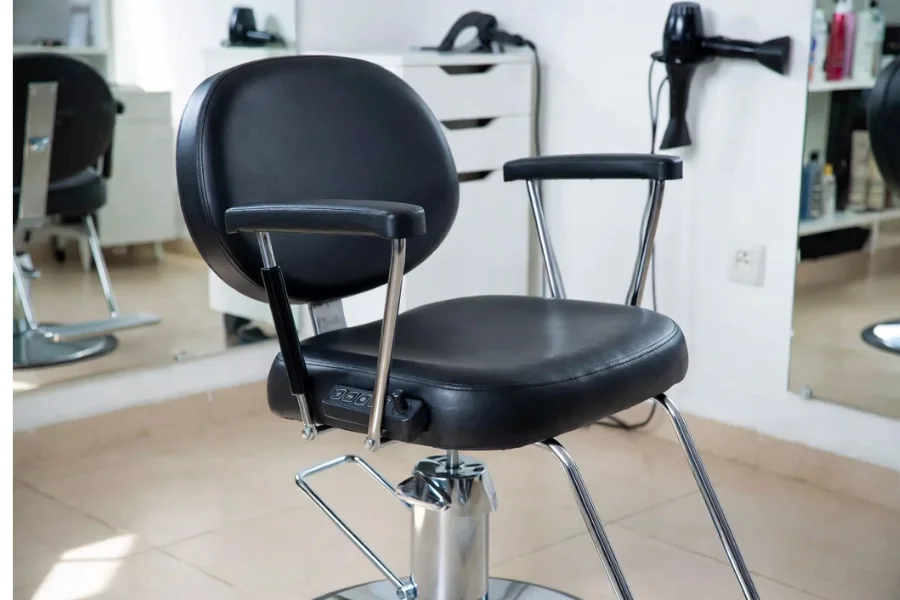
Today’s salon chairs combine traditional forms with modern technology. Electric hydraulic systems are now common in high-end models, offering push-button or foot-controlled adjustments.
Memory settings allow stylists to save preferred working heights, reducing repetitive strain throughout the day. Designs have become lighter and more streamlined to support flexible layouts.
Sustainability is increasingly considered through recyclable metals, eco-conscious upholstery, and long-life components. Salons now choose between classic profiles enhanced by modern systems or fully contemporary designs built for efficiency.
Why this still matters today — technology choices influence maintenance costs and daily workflow more than visual style alone.
Common Types of Hair Salon Chairs Used Today
Electric Hydraulic Chairs for High-Volume Salons
Electric hydraulic chairs offer automated height adjustment through buttons or foot controls and often include programmable memory settings.
They reduce physical strain on stylists and improve consistency during busy service periods. These chairs are well suited for high-traffic or premium salons.
This option is not ideal if electrical access is limited or if maintenance support is unavailable.
Manual Hydraulic Chairs for Reliable Daily Use
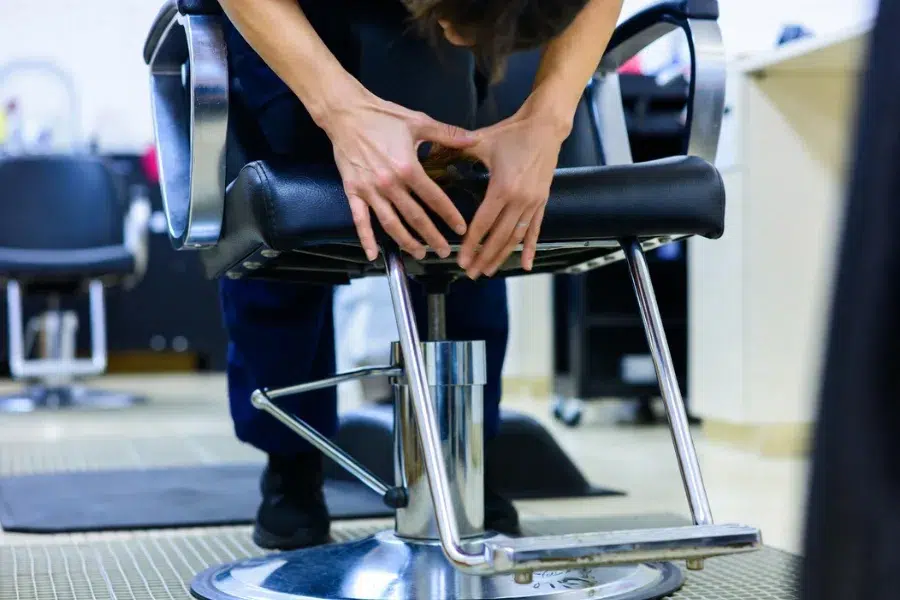
Manual hydraulic chairs use a foot pump to adjust height and do not require electricity. This simplifies installation and reduces mechanical complexity.
They often include reclining backs and footrests, making them a dependable choice for many salons.
This option is not ideal if minimizing physical effort during repeated adjustments is a priority.
Swivel Chairs for Limited Space and Tight Budgets
Swivel chairs adjust height through a threaded post activated by rotation. They feature fewer moving parts and a smaller footprint.
Their simplicity makes them suitable for startup salons or minimalist layouts with limited budgets.
This option is not ideal if reclining or ergonomic adjustment is required.
Classic Chairs With Updated Internal Systems
Classic salon chairs retain traditional visual elements such as chrome finishes and heavier bases. Internally, many are upgraded with modern hydraulic systems.
They appeal to salons that value heritage aesthetics while still requiring modern functionality.
This option is not ideal if frequent reconfiguration or lightweight mobility is needed.
What to Consider When Selecting a Salon Chair
Matching Chair Design to Your Salon Concept
Chair design should align with the overall identity of the salon. Traditional interiors typically pair well with classic, substantial designs, while modern salons benefit from streamlined profiles.
Technology-focused concepts often favor electric hydraulic models that reinforce a contemporary image.
How Chair Comfort Affects Clients and Stylists
Cushion density, backrest support, and adjustable headrests influence client comfort and stylist posture. Natural recline angles and stable footrests reduce strain during longer services.
Testing chairs before purchase helps prevent long-term usability issues.
Durability, Cleaning, and Long-Term Maintenance
Metal frames generally provide better long-term stability than plastic alternatives. Upholstery should resist staining and allow frequent cleaning.
Hydraulic system quality varies, and warranty coverage should be reviewed carefully, especially for electric models.
Balancing Budget With Long-Term Use
Electric hydraulic chairs involve higher upfront costs but may improve efficiency over time. Manual hydraulic chairs offer a balance between performance and affordability.
Refurbished vintage chairs with updated internals can be a practical alternative for certain concepts.
How Chair Size Impacts Salon Layout
Chair footprint, base diameter, and swivel radius affect workstation spacing and circulation. Chairs should support movement without overcrowding service areas.
Color coordination with surrounding furniture helps maintain visual consistency.
Where Hair Salon Chairs Are Headed Next
Sustainability is expected to grow in importance through recycled metals, eco-friendly upholstery, and biodegradable padding materials.
Smart integration may include Bluetooth connectivity, massage functions, temperature control, and personalized memory settings.
Modular construction allows components to be replaced rather than discarding entire chairs. Health-focused features such as improved spinal support, breathable materials, and antibacterial surfaces are becoming more common, along with designs suited for mobile or hybrid service environments.
FAQ
Which is more durable, electric or manual hydraulic chairs?
Manual hydraulic chairs use simpler mechanical systems, which often results in lower failure rates and easier maintenance. Electric hydraulic chairs rely on motors and control components, adding complexity. However, well-built electric models from reputable manufacturers can remain reliable for long-term commercial use when properly installed and maintained.
Are retro-style chairs less comfortable than modern designs?
Not necessarily. Many modern retro-style chairs preserve classic appearances while upgrading internal components. Improved cushioning materials, refined hydraulic systems, and better ergonomics allow these chairs to deliver comfort levels comparable to contemporary designs, provided they are built for professional salon use rather than decorative purposes.
How should salon chairs be cleaned and maintained?
Salon chairs should be wiped daily using non-corrosive, salon-safe cleaners to prevent buildup and surface damage. Hydraulic systems should be inspected periodically for leaks or reduced responsiveness. Leather upholstery benefits from regular conditioning to maintain flexibility and prevent cracking in high-use commercial environments.
Can swivel chairs recline?
Most swivel chairs are designed to adjust height only and do not include reclining mechanisms. Recline functions are typically found in manual or electric hydraulic chairs, which are built to support controlled backrest movement. Swivel chairs prioritize simplicity and compact design over advanced ergonomic adjustments.
Is it important to test a chair before purchasing?
Yes. Comfort and usability vary depending on seat depth, cushioning density, backrest angle, and footrest positioning. Testing a chair helps identify ergonomic mismatches that may not be obvious in specifications alone and reduces the risk of long-term discomfort for both clients and stylists.
As a manufacturer focused on professional salon environments, Nova approaches chair design through long-term production experience and real usage feedback from commercial settings. This perspective emphasizes workflow efficiency, durability, and service consistency rather than short-lived design trends.
Related Products for Your Salon Business
Browse our professional-grade salon equipment and furniture at factory-direct wholesale prices: