

Opening a hair salon is a common next step for experienced stylists who want greater control over their work and long-term income. The opportunity is real. The beauty and hair care industry continues to show steady demand, with many markets averaging long-term growth of around 6 percent.
What often gets underestimated is how different salon ownership is from salon work. Technical skill alone does not protect a business from unclear positioning, rising costs, or inefficient operations. Many salons struggle not because of service quality, but because early decisions were made without a structured plan.
This guide focuses on the decisions many salon owners wish they had clarified earlier. It is written for first-time salon owners who want fewer surprises after opening and a clearer path to sustainable operations.
Step One Clarify What Your Salon Stands For and Who It Serves
A strong business plan begins with clarity, not paperwork.
Start by answering a few core questions.
Why does this salon exist
What specific client need does it serve
How is your approach different from nearby salons
What kind of experience should clients expect
Many first-time salon owners underestimate how costly vague positioning can be. When a salon tries to appeal to everyone, pricing, services, and marketing all become harder to manage.
Define a clear niche. This could be based on service focus, client demographic, lifestyle fit, or hair type specialization. A focused position reduces competition and makes decisions easier.
Create a realistic ideal customer profile based on observation and local research. Include age range, income level, service habits, and priorities. Every later decision should align with this profile.
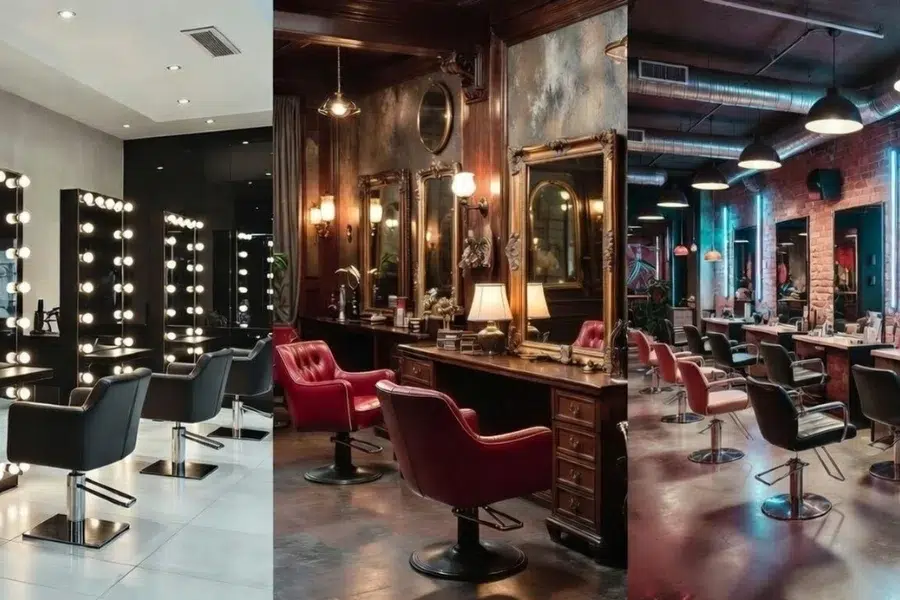
Step Two Understand Your Local Market and Competition
Market research confirms whether your idea fits the reality around you.
Review recent industry trends through reports, trade events, and professional communities. Focus on changes in service demand, staffing challenges, and client expectations.
Then analyze local competitors. Identify both direct and indirect competitors in your area. Review their services, pricing, reviews, branding, and space layout.
This is one of the most common planning gaps we see. Many owners observe competitors casually but never document patterns or weaknesses. Your goal is not imitation, but identifying where clients are underserved or dissatisfied.

Step Three Outline the Core Structure of Your Business Plan
The executive summary is the overview of your entire plan. Write it last, but place it first. In one or two short paragraphs, summarize your concept, target market, core services, competitive edge, legal structure, and financial outlook.
Explain who you are and why you are qualified to run this salon. Include your background, credentials, and relevant experience.
Describe your business structure, such as sole proprietorship or LLC, and why it supports your goals. Use the five W approach to explain who is involved, what you offer, where you operate, when you plan to open, and why your salon fills a gap.
Define ownership, management roles, and reporting structure. Clarify responsibilities for managers, stylists, assistants, and front desk staff.
Also specify whether workers are employees or independent contractors and how that choice affects scheduling, taxes, and accountability.
Step Four Plan Your Startup Costs, Pricing, and Cash Flow
Financial planning turns assumptions into measurable risk.
Start by listing startup costs. Include licenses, deposits, build-out, professional equipment, furniture, initial inventory, and technology systems.
Then estimate ongoing operating costs. Separate fixed expenses like rent and software from variable costs like utilities, product usage, commissions, and marketing.
In early-stage salons, this is often where costs creep up quietly. Underestimating payroll flexibility and product consumption is especially common.
Project revenue using realistic booking capacity and pricing. Build projections for at least one to three years to understand break-even timing and cash flow pressure.

Step Five Handle Licenses, Registration, and Insurance Early
Legal setup protects your business from preventable disruption.
Confirm that all required cosmetology licenses are valid and current. Register your business entity and obtain a federal tax ID.
Check local requirements for operating permits, health approvals, occupancy certificates, and retail licenses if applicable.
Insurance is essential. Carry professional liability, general liability, employer liability if you hire staff, and property coverage for equipment and furnishings.
Step Six Choose a Location and Design a Functional Salon Layout
Location directly affects visibility, staffing, and revenue stability.
Choose a space that matches your target client profile. Consider foot traffic, parking, public transit access, and surrounding businesses. Rent should remain sustainable within your projected revenue.
Layout design should prioritize workflow and safety. Stations, wash areas, reception, storage, and staff zones must support efficient movement and hygiene standards.
Many first-time salon owners underestimate how much layout inefficiency affects daily operations. Poor spacing increases service time, staff fatigue, and client frustration.
Working with experienced manufacturers such as Nova helps ensure that furniture and wash stations are selected with long-term use, workflow compatibility, and commercial durability in mind rather than short-term appearance.
Step Seven Define Your Service Menu, Pricing, and Retail Approach
Your service menu communicates positioning more clearly than any slogan.
List all core and specialty services with clear descriptions focused on client outcomes. Avoid vague wording that makes pricing hard to justify.
Pricing should be transparent and based on costs, market benchmarks, and client expectations. Tiered pricing by experience level or service time can improve margin control.
Retail should extend service value, not distract from it. Choose products that support results clients already trust you to deliver and train staff to recommend them naturally.
Step Eight Hire and Prepare the Right Team
Your team defines your service consistency.
Recruit through professional networks, schools, referrals, and industry platforms. Job descriptions should be clear about expectations, schedules, and growth paths.
Evaluate both technical skills and interpersonal ability. In service businesses, communication and reliability matter as much as technique.
This is one of the most common mistakes we see. Hiring too quickly to fill chairs often leads to higher turnover and inconsistent client experience.
Provide structured onboarding and ongoing training to align standards and retain talent.
Step Nine Build Visibility and Attract Your First Clients
Marketing builds trust before a client walks through the door.
Create a consistent brand presence across signage, digital platforms, and printed materials. Your website should be mobile-friendly and integrated with online booking.
Focus early on local visibility. Optimize your Google business profile, encourage reviews, and keep photos and hours accurate.
Choose two or three social platforms your audience actually uses. Share work examples, educational insights, and behind-the-scenes content that demonstrates professionalism.
If this step is rushed, the consequence is usually uneven booking patterns and over-reliance on discounts to fill gaps.
Step Ten Set Up Systems for Opening Day and Daily Operations
Before opening, finalize equipment and inventory purchases from suppliers who understand commercial salon environments. Long-term reliability matters more than short-term savings. Manufacturers like Nova are often chosen by owners who plan for durability, customization, and operational fit as their business grows.
Implement management systems that integrate booking, customer records, staff scheduling, payments, and reporting. Clear procedures reduce errors and improve consistency.
Use a detailed opening checklist and consider a soft launch to test workflows. Review performance regularly and update your business plan as conditions change.
FAQ
Is a hair salon business plan really necessary?
Yes. A business plan clarifies positioning, costs, and priorities before money is spent. It also helps identify risks early, supports financing conversations, and guides day-to-day decisions after opening. Salons with written plans are consistently more likely to survive the first few years and adjust effectively as conditions change.
How long should a salon business plan be?
Most salon business plans fall between ten and twenty pages. Length matters less than usefulness. The plan should clearly explain your concept, market, costs, pricing, and operations. If it becomes difficult to reference or update, it is likely too long to support real decision-making.
How much capital is needed to open a small salon?
Startup costs vary by location, size, and service mix. Many small salons require between thirty thousand and one hundred fifty thousand dollars. Major variables include rent, build-out, equipment, staffing, and cash reserves. A detailed financial plan is the only reliable way to estimate your specific funding needs.
How do I choose the best location for a hair salon?
The best locations balance client density, visibility, accessibility, parking, and sustainable rent. Prestige matters less than convenience and fit with your target customer. Many salons struggle when rent consumes too much revenue or when access issues discourage repeat visits, even if the space looks appealing.
Why do many salons fail even with a written business plan?
Most failures occur when the plan is treated as a one-time document instead of a working tool. Assumptions go unreviewed, costs drift upward, and daily decisions slowly disconnect from the original strategy. A business plan only works when it is revisited and adjusted as the salon operates.
How do I create a business plan for a hair salon step by step?
Start by defining your target customer and positioning. Then analyze the local market, outline services, estimate startup and operating costs, and plan pricing. Include legal setup, staffing structure, marketing approach, and operational systems. The plan should guide decisions before opening and continue shaping operations afterward.
Conclusion
Moving from stylist to salon owner requires more than talent. It requires structured thinking, realistic planning, and disciplined execution.
A business plan is not paperwork for investors. It is a decision framework that helps reduce uncertainty, control risk, and build a salon that works operationally as well as creatively. With the right preparation, your experience and vision can support a business that grows sustainably over time.
Related Products for Your Salon Business
Browse our professional-grade salon equipment and furniture at factory-direct wholesale prices:
Shop All Salon Equipment | Get Wholesale Quote
The One-Page Salon Business Plan Template (Fill This In First)
Short answer: a working salon business plan fits on one page before it grows: what you sell, who buys it, what one service earns, what it costs to open, and when you break even. Write those five lines and you have a usable plan; expand each into a page only when a lender or a landlord asks for it.
| Section | What to write | Rule of thumb |
|---|---|---|
| Concept & client | Service style, price tier, target client | One sentence each |
| Startup costs | Fit-out, furniture, tools, deposits | Furniture and equipment is usually the largest single line |
| Service pricing | Price, duration, cost per service | Price by chair-hour, not by list |
| Fixed costs | Rent, utilities, insurance, software | Keep under roughly a third of revenue |
| Break-even | Services per week at your price | Fixed costs divided by margin per service |
Hair salon business plan vs. beauty shop business plan
A hair salon business plan leans on chair count and turnover: you are selling stylist hours plus colour and retail attach. A beauty salon business plan or beauty shop business plan leans on treatment-room count and longer appointments, so the room mix, not the chair count, drives the numbers. A hairdressing salon business plan for a barber-led shop adds a fast-service tier — short cut and beard work — that fills the gaps between longer colour appointments. The sections are the same in each case; only the revenue driver changes, so start from the driver and work backwards to the furniture list.
Salon Business Plan FAQ: Budget & Break-Even
How long should the plan be? One page to start, three to five pages when a lender or landlord asks. Detail that does not change a decision is filler.
What is the biggest first-year mistake? Buying furniture for the salon you hope to have rather than the one you open — size the chair and station count to your week-one bookings.