
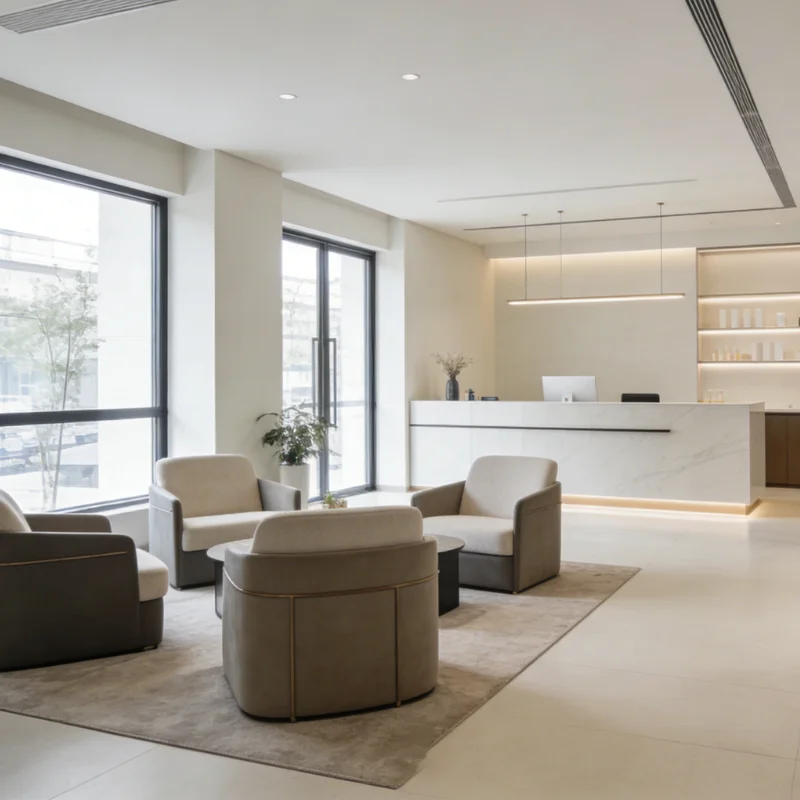
Why Many Salon Waiting Areas Feel Crowded or Uncomfortable
Most waiting areas feel uncomfortable because they are designed around appearance rather than real usage.
- Too many seats create congestion near the entrance
- Too few seats leave clients standing during peak hours
- Poor layout slows check-in and blocks staff movement
During busy periods, clients often arrive within a short 10–15 minute window. If the entrance area cannot absorb that flow, queues form quickly, and the space feels disorganized.
A well-designed waiting area reduces friction. Clients should be able to enter, check in, and sit down without hesitation.
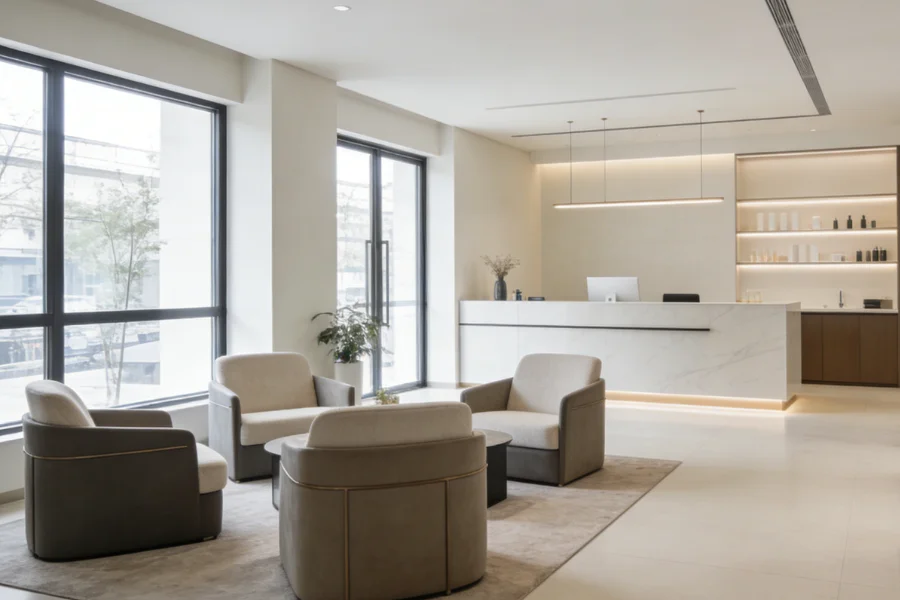
How to Decide the Right Number of Seats for Your Salon
Before choosing furniture, define how many people your space needs to handle at once.
How Many Seats Should a Salon Waiting Area Have
A practical rule is:
- Plan for 1.2 to 1.5 times your hourly client volume
Example:
- 6 clients per hour → 7–9 waiting seats
This range accounts for early arrivals, short delays, and accompanying guests. Designing below this level often leads to visible crowding, especially during overlapping appointments.
How to Plan Seating for Busy Hours
Peak periods determine whether your layout actually works.
- Evening and weekend traffic often increases arrival overlap
- Multiple stylists finishing at similar times increases waiting demand
- Walk-in clients add unpredictable pressure
If seating is only planned for average flow, clients will stand or cluster around the entrance during busy periods, which lowers perceived professionalism.
Salon Waiting Area Layout Tips That Prevent Crowding
Layout decisions directly affect how the space functions under real conditions.
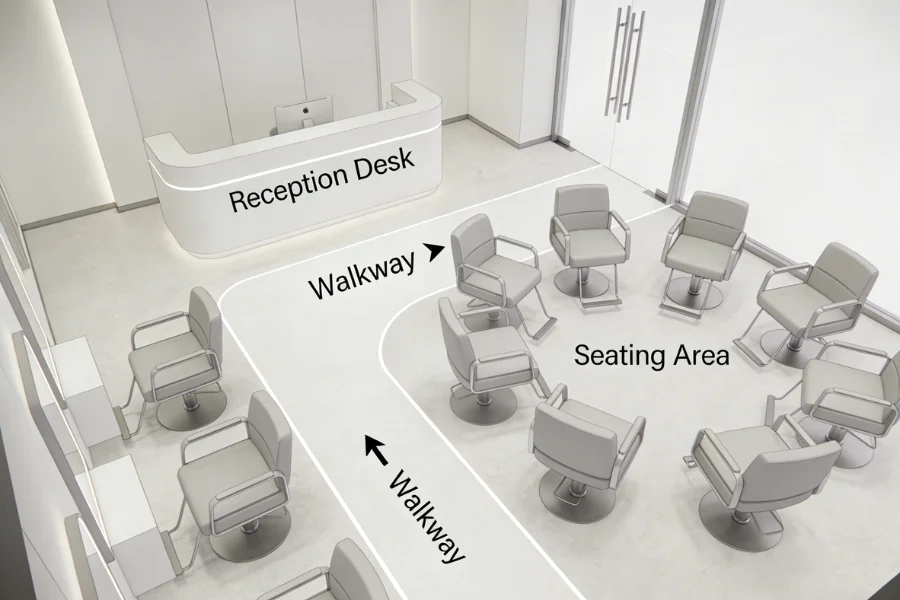
Keep Walkways Clear and Easy to Move Through
- Minimum walkway width 900–1200 mm
- Keep the entry path fully open
- Avoid placing seating directly in front of the reception desk
This allows two-way movement without interruption. When walkways are too narrow, clients hesitate or stop, which slows check-in and creates bottlenecks.
How Much Space Should You Leave Between Seats
- Allow 600–800 mm between seats
- Use individual chairs instead of long benches in most cases
- Keep visible gaps between seating
This spacing improves personal comfort and reduces the feeling of crowding. It also allows staff to move between seats when needed.
Keep the Waiting Area Separate from the Reception Desk
Waiting and check-in should function as two distinct zones.
- Position seating slightly to the side of the desk
- Keep a clear standing area for check-in
- Ensure staff can move freely behind the desk
When seating overlaps with the reception zone, clients waiting and clients checking in compete for the same space, which creates confusion and slows operations.
How to Make Your Waiting Area Feel Comfortable Without Overdesigning
Comfort is created by how the space performs during real use.
Choose Seating That Works for Real Use
- Medium-firm cushioning supports posture during 10–20 minute waits
- Armrests support a wider range of users
- Durable materials maintain shape under daily use
Very soft seating may look appealing but often leads to discomfort and faster wear in commercial environments.
Focus on Environmental Comfort
Clients respond more to physical conditions than visual design.
- Maintain stable temperature
- Reduce background noise
- Keep surfaces clean and uncluttered
These factors reduce stress and improve the overall experience.
Use Lighting That Feels Relaxed
- Combine warm ambient lighting with focused task lighting
- Position seating near natural light when possible
- Avoid harsh overhead lighting
Balanced lighting improves mood and reduces visual fatigue.
What to Include in a Salon Waiting Area (WiFi, Charging, More)
Amenities should reduce waiting frustration and improve usability.
Essentials That Make a Difference
- Reliable WiFi access
- Charging outlets near seating
- Small tables for personal items
Without these, clients often hold belongings or move around unnecessarily, which creates discomfort.
Simple Refreshments Improve the Experience
- Water, tea, or coffee stations
- Self-service options in larger spaces
Even basic refreshments help shift the experience from waiting to being hosted.
Use Digital Check-In to Reduce Congestion
- Tablets or self-check-in systems
- Clear and visible instructions
- Reduced queues at the reception desk
During peak times, traditional check-in creates lines that extend into the waiting area. Digital systems reduce this pressure and keep the entry zone organized.
Reception desks designed with integrated space for devices make this process more efficient. Many salon owners choose solutions from suppliers like NovaBeauty to ensure their reception area supports both workflow and technology integration.
How to Use Your Waiting Area to Display and Sell Products
Waiting time can support your retail strategy when designed correctly.
Place Products Where Clients Naturally Look
- Position displays at seated eye level
- Keep products within easy reach
- Avoid overcrowded shelving
Clear and accessible placement increases interaction without requiring staff involvement.
Integrate Display Into Your Furniture
- Use shelving built into reception desks or wall units
- Combine seating and retail zones without blocking movement
Maintaining consistent dimensions and materials across seating, reception, and display areas helps the space feel organized. Many salon owners work with suppliers like NovaBeauty when they want coordinated furniture systems that support both layout efficiency and visual consistency.
Encourage Interaction
- Provide testers or sample products
- Use simple signage that explains benefits
Clients are more likely to engage when interaction feels natural and low pressure.
How to Match Your Waiting Area with Your Salon Style
Brand alignment should support clarity and usability.
Keep Design Consistent
- Use matching materials and finishes
- Maintain a unified color palette
- Align furniture with service positioning
Consistency helps clients understand your brand and service level.
Avoid Overdesigning the Space
Too many decorative elements create practical problems.
- Reduce usable seating space
- Increase maintenance effort
- Distract from movement flow
A restrained design improves usability and keeps the space easy to manage.
Common Salon Waiting Area Mistakes to Avoid
These issues often appear in real salon environments.
- Overcrowding the space with maximum seating
- Blocking entry flow with poor furniture placement
- Designing for appearance rather than peak usage
- Ignoring where clients place personal items
- Allowing queues to form inside the waiting area
Each of these reduces comfort and creates operational friction.
Simple Ways to Improve Your Salon Waiting Area
Improvements can often be made without a full redesign.
- Measure seating capacity against peak demand
- Observe where congestion occurs during busy hours
- Adjust seating positions before replacing furniture
- Add practical upgrades such as tables or charging points
Many salon owners standardize furniture across reception, seating, and display areas to simplify planning. Working with suppliers like NovaBeauty can help align dimensions, materials, and configurations from the start.
The goal is to create a space that works reliably under daily conditions. When layout and function are aligned, the waiting experience becomes smooth and predictable.