
Why Most Salon Storage Setups Fail in Daily Use
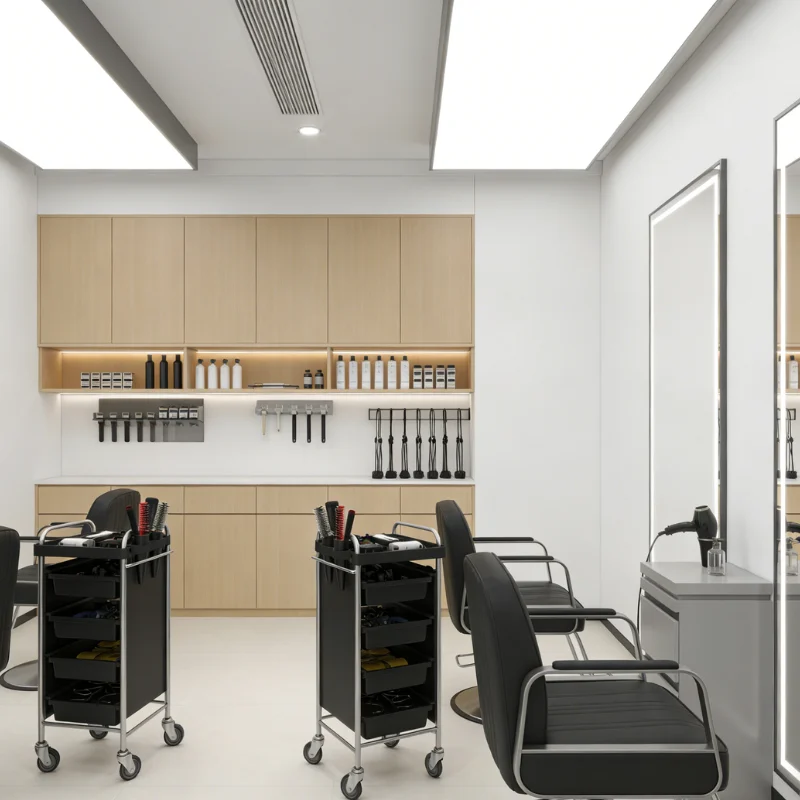
Many storage ideas look organized but fail during real operations. The issue is not storage itself, but how it interacts with daily workflow.
In busy salons, stylists may reach for the same tools dozens of times per hour. If storage requires extra movement or searching, this repeated motion slows down service and increases fatigue over time.
Effective storage reduces movement and keeps tools where they are needed most.
What Actually Improves Storage Efficiency in a Busy Salon
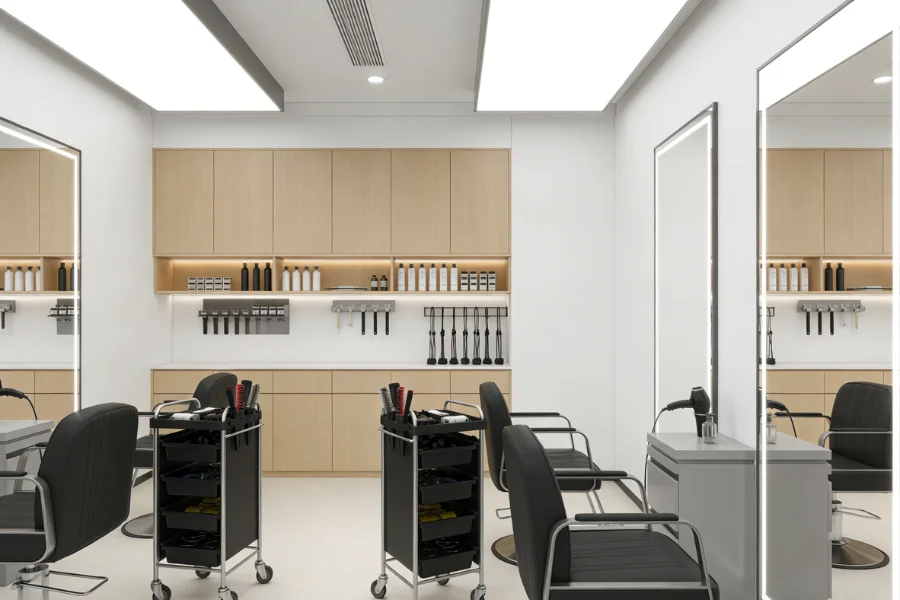
Good storage supports how your team actually works during continuous service.
Key principles:
- Keep high-frequency tools within arm’s reach
- Reduce walking distance between service zones
- Group items based on tasks, not categories
- Avoid hiding frequently used tools in closed storage
Practical rules used in many salon layouts:
- Daily-use tools should be within 60–80 cm
- Frequently accessed drawers should sit between waist and chest height
- Keep at least 80–100 cm clearance behind styling chairs to allow safe movement
8 Salon Storage Ideas You Can Actually Use
Use Wall Storage to Keep Tools Within Reach
Install pegboards, magnetic strips, or wall-mounted racks near styling stations.
Why it works:
- Keeps tools visible and easy to grab
- Reduces time spent opening and closing drawers
- Minimizes repeated bending during continuous services
In high-turnover stations, tools like brushes and clips may be used every few minutes. Keeping them mounted at 20–40 cm above the work surface allows direct access without interrupting workflow.
Use Rolling Carts to Bring Tools to the Client
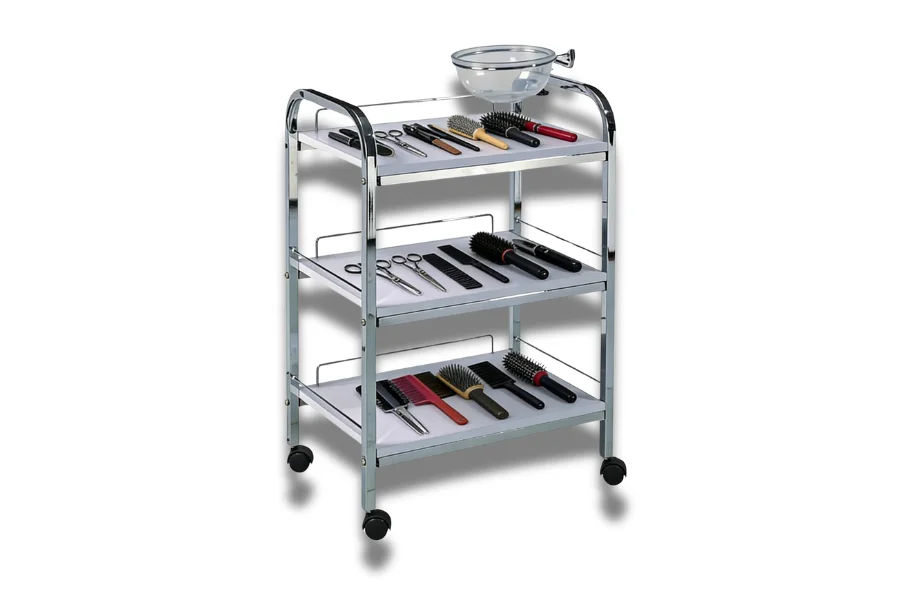
Assign each stylist a dedicated trolley cart.
Why it works:
- Tools move with the service instead of forcing movement
- Reduces overlap between stylists
- Keeps personal tools consistently organized
During peak hours, stylists often switch between clients quickly. A mobile cart allows them to carry all necessary tools without returning to a fixed station.
In many commercial salon setups, carts are designed with layered storage that separates tools by service steps. Some manufacturers, such as NovaBeauty, offer configurations that support this workflow while keeping the footprint compact.
Choose Workstations with Built-In Storage
Use styling stations that include drawers, cabinets, and power access.
Why it works:
- Keeps all tools within a defined working radius
- Reduces unnecessary walking between stations
- Maintains consistent organization habits across staff
This setup is especially effective in compact salons where stylists operate within a limited 1–1.5 meter zone and need everything accessible without stepping away.
Use Floating Shelves Without Crowding Your Space
Install floating shelves for products and display items.
Why it works:
- Uses vertical space without affecting movement paths
- Keeps products visible while freeing up work surfaces
- Supports both storage and retail display
Placement tip:
- Keep shelves above 140–160 cm in active work zones
- Use eye-level placement only in retail or waiting areas
Organize Your Color Station for Faster Service
Create a structured color station with labeled containers or display systems.
Why it works:
- Reduces time spent searching for specific shades
- Improves accuracy during color mixing
- Makes inventory easier to track and restock
In color services, delays often come from locating the correct shade. Organizing by color family and usage frequency allows stylists to work continuously without interruption.
Hide Storage to Keep Your Salon Looking Clean
Use under-seat storage, cabinets, or storage benches.
Why it works:
- Keeps low-frequency items out of sight
- Maintains a clean and professional environment
- Prevents visual overload in compact spaces
Items used once per day or less should not occupy active workspace. Moving them into hidden storage keeps the main working area clear and efficient.
Use Upper Space for Items You Don’t Use Often
Install shelves or storage above head level.
Why it works:
- Maximizes unused vertical space
- Keeps backup supplies accessible without interfering with workflow
Important:
- Store only low-frequency items overhead
- Maintain clear visual lines to avoid a heavy or crowded feeling
Use Labels and Zones to Keep Everything in Place
Implement labeling systems and service-based zones.
Why it works:
- Reduces confusion across multiple staff
- Speeds up tool access during busy hours
- Keeps workflow consistent across stations
In multi-stylist environments, unclear storage often leads to misplaced tools and delays. Clear labeling and zoning eliminate unnecessary searching and interruptions.
Common Storage Mistakes That Slow Down Your Salon
Many storage problems come from layout decisions, not lack of space.
Avoid these:
- Storing frequently used tools outside the working radius
- Mixing tools from different services in one drawer
- Using closed cabinets for items needed every few minutes
- Placing storage where it interferes with movement paths
- Designing for appearance instead of daily workflow
Even well-designed furniture becomes inefficient if it does not align with how stylists move and work.
How to Choose the Right Storage for Your Salon Size
Different salon sizes require different strategies.
Small salons:
- Focus on vertical storage and rolling carts
- Use multifunction workstations with built-in storage
- Keep walkways clear with at least 70–80 cm width
Medium salons:
- Combine wall storage with workstation storage
- Separate styling, washing, and color zones
- Use carts to reduce cross-zone movement
Large salons:
- Implement full zoning systems
- Centralize inventory storage away from active stations
- Standardize workstation layouts for consistency
The goal is not more storage, but better placement based on movement patterns.
Build a Salon Space That Stays Organized
Effective storage is not about adding more shelves or cabinets. It is about placing storage where it supports real work.
When tools are easy to reach, movement is reduced and service becomes faster. When storage aligns with workflow, the space stays organized naturally.
A well-planned salon typically combines mobile storage, integrated workstations, and vertical systems to support both flexibility and consistency. When these elements are aligned with daily operations, organization becomes part of the workflow rather than an extra task.
Choosing Salon Storage Solutions That Survive Daily Use
When you compare salon storage solutions, start from your busiest workflow, not the catalogue: keep daily tools within arm reach, group items by task, and use mobile carts so storage moves with the stylist. Nova’s trolleys and racks ship factory-direct with MOQ 1, one-year warranty and DDP delivery.