
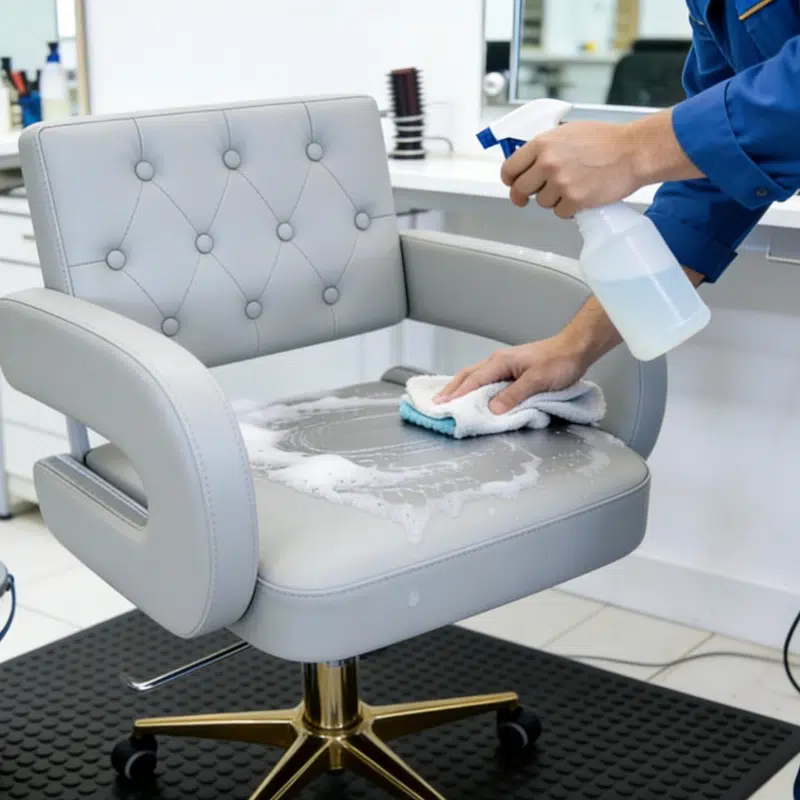
Why Proper Chair Maintenance Protects Your Salon Investment
Commercial salon chairs are high-use assets, not decorative fixtures. In a five-station salon operating six days a week, chairs may support more than 150 client sessions weekly. Under this level of usage, minor neglect compounds quickly.
Improper maintenance shortens asset lifecycle, increases early capital replacement, and disrupts service flow. Structured care protects both investment value and operational continuity.
Clients also notice condition immediately. Clean, stable, and fully functional seating reinforces professionalism and builds trust without additional marketing effort.
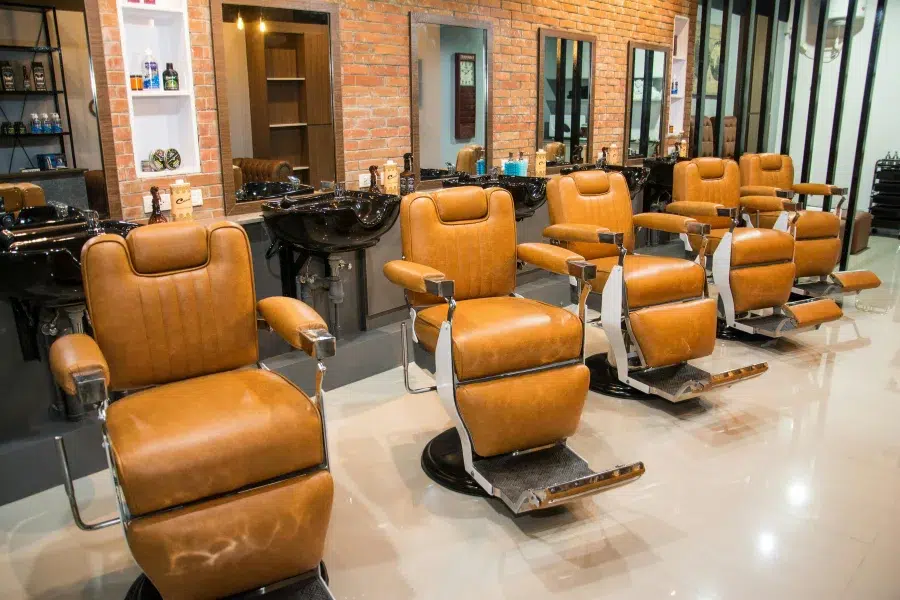
How Chair Material Affects Cleaning and Long-Term Maintenance
Material selection directly affects maintenance workload, cleaning frequency, and replacement timing. In commercial environments, upholstery choice influences labor hours as much as aesthetics.
Understanding how each material performs under daily salon conditions allows owners to reduce avoidable wear and control long-term operating expenses.
Vinyl Chairs — Durable but Not Maintenance-Free
Vinyl remains one of the most practical materials for high-traffic salons due to moisture resistance and chemical tolerance. However, aggressive solvents and alcohol-based cleaners degrade surface integrity over time.
From a procurement standpoint, vinyl typically reduces long-term cleaning labor compared to fabric upholstery in color-intensive salons. Regular use of manufacturer-approved cleaners preserves flexibility and delays surface fatigue.
Leather Chairs — Premium Appearance Requires Structured Care
Leather requires disciplined maintenance in commercial settings. Excess moisture, heat exposure, and inconsistent conditioning accelerate drying and surface cracking.
Monthly conditioning stabilizes elasticity and preserves commercial-grade finish. In salons with large windows or strong overhead lighting, environmental positioning becomes part of the maintenance strategy.
Fabric Chairs — Higher Maintenance in High-Traffic Salons
Fabric upholstery absorbs chemical residue and retains odor more easily than vinyl or leather. In high-volume color service environments, this increases cleaning intensity and risk of visible staining.
Frequent vacuuming and scheduled steam sanitation reduce contamination buildup. Fabric seating performs best in lower-exposure zones where chemical contact is limited.
Metal and Wood Components — Often Overlooked but Operationally Important
Structural components experience continuous mechanical stress. Moisture accumulation leads to corrosion, while loose fasteners compromise stability and safety compliance.
Routine inspection and tightening prevent cumulative structural strain. Commercial manufacturers focused on long-term durability, including NovaBeauty, prioritize reinforced frames and easy-care finishes to reduce ongoing maintenance complexity.
Daily Cleaning Protocols for Commercial Salon Use
A structured between-client protocol stabilizes hygiene standards and prevents weekly maintenance escalation. In most salons, proper surface cleaning requires less than three minutes when standardized.
After each appointment:
- Remove hair and debris from seams and joints
- Disinfect all client contact areas
- Inspect for chemical residue or spills
At closing time:
- Lower hydraulic systems fully to relieve cylinder pressure
- Vacuum bases and wheel assemblies
- Inspect visible bolts and fasteners
- Wipe upholstery using commercial-grade cleaners
Consistency in daily routines significantly reduces mechanical strain and preserves surface integrity.
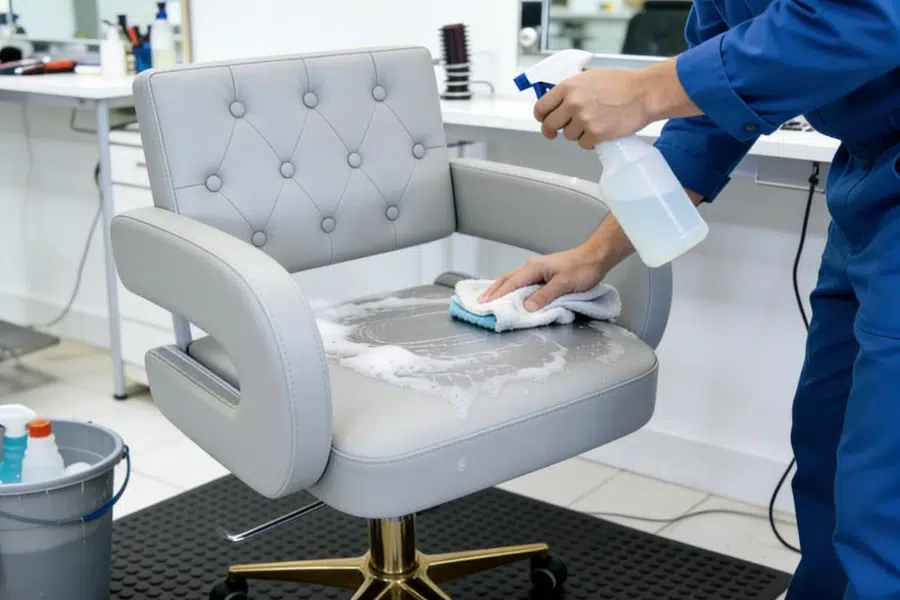
Weekly and Monthly Deep Cleaning Standards
Surface wiping addresses appearance, not structural preservation. Deep cleaning prevents hidden buildup that accelerates wear under high-traffic conditions.
Before beginning:
- Disconnect power for electric models
- Remove detachable cushions or headrests
Standard procedure:
- Vacuum folds and internal joints
- Apply upholstery-appropriate cleaning agents
- Remove residue carefully, avoid oversaturation
- Disinfect using approved commercial solutions
- Allow full drying before returning to service
Monthly conditioning for leather and protective treatments for vinyl extend material resilience in demanding salon environments.
Maintaining Hydraulic Systems and Structural Components
Hydraulic assemblies carry constant vertical load. Unexpected cylinder failure during peak hours disrupts workflow and reduces daily service capacity.
Preventive maintenance guidelines:
- Clean exposed piston rods regularly
- Apply silicone-based lubricant to moving joints
- Cycle mechanisms after lubrication to ensure even distribution
Replace components when:
- Height cannot be maintained under normal load
- The chair lowers gradually during service
- Wheel assemblies resist smooth movement
- Reclining mechanisms produce abnormal resistance
Using compatible replacement components preserves structural alignment and reduces repeat repairs.
Preventive Maintenance Strategies That Extend Chair Lifespan
Preventive maintenance stabilizes operating expenses and reduces early replacement cycles. Addressing minor issues early avoids larger capital expenditure later.
Effective strategies include:
- Using protective covers during chemical treatments
- Positioning chairs away from direct UV exposure
- Training staff to avoid tool contact with upholstery
- Cleaning spills immediately to prevent penetration
- Conducting scheduled monthly structural inspections
Salons that treat maintenance as an operational standard rather than an occasional task consistently experience lower long-term replacement rates.
Common Operational Issues and Practical Solutions
Commercial salon environments expose chairs to repeated stress, staining agents, and mechanical movement. Early intervention limits escalation and service interruption.
Surface stains should be addressed with material-specific commercial cleaners. Structural tears or significant upholstery damage require professional repair to maintain safety and brand standards.
Persistent hydraulic instability typically signals cylinder wear and should be resolved before peak operating hours.
Building a Long-Term Maintenance Culture in Your Salon
Chair maintenance should be integrated into daily operations rather than handled reactively. Structured protocols reduce unexpected downtime and protect capital investment.
Selecting equipment engineered for commercial durability simplifies every maintenance step described above. Manufacturers such as NovaBeauty design salon chairs with reinforced structures, stable hydraulic systems, and easy-care upholstery to support long-term operational efficiency.
A disciplined maintenance culture protects assets, preserves client confidence, and ensures uninterrupted service capacity.