
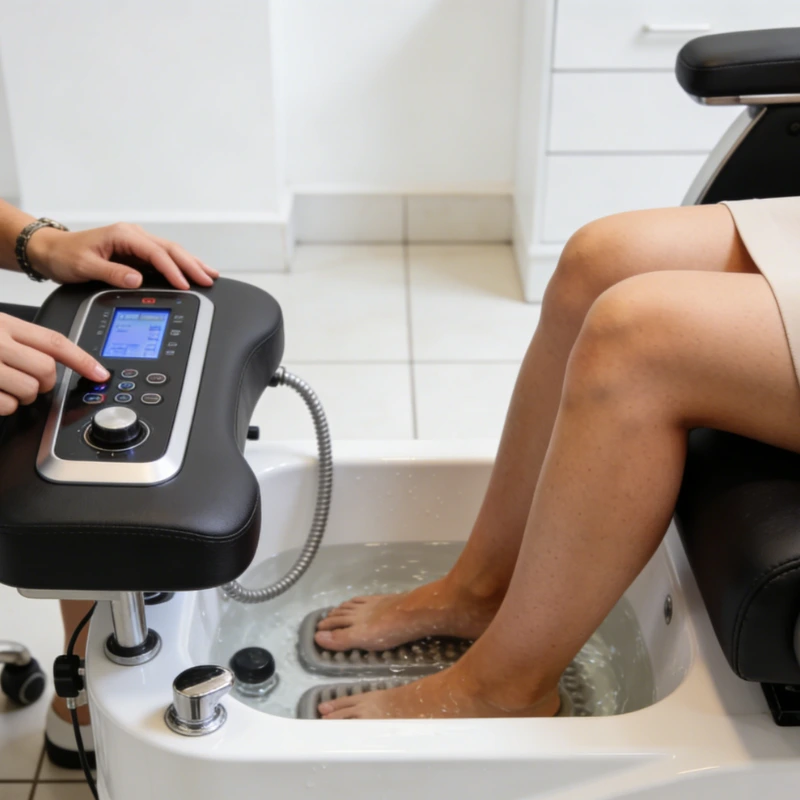
Selecting a pedicure chair is a business decision, not just a furniture choice.
The right setup improves workflow, reduces technician fatigue, and supports hygiene standards.
The wrong one leads to congestion, longer service times, and higher maintenance costs.
This guide focuses on what actually affects daily operations, so you can make a confident decision.
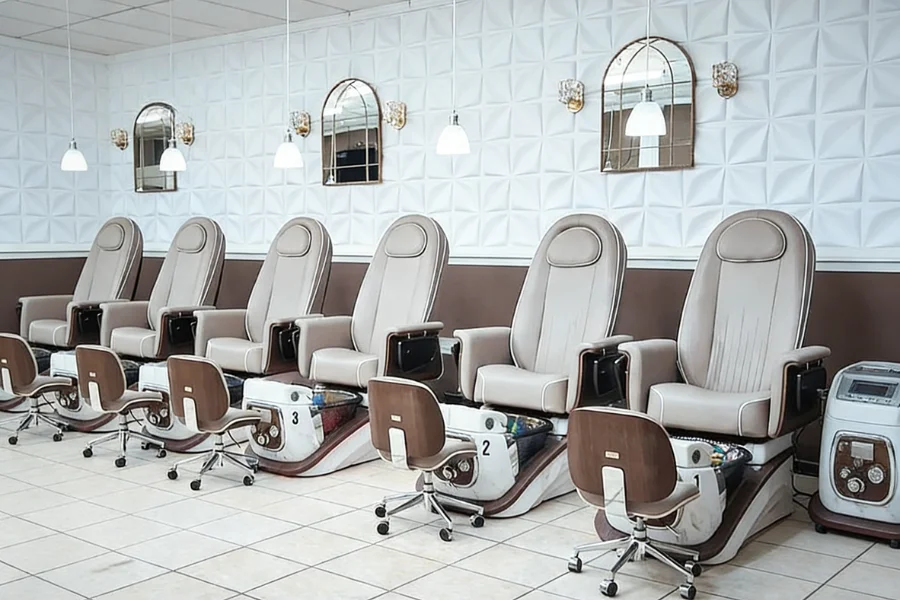
First Decision – Which Type of Pedicure Chair Do You Need
Before comparing features, determine which system matches your business model.
For full-service salons
- Plumbed chairs connect to water supply and drainage
- Suitable for high-volume services
- Require professional installation and local compliance
For independent technicians or small spaces
- Non-plumbed or portable chairs require only a power source
- No plumbing modifications needed
- Easier to relocate or adjust
This decision defines installation cost, flexibility, and long-term scalability.
Getting it right early avoids expensive changes later.
Check Your Space Before Looking at Features
A chair that doesn’t fit your layout will slow down your entire operation.
Practical spacing guidelines
- Minimum 30 inches between chairs for technician movement
- Allow full recline clearance behind each unit
- Keep at least 24 inches of working space in front of the foot area
Why this matters
Tight layouts reduce efficiency during peak hours.
In busy periods, technicians may need to step around chairs repeatedly, adding 1–2 minutes per service and reducing daily capacity.
In many salon setups, layout planning is completed before equipment selection.
Suppliers like NovaBeauty often support this process by aligning chair dimensions with overall floor planning.
Why Ergonomics Matters for Daily Work
Comfort affects both the client experience and technician performance.
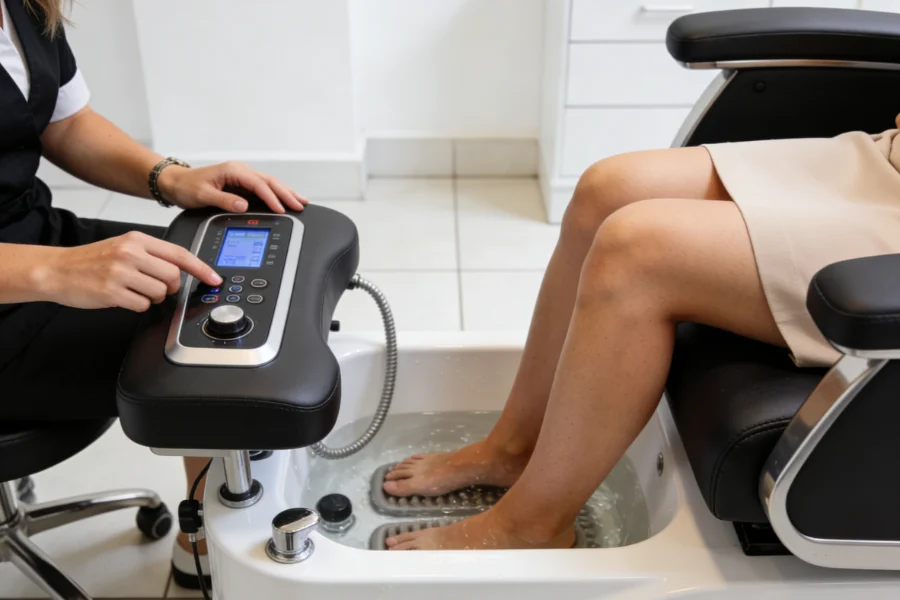
Key ergonomic benchmarks
- Seat height range between 16 and 24 inches
- Backrest recline of at least 120 degrees
- Adjustable footrest with vertical and tilt movement
- Armrest width of at least 22 inches
Operational impact
- Reduces bending and physical strain for technicians
- Supports consistent posture during long sessions
- Improves client comfort, increasing service tolerance
For example, if the footrest position forces a technician to lean forward for each step, even a slight angle issue can create repeated strain across 20–30 services per day.
Poor ergonomics often leads to staff fatigue and inconsistent service quality.
Over time, this becomes a hidden operational cost.
Hygiene Systems – Where Most Mistakes Happen
Hygiene is a compliance requirement, not a preference.
Recommended system choice
- Pipe-less jet systems reduce internal contamination risk
- No complex piping means faster cleaning and turnaround
What to check
- Smooth, seamless basin design with no hidden edges
- Removable components for easy sanitation
- Materials resistant to acetone and cleaning chemicals
Why it matters
Difficult-to-clean systems increase service time between clients.
For example, if cleaning takes an additional 3–5 minutes per client, a salon completing 20 services per day can lose over an hour of productive time.
They also raise the risk of failing inspections.
Build Quality and Maintenance – What Keeps Your Chair Running
Durability determines how often your business is interrupted.
What to look for
- Steel frame construction with a stable base
- Commercial-grade upholstery resistant to wear and chemicals
- Dual-motor systems for smoother adjustments and longer lifespan
Maintenance considerations
- Easy access to internal components
- Replaceable parts without full disassembly
- Clear warranty coverage including service support
Why this matters
Unexpected breakdowns lead to lost appointments and revenue.
Even a single day of downtime can disrupt scheduling and reduce weekly income.
Reliable equipment keeps operations consistent and predictable.
Which Features Actually Help Your Workflow
Not all features add real value.
Focus on what improves efficiency, not just appearance.
High-impact features
- Automatic fill and drain systems
- Adjustable technician access to the foot area
- Simple, responsive control systems
Lower-priority features
- Decorative lighting
- Built-in entertainment or media options
- Non-essential accessories
These may enhance the experience, but they do not significantly affect daily operations.
Don’t Focus on Price – Look at Total Cost
Initial price is only part of the investment.
Typical price ranges
- Portable or basic chairs, approximately $1,500–$3,000
- Mid-range commercial chairs, approximately $3,000–$4,500
- High-end models, $5,000 and above
What affects long-term cost
- Maintenance frequency
- Replacement parts
- Downtime and lost revenue
Lower-cost chairs often require more repairs and replacements.
Over a five-year period, repeated service calls and downtime can outweigh the initial savings.
A Quick Checklist Before You Buy
Use this as a final verification step before placing an order.
- Verify certifications through official sources
- Test all functions including lift, recline, and controls
- Inspect basin for seams, edges, or hard-to-clean areas
- Check accessibility of internal components
- Review warranty terms and service response
This step helps prevent common purchasing mistakes and reduces risk after installation.
How to Make the Final Decision
Different setups require different priorities.
If you run a high-volume salon
- Focus on durability and cleaning efficiency
- Choose plumbed systems with automated functions
- Maintain consistent layout across multiple units
If you are an independent technician
- Choose compact or portable solutions
- Focus on flexibility and ease of setup
- Avoid unnecessary installation costs
Matching the chair type to your operation leads to better long-term performance.
Final Thoughts
The right pedicure chair supports more than client comfort.
It improves workflow, reduces technician strain, and helps maintain consistent service quality.
By focusing on system type, layout compatibility, ergonomics, hygiene, and long-term cost, you can make a decision that supports both daily operations and future growth.
In many professional setups, working with suppliers such as NovaBeauty helps align equipment selection with layout planning and overall salon design.
This approach simplifies coordination, reduces planning time, and supports a more efficient and consistent working environment.