
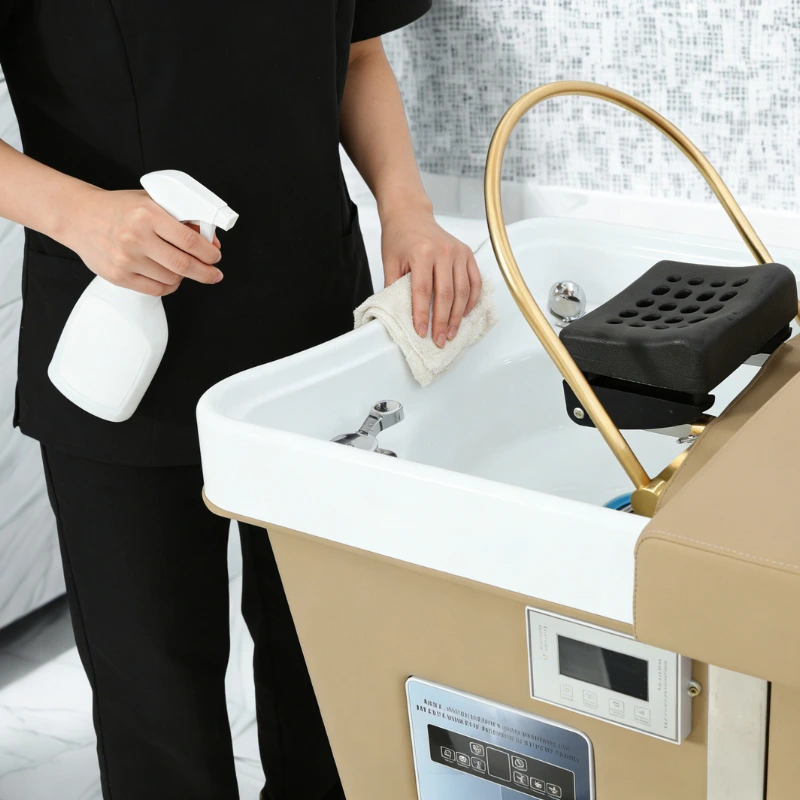
A well-maintained shampoo sink directly affects client comfort, workflow efficiency, and equipment lifespan. Poor maintenance leads to slow drainage, unpleasant odors, and avoidable downtime during peak hours.
This guide outlines a practical maintenance system that helps salon owners maintain consistent service quality while reducing long-term repair and replacement costs.
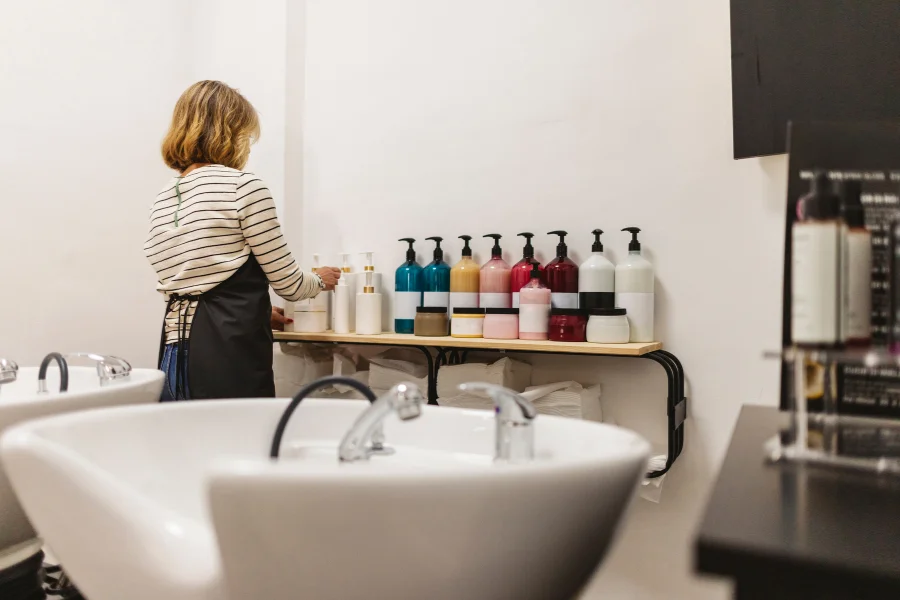
Why Shampoo Sink Maintenance Matters in a Busy Salon
Shampoo sinks are one of the most frequently used stations in a salon, and small issues often escalate quickly under continuous use.
- Residue buildup increases cleaning time between clients and slows service turnover
- Drain blockages interrupt workflow and may require immediate attention during peak hours
- Surface damage shortens equipment lifespan and increases replacement frequency
In many NovaBeauty projects, maintenance planning is integrated into workflow design early, as it directly affects both service efficiency and long-term operating costs.
Daily Cleaning Routine for Smooth Salon Workflow
Consistent daily cleaning prevents buildup that later requires more aggressive and time-consuming maintenance.
Between Clients
Quick cleaning between clients keeps the station operational without disrupting service flow.
- Wipe the bowl with a mild, non-abrasive cleaner
- Remove visible hair and product residue
- Rinse the drain area to prevent accumulation
In high-traffic salons, skipping this step often leads to visible residue within hours, increasing turnaround time and reducing overall efficiency.
End-of-Day Cleaning
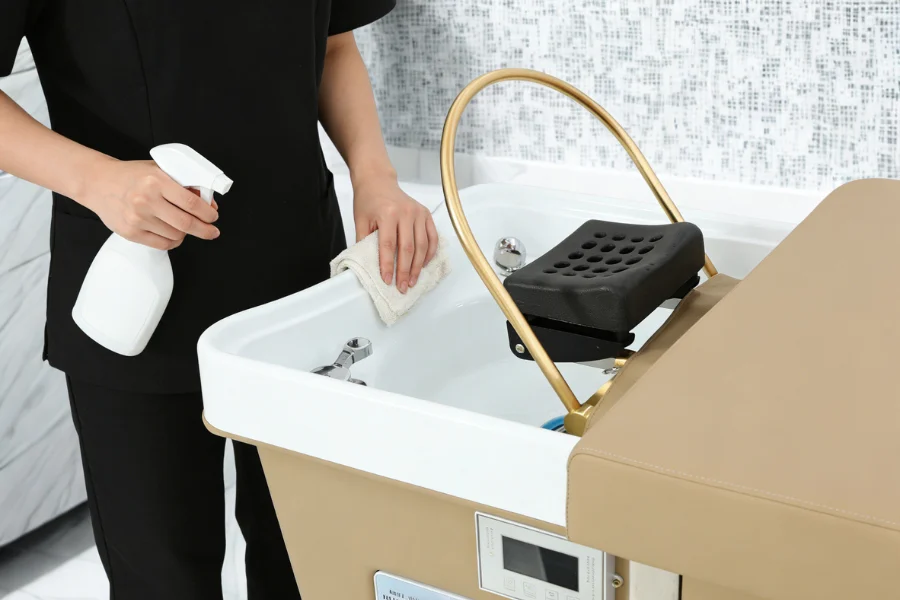
A thorough end-of-day routine resets the station and prevents gradual buildup.
- Use warm water and a mild detergent
- Clean the bowl surface with a soft cloth or sponge
- Flush the drain with hot water to remove residual product
Without this step, residue hardens overnight, making the next day’s cleaning more difficult and increasing long-term surface wear.
How to Choose Safe Cleaning Products for Shampoo Sinks
Cleaning products directly affect both surface durability and maintenance workload.
What to Use
- Neutral pH, non-abrasive cleaners
- Diluted dish soap for routine cleaning
- Soft cloths or non-scratch sponges
What to Avoid
- Abrasive cleaners or scouring pads
- Bleach or strong chemical drain cleaners
- Acidic or highly alkaline products
Surface scratches caused by improper cleaning create micro-pits where residue accumulates, which increases cleaning frequency and accelerates visible wear.
How to Deep Clean and Maintain Shampoo Sink Drains
Daily cleaning does not address internal buildup inside pipes. A structured deep cleaning routine prevents performance issues.
Weekly Drain Cleaning Process
- Pour boiling water into the drain
- Add one cup of baking soda
- Pour a mixture of one cup water and one cup vinegar
- Cover the drain and wait 5–10 minutes
- Flush again with boiling water
This process helps dissolve grease, soap residue, and product buildup that restrict water flow over time.
Adjusting Frequency Based on Salon Volume
Cleaning frequency should reflect actual usage, not a fixed schedule.
- Low-traffic salons — once per week
- Medium-traffic salons — once or twice per week
- High-traffic salons — two to three times per week
If water drains slower than usual or odor develops, cleaning should be done immediately. Delaying maintenance increases the risk of full blockages and service interruption.
How to Prevent Clogs and Keep Drains Flowing
Preventing blockages is more efficient than resolving them after they occur.
Hair Trap Maintenance
- Remove and clean regularly to prevent buildup
- Place a container underneath before removal
- Clear all trapped hair and debris
Recommended Frequency
- Minimum — once per month
- High-volume salons — weekly
If water drainage slows, the hair trap should be checked first. Ignoring early signs often leads to more severe blockages that require professional intervention.
How to Maintain Shampoo Sprayers for Consistent Water Flow
Sprayer performance affects both client comfort and service time.
Common Issue
Mineral buildup blocks spray holes, causing uneven water distribution and reduced pressure.
Cleaning Method
- Soak the sprayer in a solution of 1 part vinegar and 2 parts water
- Leave for 10–20 minutes
- Rinse thoroughly and run water through the system
After cleaning, ensure all spray holes are clear. Inconsistent flow can extend rinse time and reduce overall service efficiency.
Advanced Sprayers
Some systems include internal filters that require periodic cleaning or replacement.
Following manufacturer guidelines prevents pressure loss and maintains consistent performance during continuous use.
Preventive Maintenance Tips to Avoid Costly Repairs
Preventive maintenance reduces unexpected downtime and avoids unnecessary repair costs.
Install Drain Protection
- Use drain screens or hair traps
- Prevent large debris from entering pipes
- Reduce the frequency of deep cleaning
Avoid Chemical Damage
Chemical misuse is a common cause of long-term equipment failure.
- Strong chemicals corrode pipes and fittings
- Surface coatings degrade and become harder to clean
- Repeated misuse increases the likelihood of early replacement
Consider Equipment Design and Color
Maintenance effort is influenced by equipment selection and design.
- White bowls show stains quickly and require more frequent cleaning
- Dark bowls hide stains but require careful inspection for hair buildup
In NovaBeauty planning projects, equipment selection is often aligned with maintenance capacity and staffing structure, helping reduce ongoing maintenance pressure.
How Often Should You Clean Based on Salon Traffic
A fixed cleaning schedule is not effective in commercial environments.
Low-Volume Salons
- Weekly deep cleaning is typically sufficient
- Focus on consistency rather than frequency
High-Volume Salons
- Require structured cleaning between clients
- Higher risk of residue accumulation and clogging
- Maintenance must be integrated into staff workflow
Ignoring usage intensity leads to faster equipment wear, increased maintenance time, and higher operating costs.
Common Shampoo Sink Maintenance Mistakes to Avoid
Small mistakes often lead to larger operational issues over time.
- Skipping quick cleaning between clients, leading to buildup
- Using abrasive or chemical cleaners, causing surface damage
- Ignoring early signs of slow drainage
- Delaying minor repairs until they affect operations
These issues increase downtime risk and reduce equipment lifespan.