
Not all beauty salon beds are built the same. Walk into any US salon and you will see different beds for different services. A lash bed is not the same as a waxing bed. A shampoo bed is a completely different setup from a facial bed. If you are outfitting a new salon or expanding your treatment rooms, understanding these differences matters. Pick the wrong bed, and your technicians will struggle, your clients will be uncomfortable, and you will end up buying replacements sooner than you planned.
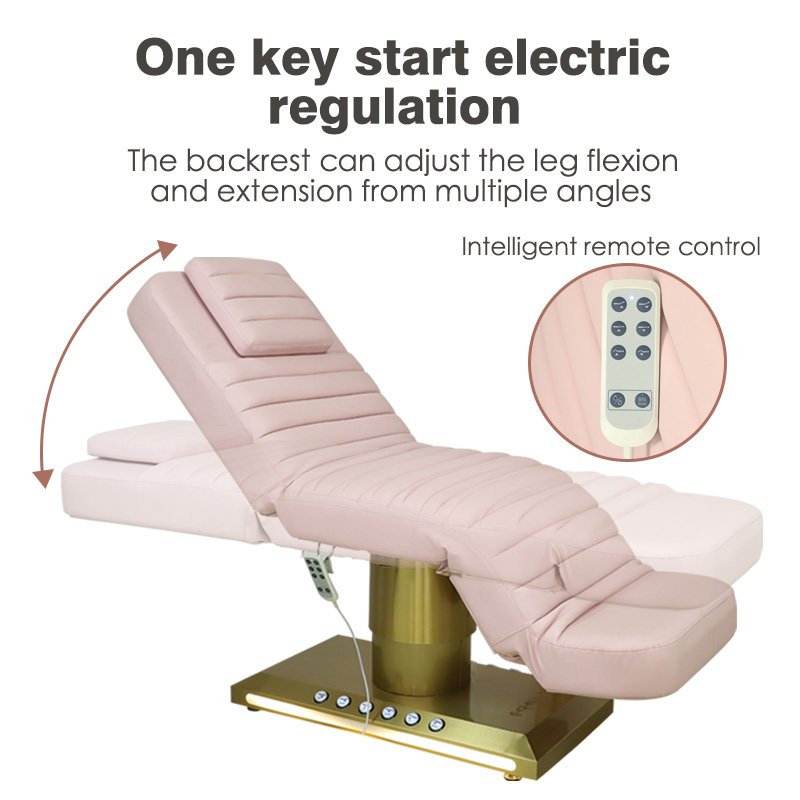
Eyelash Beds for Beauty Salons
Lash beds have become their own category in recent years. The demand for lash extensions keeps growing, and the beds have evolved to match. An eyelash bed for beauty salons is typically narrower than a standard facial bed. Why? Because the technician needs to sit or stand at the head of the bed and work close to the client’s face. A wide bed gets in the way.
Most lashes beds for beauty salons feature a flat or slightly reclined position. They rarely need the full range of motion that a massage bed requires. What matters more is the height adjustability — a good electric lash bed lets the technician raise or lower the bed to match their working position. Some newer models include a small storage drawer under the bed for lash supplies, which is a nice touch when you are working in a compact treatment room. If you want a ready-made lash option with premium finish, a white gold electric lash and facial bed comes with a gold frame and electric adjustment.
If you run a dedicated lash studio, look for beds with clean, seamless upholstery. Lash glue and adhesive removers can damage stitched seams over time. A beauty bed for lash salons with smooth PU leather and minimal crevices will hold up better.
Eyelash and Brow Facial Beauty Beds
Lash and brow services need different geometry than facials: the client’s head stays flat and still while you work from above. An eyelash and brow facial beauty bed solves this with a slim, height-adjustable platform that keeps the eye area at a comfortable working level, so you are not leaning over a wide spa table all day.
If you run eyelash extensions and brow lamination back-to-back, choose an eyelash and brow facial beauty bed with electric lift — preset heights cut the transition time between clients. Our lash beds and facial beds for estheticians come in the same custom upholstery colors, with MOQ 1 and DDP shipping to US salons. For that lash-and-brow geometry, a gold-base electric facial and lash bed keeps the client flat while still offering electric recline.
Waxing Beds for Beauty Salons
A waxing bed for beauty salons faces different demands. Waxing involves oils, wax residue, and frequent sheet changes. The upholstery needs to be waterproof and easy to wipe down. High-density foam is important because clients lie still for extended periods during full-leg or Brazilian waxing — a bed with thin foam will leave them sore.
Many salon owners prefer a wider platform for waxing. A standard 28-inch bed works, but 30-inch or wider gives the client room to shift positions without feeling like they might roll off. Look for beds with a removable face cradle. For back waxing, the face cradle comes off. For leg waxing, it stays on. This flexibility makes the same bed usable for multiple service types.
Disposable bed sheets are standard in waxing rooms. Any beauty waxing bed should work with standard-sized disposable rolls. Some beds come with built-in paper roll holders, which saves the hassle of mounting a separate dispenser on the wall.
Facial Beds for Beauty Salons
The facial bed for beauty salons is the workhorse of any esthetician’s room. Unlike lash beds, facial beds need more adjustability. The backrest should raise to a near-sitting position for extraction work. The leg section should adjust to prevent client fatigue during longer treatments.
A proper beauty salon facial bed includes a face cradle with enough padding. Cheap face cradles cause numbness after 30 minutes — and facial treatments easily run 60-90 minutes. Look for adjustable armrests too. Clients naturally want somewhere to put their arms, and fixed armrests only work for certain body types.
For salons offering multiple facial types — classic European, LED light therapy, microdermabrasion — the bed needs to accommodate the extra equipment. An electric facial bed for beauty salon use with a built-in outlet or cable management channel is a practical upgrade that keeps cords from tangling around your feet. To cover all three from one frame, an electric esthetician table with 3 motors adjusts height and angle without changing beds between services.
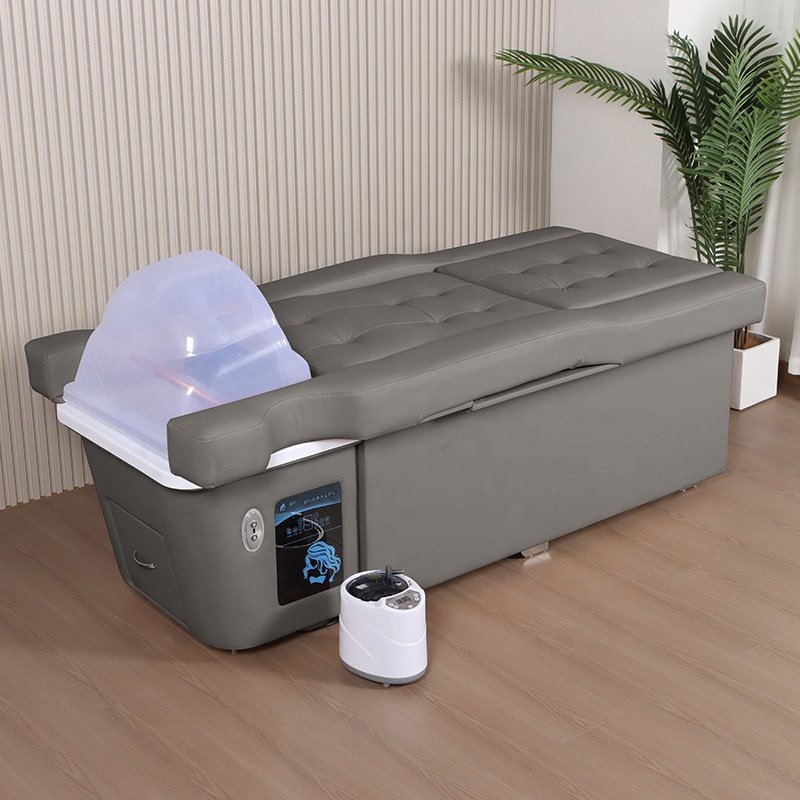
Beauty Salon Shampoo Beds
A beauty salon shampoo bed is different from a regular facial or lash bed. It combines elements of a shampoo chair and a treatment bed. The client lies face-up at the basin end while the stylist or technician washes their hair from behind. These beds are common in head spa studios and salons that offer scalp treatments.
Shampoo beds need plumbing access. You either plumb them into your water lines or go with a portable tank system. The non-plumbed option gives you more flexibility in room placement but requires filling and draining the tank manually. For high-volume salons, plumbed is the way to go — less setup time between clients.
The basin design matters. Ceramic basins are easier to clean and more comfortable for the client’s neck. Acrylic basins are lighter and cheaper but scratch more easily. Look for a bed with a comfortable neck rest contour — this is the difference between a client who relaxes during the wash and one who tenses up.
Which Beauty Salon Bed Should You Choose?
| Service Type | Recommended Bed | Key Feature to Look For |
|---|---|---|
| Lash extensions | Narrow electric lash bed | Height adjustability + storage drawer |
| Waxing | Wide waterproof bed | 30-inch platform + removable face cradle |
| Facial / Skincare | Adjustable facial bed | Multi-position backrest + padded face cradle |
| Shampoo / Head spa | Plumbed shampoo bed | Ceramic basin + neck rest contour |
| Mixed services | Multi-purpose electric bed | Electric adjustment + waterproof upholstery |
If you run a multi-service salon, consider buying separate beds for each treatment type rather than trying to make one bed do everything. Yes, it costs more upfront, but the right bed for each service improves client comfort and technician efficiency — which means more bookings and better reviews.
Factory-direct pricing makes this more affordable than buying from US distributors. For a deeper look at features like electric adjustment, heating, and upholstery options, read our Beauty Salon Bed Features Guide. Check out our beauty bed collection to see the range of options available for US salons.