
I’ve seen too many people open a “salon” that operates like a barbershop, or a “barbershop” that tries to be a salon. The result is always the same: confused clients, mismatched equipment, and a space that doesn’t quite work for either model.
The difference between a barber shop and a salon goes way beyond whether you call your staff “barbers” or “stylists.” It affects everything — your floor plan, your equipment choices, your pricing, even your lighting. Here are the real differences.
1. Service Model Shapes Everything
A barbershop is built around quick, repeat services. Haircuts, beard trims, hot towel shaves — most appointments are 15-30 minutes. The volume is high, the ticket price is moderate, and the goal is to move clients through efficiently.
A salon is built around longer, more varied appointments. Color can take 2-3 hours. Highlights, balayage, extensions, perms — these are complex, time-intensive services. The ticket price is higher, the volume is lower, and the space needs to keep clients comfortable for extended periods.
This fundamental difference affects every equipment decision below.
2. Chair Layout is Completely Different
| Factor | Barbershop | Salon |
|---|---|---|
| Chair spacing | 4-5 feet apart. Barbers work close together, conversation flows between stations. | 6-8 feet apart. More privacy for color services, less chemical fume overlap. |
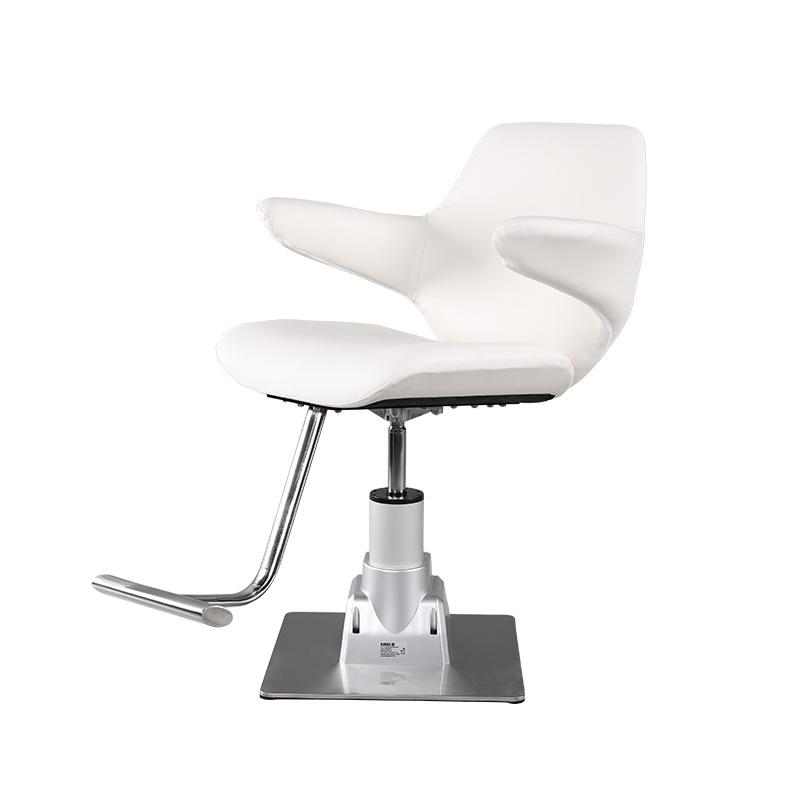
| Chair type | Heavy-duty hydraulic barber chairs with foot pumps. Chrome bases, classic styling. Built to last 15+ years. | Styling chairs with gas lift, 360 swivel, lockable casters for flexible station layouts. |
| Wash stations | Optional or minimal. Many barbershops do haircuts without washing. | Essential. At least 2-3 shampoo bowls with reclining chairs for a medium-sized salon. |
| Dryers | Not needed for most services. If used, hand-held dryers only. | Hooded and hand-held dryers at every color station. Essential for processing and finishing. |
3. Reception & Waiting Area
Barbershops typically have a smaller, more casual waiting area. A few chairs, maybe a couch. Clients expect to wait 5-10 minutes — it’s part of the culture. The reception desk is minimal, often just a counter.
Salons need a more substantial reception desk with POS, retail displays, and appointment scheduling. The waiting area needs to accommodate clients staying 30+ minutes — comfortable seating, good lighting, and space for companions.
4. Equipment Investment
| Equipment | Barbershop (per station) | Salon (per station) |
|---|---|---|
| Chair | $400-$1,500 (hydraulic barber chair) | $300-$1,200 (styling chair) |
| Mirror & station | $200-$600 | $400-$1,500 (often with built-in storage and lighting) |
| Wash unit | $0-$1,000 (optional) | $600-$2,000 (shampoo chair + bowl, per station) |
| Dryer | $50-$150 (hand-held) | $300-$1,000 (hooded per station) |
| Total per station | $650-$3,250 | $1,600-$5,700 |
5. Pricing & Revenue Model
Barbershops run on volume. A barber doing 4-5 haircuts per hour at $35 each generates $140-$175/hour. Salons run on ticket size. A stylist doing one color service at $200 over 2 hours generates $100/hour — but the product-upsell opportunity is significantly higher.
This means barbershops need more chairs and shorter service times to be profitable. Salons need fewer chairs but higher prices per client.
6. Licensing & Staffing
Barbers and cosmetologists have separate licenses in most states. Barber training focuses on clipper cutting, straight razor work, and facial hair. Cosmetology training covers color, chemical services, and a wider range of cutting techniques. You can’t hire a barber to do color services, and most cosmetologists aren’t trained on straight razors.
7. Atmosphere & Design
Barbershops lean into heritage — tile floors, chrome barber chairs, classic black and white, maybe a vintage barber pole. The vibe is masculine, straightforward, efficient. Music is often louder, conversation flows freely between stations.
Salons lean into aesthetics — curated decor, good lighting, comfortable treatment rooms. The vibe is more upscale and personal. Clients expect privacy during chemical services and a relaxing environment.
Related Guides
- Check out our Beauty Trolley Guide for more information.
- Check out our Salon Front Desk Guide for more information.
Related Guides
- Read our Hair Salon Chairs Guide for more information.
- Read our Hydraulic Chairs Guide for more information.
Final Take
The barbershop vs salon decision isn’t about which is “better” — it’s about which model fits your skills, your investment, and your market. Barbershops are simpler to set up, with lower per-station costs and higher throughput. Salons require more investment per station but generate higher revenue per client.
Browse our barber chairs and salon chairs to compare equipment options for both models.
Barber Shop vs Salon Difference: Price Guide (2026)
Budgeting for a new shop requires separating hype from hard numbers. The barber shop vs salon difference starts with equipment spend. Below are realistic factory-direct wholesale prices for 2026, assuming 110V US plug compatibility and CE certified components. All units ship via DDP (Delivered Duty Paid) with no hidden freight fees, and MOQ is 1 unit per model.
| Model/Type | Price Range (USD) | Best For |
|---|---|---|
| Hydraulic Barber Chair (Classic Pump) | $380 – $650 | High-volume clipper cuts; durable vinyl, no electrical parts. |
| Electric Reclining Salon Chair (110V) | $720 – $1,100 | Color services, chemical treatments, and client comfort. |
| All-Purpose Styling Station (Combo Unit) | $450 – $800 | Backwash sinks, storage, and mirror combos for both spaces. |
| Barber-Specific Shampoo Bowl (Backwash) | $290 – $520 | Neck-strap bowls for quick rinses without full recline. |
| Salon Facial / Waxing Bed (Stationary) | $610 – $950 | Esthetician add-ons in a full-service salon. |
| Double-Sided Dryer / Hood Unit | $340 – $580 | Salons processing colors; barbers rarely need this. |
Prices reflect factory-direct wholesale, not retail markups. For a 4-chair barber shop, plan $3,500–$5,000. For a 4-station salon with chemical services, budget $6,000–$9,000. The barber shop vs salon difference in equipment cost is driven by reclining mechanics and plumbing complexity, not chair count.
Barber Shop vs Salon: Owner Buying Checklist
Use this checklist when comparing quotes. It filters out residential-grade junk and ensures you get commercial equipment that survives daily use.
- Chair base construction: Look for cast aluminum or heavy-gauge steel bases. Barber chairs take more lateral abuse from leaning clients. Salon chairs need stable bases for reclining torque. Avoid plastic bases in either category.
- Hydraulic vs electric lift: Barber shops benefit from manual pump hydraulics (zero electrical failure points). Salons with color services should choose 110V electric recliners with dual motors. Verify the motor is CE certified, not just the plug.
- Plumbing requirements: Barber shampoo bowls need a spray hose and drain. Salon backwash units need hot/cold water lines and a floor drain. Confirm your space has rough-in plumbing before ordering.
- Upholstery grade: Commercial vinyl (not PU leather) is mandatory. Barber chairs need PU or treated vinyl that resists clipper oil. Salon chairs need fluid-resistant seams for chemical spills. Ask for double-stitched seams.
- Warranty and parts: Factory-direct wholesale should include a 2-year structural warranty. Confirm replacement pumps, motors, and casters are stocked in the US. Avoid brands that require overseas shipping for a $20 caster.
- Shipping and setup: Confirm DDP shipping (no surprise customs fees) and MOQ 1. For 110V US plug equipment, verify the unit is pre-wired for US outlets. Most barber vs salon equipment ships assembled except for base attachment.
The barber shop vs salon difference in maintenance is also notable. Barber chairs with pump lifts can be repaired by any local hydraulic shop. Salon electric recliners require certified technicians. Factor that into your long-term operating cost.
If you want the short version first, our barbershop vs salon comparison lays out services, licensing and equipment side by side.
Frequently Asked Questions
Can I use the same chairs for a barber shop and a salon?
Yes, but it is inefficient. A barber chair works for haircuts but lacks the reclining backrest needed for color processing. A salon chair works for styling but is overkill for a quick fade. If you run a hybrid shop, buy barber chairs for cutting stations and one electric recliner for chemical services. See our barber chair collection for hybrid options.
What is the biggest cost difference between a barber shop and a salon?
The biggest gap is in shampoo bowls and backwash units. Barber shops can use compact neck-bowl sinks. Salons need full backwash stations with reclining chairs and water heaters. That difference can add $1,500–$3,000 to a salon buildout. Factory-direct wholesale pricing narrows the gap, but plumbing costs remain.
Do I need CE certified equipment for a US salon?
CE certification is not required by US law, but it indicates the electrical components meet international safety standards. For 110V US equipment, CE certification is a quality marker, not a legal mandate. Always confirm the unit is wired for 110V, not 220V. Most reputable factory-direct suppliers provide CE certified units with US plugs.
What does DDP shipping mean for my equipment order?
DDP means the supplier pays all freight, customs, and duties until the goods arrive at your door. You pay the quoted price and nothing more. This is critical for wholesale purchases because it prevents unexpected broker fees. With MOQ 1, you can order a single chair and still get DDP terms. Check the salon chair category for DDP pricing.