
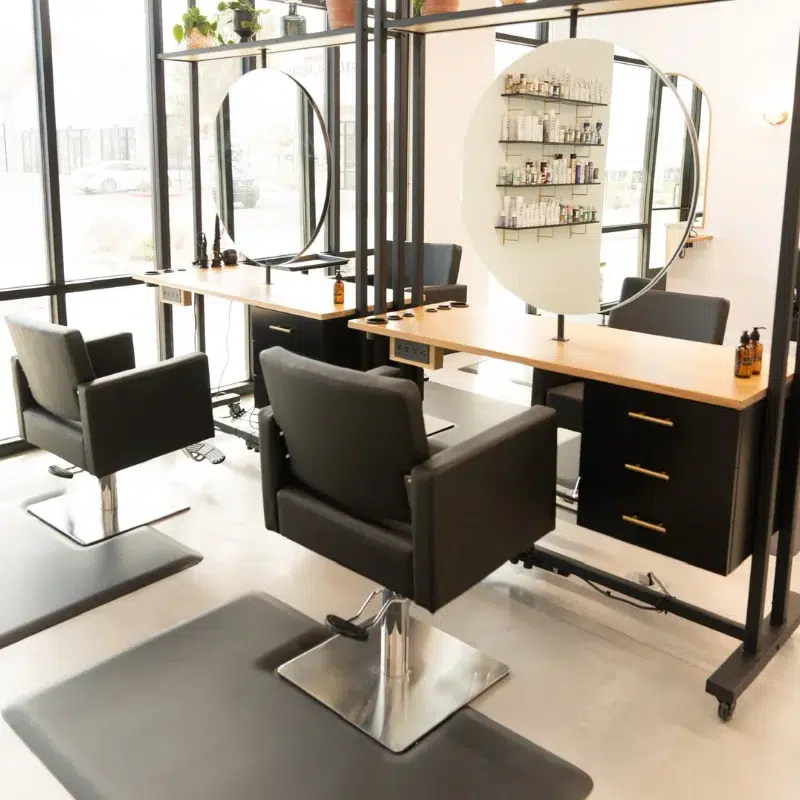
Why the Right Salon Chair Shapes Daily Operations More Than You Expect
This guide is written for salon owners, managers, and studio operators who are opening a new location, upgrading existing stations, or rethinking how their space functions day to day.
A salon chair is not a decorative purchase. It is a working tool used in nearly every service, every day. Clients sit in it for most of their appointment, which makes comfort a direct driver of satisfaction and return visits.
For stylists, chair height, swivel range, and back design affect posture and fatigue over hundreds of services each month. A chair that looks fine on day one can quietly create workflow friction or physical strain over time.
The mistake many salons make is choosing chairs based on appearance or price first, then adjusting operations around them. In practice, the chair should be chosen to support how the salon actually works.
At Nova, this perspective comes from years of working with salons planning full builds, phased upgrades, and multi-location rollouts, where chair selection often determines whether a layout succeeds or struggles.
Types of Salon Chairs and When Each One Makes Sense
Styling Chair
Styling chairs are designed for cutting, coloring, and styling services. They include hydraulic height adjustment and full 360-degree rotation. Their lower back design allows easier access to long hair, making them the most practical choice for core hair services in most salons. If the majority of your services involve standing work around the client, a styling chair is the baseline reference point.
All-Purpose Chair
All-purpose chairs recline or fully lay back and usually include removable headrests. They support cutting, shampooing, makeup, lash services, and facials from a single station. They are most effective in studios or suites where space limits the number of dedicated service areas. The trade-off is footprint. All-purpose chairs save stations, but require more clearance when reclined.
Shampoo Chair
Shampoo chairs are designed to pair with shampoo bowls and recline into the basin. They do not use hydraulic height adjustment. Because height is fixed, bowl height and plumbing alignment must be planned carefully in advance.
Dryer Chair
Dryer chairs feature high backs with cut-out openings to fit hooded dryers, steamers, or processors. They prioritize stability and equipment compatibility rather than movement. For more options, see our salon dryer chair.
Barber Chair
Barber chairs recline and include headrests for shaving and grooming services. They are wider, heavier, and often rated up to 450 pounds. They work best in barbershops or hybrid salons offering beard and facial services, but require more space per station.
Cutting Stool
Cutting stools are adjustable seats for stylists. Some include removable backs. They are not replacements for styling chairs, but practical tools to reduce fatigue during long or detailed services.
What Actually Makes a Salon Chair Comfortable for Clients
High-density foam with memory support maintains comfort across long appointments. Softness alone is not the goal. Consistent support is. Chairs that flatten quickly often feel acceptable at first, then uncomfortable within months.
Seat width, measured between armrests, typically ranges from 18 to 23 inches. Seat depth usually falls between 16 and 20.5 inches. Chairs at the narrow or shallow end of these ranges may exclude larger clients, while oversized seats increase footprint. Comfort comes from proportion, not maximum size.
Open armrests improve airflow, simplify cleaning, and visually reduce bulk. They work well in suites and compact layouts. Fully upholstered armrests provide a more enclosed feel and act as visual anchors in larger spaces.
T-shaped footrests reduce footprint and make entry and exit easier. U-shaped footrests provide greater stability, often preferred by older clients. Flip-up footrests support wheelchair transfers and should be considered in accessibility-conscious environments.
How Salon Chairs Impact Stylist Comfort and Daily Efficiency
Most professional styling chairs offer hydraulic travel between 20 and 28 inches. This range accommodates most stylists when paired with the right base. Full swivel reduces repetitive lifting and repositioning.
For shorter stylists, chairs with lower minimum heights, such as 18 to 25 inches, reduce shoulder strain. Lower backrests improve reach over long hair. For taller stylists, higher maximum travel, such as 23 to 30 inches, or raised bases support upright posture. Ignoring stylist height differences is one of the fastest ways to create long-term fatigue issues.
Anti-fatigue mats matched to base shape reduce leg and lower-back stress. Adjustable stools support services requiring precision or extended duration. Integrated tool holders improve efficiency without clutter.
How Much Space Salon Chairs Really Need
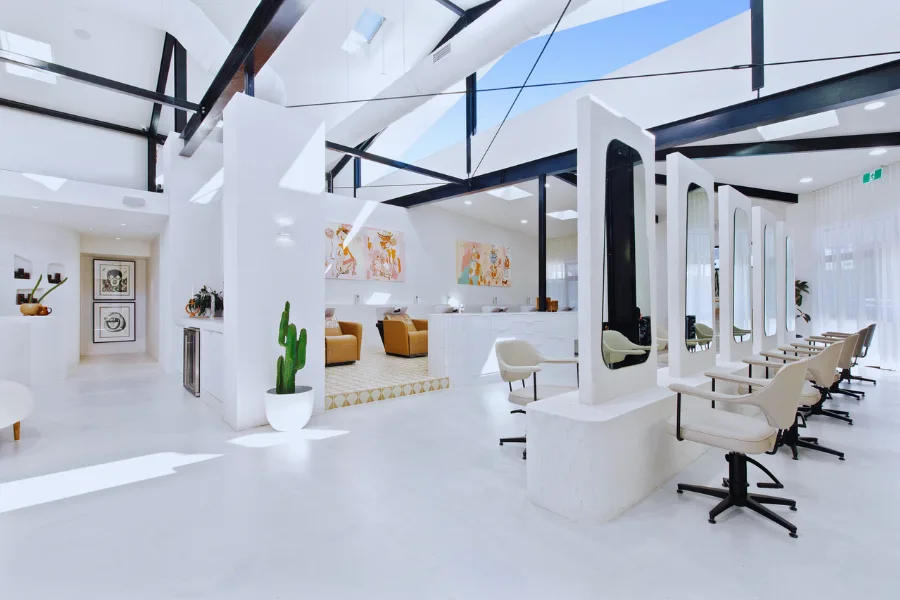
Footprint is measured from the outer edges of armrests and from footrest to chair back. Compact chairs may measure around 23 inches wide by 33 inches deep, while larger models can reach 30 inches by 40 inches. Differences of one or two inches multiply quickly across multiple stations.
Chairs should sit at least 2 feet from side walls and 4 feet from mirrors. Between chairs, a minimum of 4.5 feet measured center to center allows rotation and movement. Premium salons often exceed this for privacy.
Layouts should allow room for walkers and wheelchairs. Flip-up footrests and open access zones reduce barriers.
Choosing Salon Chair Designs That Age Well in Real Salons
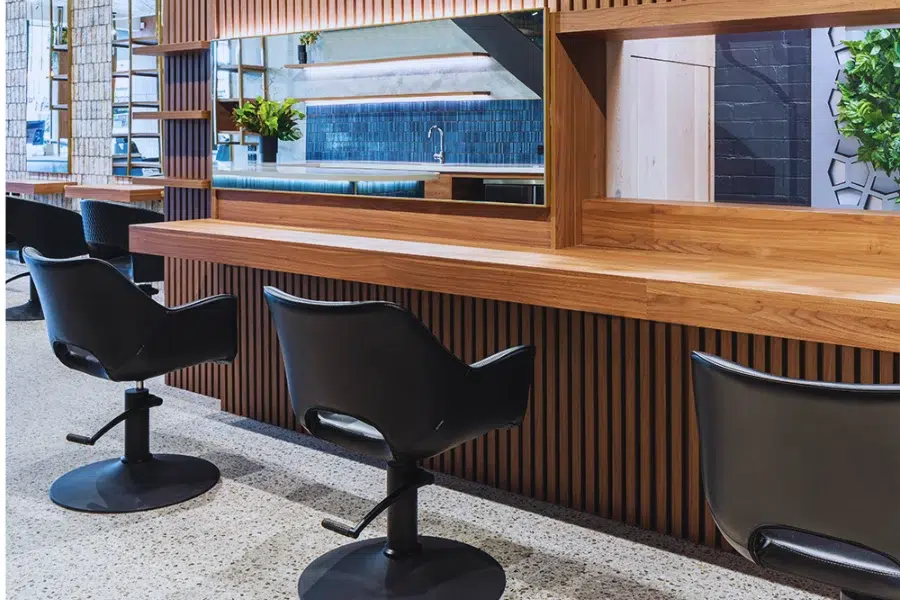
Neutral tones such as black, gray, and beige adapt as décor changes. Accent colors work best when limited and intentional. Trend-driven designs age faster than functional ones.
Seamless upholstery, floating backs, and open armrests reduce trapped hair. Darker upholstery hides stains better in color-focused salons. Bases with rubber seals simplify floor cleaning.
Chairs appear in photos and marketing content. Designs that remain clean and proportional over time support brand consistency without constant replacement.
What Determines How Long a Salon Chair Will Last
Durable chairs use reinforced steel frames and multi-layer plywood bases. Commercial-grade vinyl with reinforced stitching withstands daily use.
Chair tops often carry one-year warranties. Bases and hydraulic pumps range from two to ten years. Warranty length is one of the clearest signals of expected lifespan.
Most styling chairs support around 350 pounds. Barber chairs and reinforced models often reach 450 pounds.
Access to replacement pumps, bases, footrests, and chair tops extends usable life and limits downtime. At Nova, this consideration often shapes recommendations more than initial appearance, because replacement access determines long-term cost.
How to Balance Price, Quality, and Long-Term Value
Entry-level chairs generally range from $200 to $400. Mid-range options fall between $400 and $700. High-end chairs often exceed $700.
A practical way to think about value is time, not price. Lower-cost chairs often last 2 to 3 years. Mid-range chairs often last 5 to 7 years. Higher-quality chairs often last 8 to 10 years. Replacing a chair twice costs more than choosing correctly once.
Durable chairs reduce replacements, support consistent service quality, and improve staff comfort. These factors compound quietly over time.
What to Expect After the Chair Arrives
Most chairs assemble in three parts, base, chair top, and footrest. Reviews often reveal whether stability holds after installation.
Use recommended cleaners, inspect hydraulics periodically, and avoid harsh chemicals that degrade vinyl.
FAQ
What is the difference between a salon chair and a barber chair?
Barber chairs recline and include headrests for shaving and grooming services. Salon chairs typically have lower backs designed for easier access to long hair during cutting and styling. Barber chairs are usually wider, heavier, and rated for higher weight capacity, which also means they require more floor space per station.
How far apart should salon chairs be placed?
Salon chairs should generally be spaced at least 4.5 feet apart, measured center to center. Each chair should also be positioned about 2 feet from side walls and roughly 4 feet from mirrors. Proper spacing allows full chair rotation, smooth stylist movement, and a more comfortable experience for clients.
How much weight do salon chairs typically support?
Most professional salon styling chairs are rated to support approximately 350 pounds. Barber chairs and reinforced models often support up to 450 pounds. Choosing chairs with appropriate weight capacity improves safety, durability, and inclusivity, especially for salons serving a wide range of body types.
How long do hydraulic pump warranties usually last?
Hydraulic pump warranties typically range from two to ten years, depending on the manufacturer and build quality. Longer warranty periods often indicate stronger internal components and a longer expected lifespan. Warranty length is one of the most practical indicators of durability when comparing salon chairs.
What should I look for when buying a salon chair?
Key factors include client comfort, stylist ergonomics, hydraulic height range, chair footprint, durability, and warranty coverage. The right salon chair should support daily workflow, fit your layout without crowding, and reduce long-term replacement costs rather than focusing only on appearance or upfront price.
Related Products for Your Salon Business
Browse our professional-grade salon equipment and furniture at factory-direct wholesale prices: