
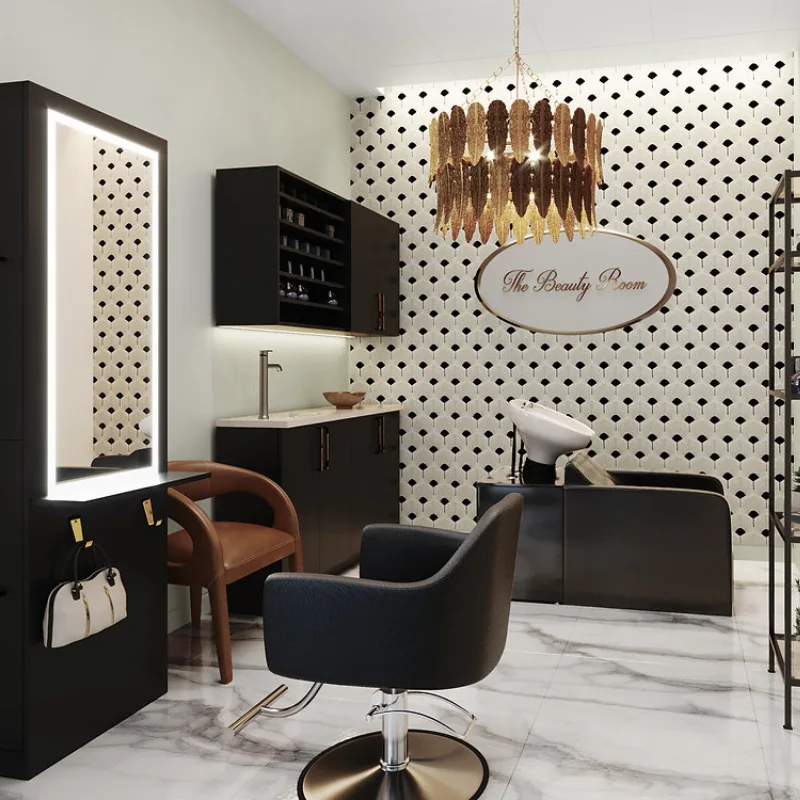
Designing a small salon suite is less about decoration and more about control. In compact commercial spaces, most problems do not come from style choices, but from three recurring issues—oversized furniture, broken circulation paths, and storage systems that gradually lose order. The ideas below focus on preventing these failures early, based on common issues observed in compact salon suites during commercial planning and layout reviews.
Choose a Clear Theme and Color Palette for a Small Salon Suite
A defined theme creates visual discipline. If multiple styles, materials, or finishes compete for attention, small spaces begin to feel cluttered even when square footage is adequate.
Effective color strategies include neutral palettes with restrained accent colors, monochrome schemes using black, white, and gray, earth tones that soften enclosed rooms, soft pastels that support relaxation, and deeper jewel tones paired with metallic accents when a more refined identity is required.
If color continuity breaks between walls, furniture, and soft finishes, the space tends to feel fragmented. In narrow suites, using a darker tone on a distant wall can add depth without closing the room in.
Use Mirrors and Lighting to Make a Small Salon Suite Feel Larger
Mirrors and lighting influence spatial perception more than decorative objects. If mirrors are undersized or poorly positioned, even bright rooms can feel compressed.
Mirrors perform best when they are placed opposite windows or primary light sources, sized generously rather than divided into many small surfaces, and integrated with backlighting to support both task clarity and visual balance.
Lighting should be layered. If task lighting is insufficient, service quality suffers. If ambient lighting is ignored, clients often perceive the space as harsh or uncomfortable. Wall fixtures that direct light upward help reduce visual compression, especially in suites with lower ceilings. LED systems remain the most reliable long-term option for energy control and maintenance.
Select Space-Saving Furniture and Layouts That Work Harder
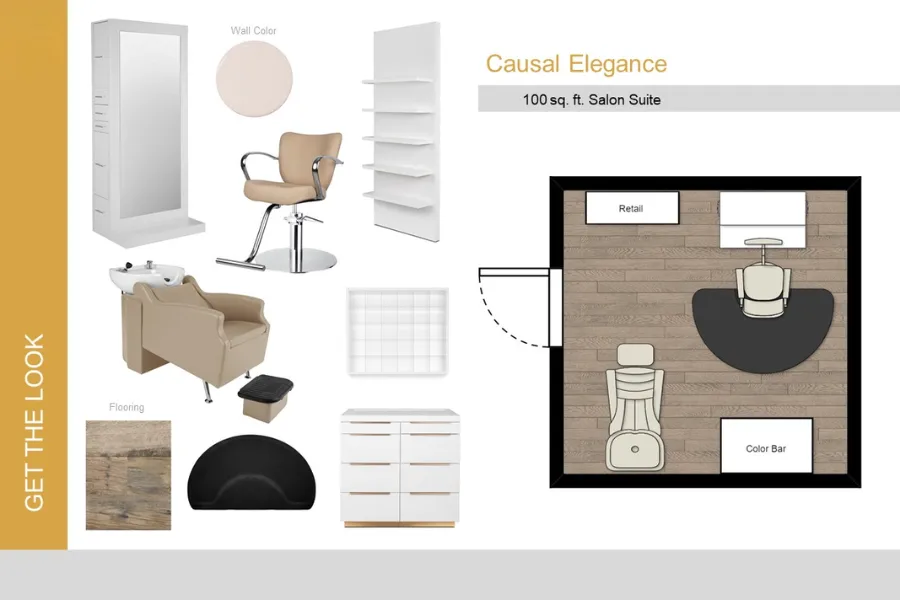
Furniture selection determines whether a small salon suite operates smoothly or feels constrained. If furniture is chosen for appearance alone, circulation problems typically surface within weeks of operation.
High-performing choices include styling chairs or stools with integrated storage, mobile trolleys that function as both workstations and supply units, and wall-mounted or fold-down work surfaces that free floor space when not in use. Transparent or lightweight furniture reduces visual blockage, but layout matters more than material.
In commercial planning projects, equipment dimensions are often the first constraint that defines layout options. Manufacturers such as Nova typically design salon furniture with commercial circulation and service zones in mind, which reduces the need for layout compromises in small salon suites.
If service zones are not clearly defined, small suites tend to feel crowded during peak appointments even when furniture counts are minimal. Clear walkways and intentional zoning consistently outperform dense layouts.
Reduce Front Desk Space With Smart Technology and Mobile Payments
Technology can remove physical bottlenecks. If booking, payment, and inventory tasks are tied to a fixed reception desk, valuable floor space is lost.
Wireless payment tools allow transactions to happen at the chair. Mobile management systems support scheduling, client records, and inventory without requiring dedicated admin areas. Digital displays can replace printed signage, reducing wall clutter while keeping information flexible. Inventory systems that automate restocking help prevent overaccumulation, a common source of visual disorder in small suites.
Plan Storage That Keeps a Small Salon Suite Organized and Calm
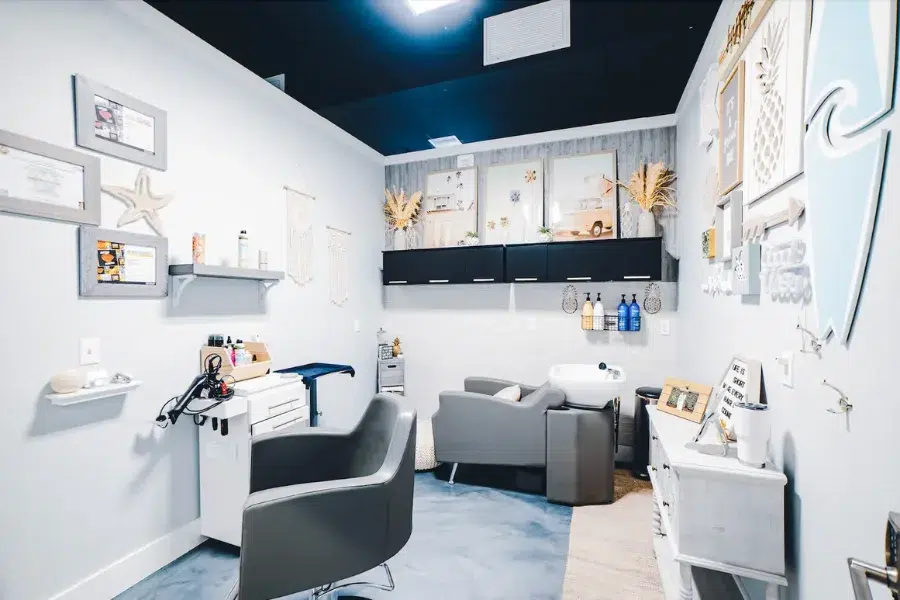
Storage problems rarely appear immediately. They develop gradually when systems lack structure. If tools, retail items, and paperwork share the same storage zones, disorder returns quickly.
Effective strategies include hidden compartments under seating, vertical wall-mounted shelving, and door-mounted or partition-mounted storage that captures unused areas. Separating storage by function reduces daily friction. Labels and clear containers speed access and reduce visual noise. Regular decluttering prevents small suites from reverting to crowded conditions.
Create a Relaxing Client Experience in a Compact Salon Suite
Atmosphere affects perception more than size. If sensory elements are overlooked, compact suites often feel transactional rather than restorative.
Controlled scent, soft textiles, and consistent background music help regulate the client experience. Plants introduce texture and soften edges without consuming floor space. Temperature stability and proper ventilation matter more in enclosed environments, where discomfort is noticed quickly and remembered longer.
Design a Small Salon Suite on a Budget Without Sacrificing Quality
Cost control is about sequencing, not cutting corners. If early budgets are spent on decorative items before seating, lighting, or mirrors, upgrades become disruptive later.
Refinishing secondhand furniture, using peel-and-stick finishes, and staging purchases allow gradual investment. Core equipment should be prioritized first, with decorative elements added over time. In some commercial projects, leasing or phased purchasing helps manage early cash flow without lowering quality standards.
Prioritize Comfort and Accessibility in a Small Salon Suite
Comfort is operational, not optional. If equipment lacks adjustability, physical strain increases for both clients and operators.
Hydraulic chairs, adjustable work surfaces, and clear entryways support inclusivity and reduce fatigue. Wireless tools limit tripping hazards and visual clutter. Small details such as reachable storage, footrests, and stable trays improve long-term usability and reduce daily interruptions.
FAQ
What is the ideal size for a small salon suite?
There is no single ideal size. Most small salon suites work well when equipment dimensions, storage, and circulation are planned first. Even limited square footage can function efficiently if furniture is scaled correctly, walkways remain clear, and vertical storage is used instead of spreading items across the floor.
How do I prevent a small salon suite from feeling cluttered over time?
Clutter usually returns when storage lacks structure. Separate storage by function, keep daily tools within easy reach, and schedule regular decluttering. If everything shares the same cabinet or trolley, small spaces tend to lose order quickly, even when the initial setup feels organized.
Is it better to invest in furniture or decor first for a small salon suite?
Furniture and lighting should come first. Decorative elements can be added gradually, but replacing oversized chairs or poorly placed stations is disruptive and expensive. Early investment in correctly sized equipment protects workflow efficiency and prevents layout changes that interrupt daily operations.
Can a small salon suite still meet accessibility needs?
Yes, if accessibility is considered early. Adjustable-height chairs, clear entry paths, and wireless tools significantly improve usability. When accessibility is treated as an afterthought, small suites often require compromises that reduce comfort, limit movement, and affect both client experience and operator efficiency.
How many services should a small salon suite realistically offer?
Offering too many services often creates congestion. Most successful small salon suites focus on a limited group of compatible services that share equipment and layout needs. If services require constant reconfiguration, workflow slows down and the overall client experience tends to suffer.
How much money do you need to start a salon suite?
Startup costs vary by location, equipment quality, and customization level. Expenses typically include furniture, lighting, plumbing or electrical adjustments, and initial supplies. Planning equipment and layout carefully helps control costs and prevents replacing unsuitable items shortly after opening.
Are salon suites profitable?
Salon suites can be profitable when overhead is controlled and services are well-defined. Lower staffing costs and focused service offerings often improve margins. Profitability depends less on size and more on efficient layout, equipment durability, pricing strategy, and consistent client retention.
Related Products for Your Salon Business
Browse our professional-grade salon equipment and furniture at factory-direct wholesale prices: